Daehangno, Hyehwa and Naksan: Theater Streets and a Seoul City Wall Walk
Seefooddiet · Original · CC BY-SA 4.0 ·
In Daehangno, an afternoon can begin with theater posters and end above the rooftops. Around Hyehwa Station, small performance venues, restaurants and cafes fill the streets near Marronnier Park. Behind them, Naksan's paths climb to the Seoul City Wall and views across the neighborhoods below. The combination gives you a lively arts district and an outdoor viewpoint in the same outing. The two parts work together, but they call for different plans. A theater visit needs a fixed arrival time; a sunset walk needs time to get uphill and back down. If you've booked an evening performance, build the day around it. If the view is your priority, leave the late afternoon open and decide on dinner after descending. You can also skip the hill. Marronnier Park, Arko Art Center and a performance make a worthwhile arts-focused visit on their own, particularly in bad weather or when you want less walking.
Hyehwa Station is the stop for Daehangno
LERK · Original · CC BY-SA 4.0 ·
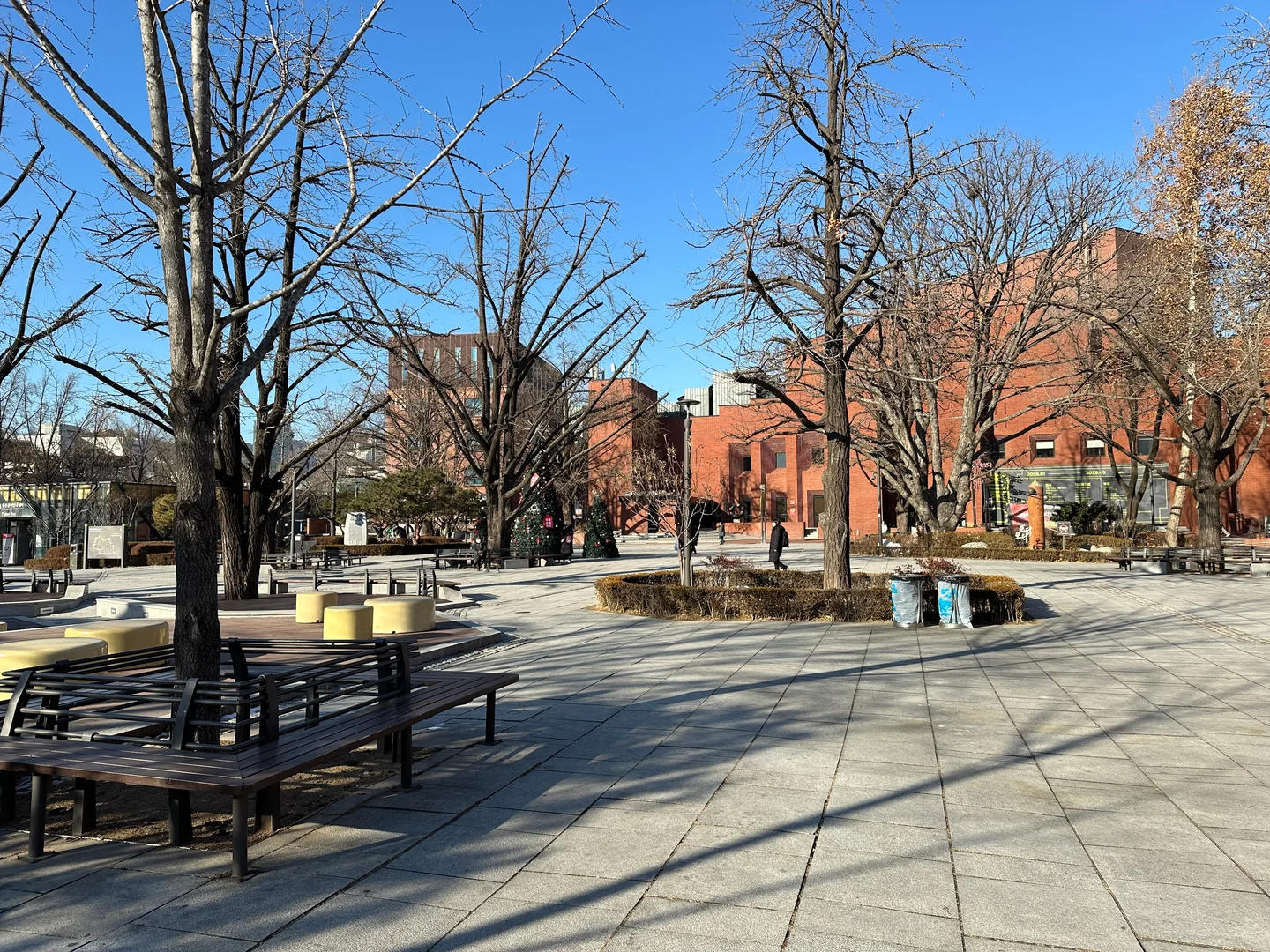
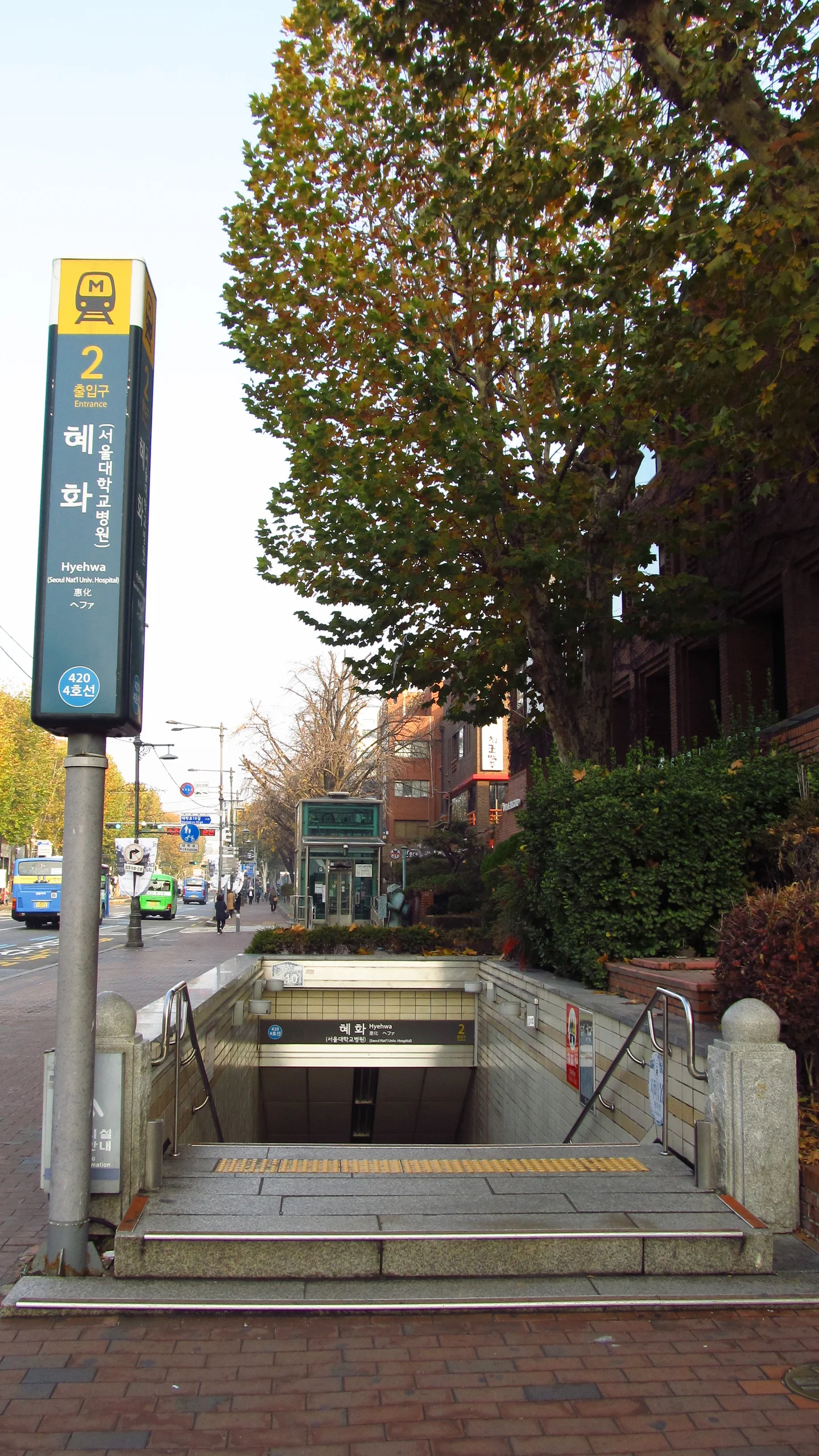
Use Hyehwa Station on Line 4. Exit 2 puts you on the Marronnier Park and Arko Art Center side of the street, a practical starting point for exploring. There isn't a separate Daehangno subway station. Save the exact theater on your map if you have tickets, because venues are scattered on both sides of the main road and in the smaller lanes. Marronnier Park is a useful meeting place before a show, with trees, benches and open space beside the district's red-brick cultural buildings. You may encounter outdoor performances, but they're a bonus rather than a guaranteed daily attraction. For a particular kind of show, choose from the advertised program instead of expecting the park to provide one on arrival. Why the neighborhood is called “University Street”
Kaflan · Original · Public domain ·
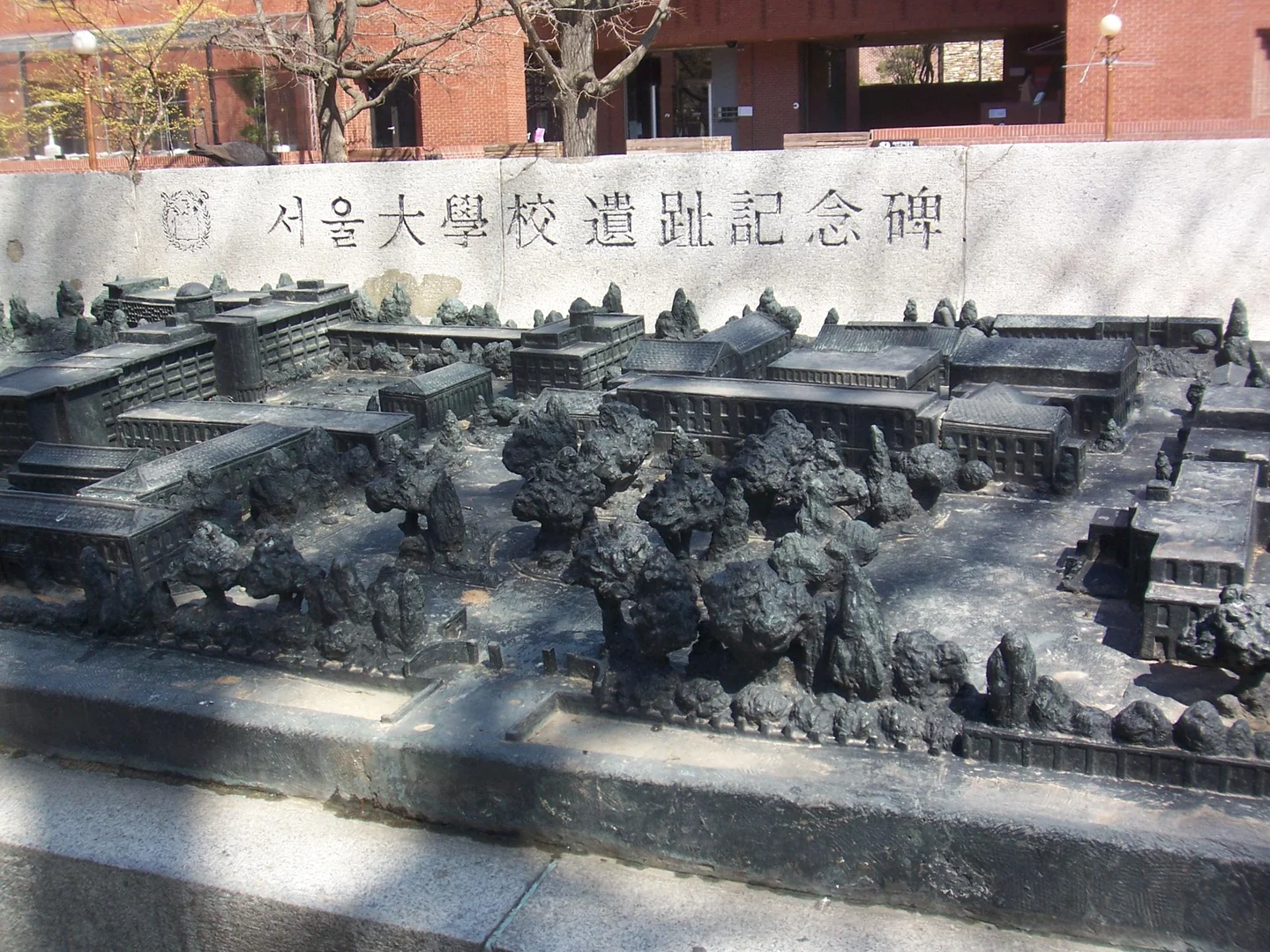
Daehangno means University Street. Seoul National University once occupied this area, and a memorial with a model of the former campus remains in the park. It gives the name a concrete meaning: the theaters and gathering places grew around a landscape with an earlier academic life. The model is a quick stop rather than a museum-length visit. Look at the arrangement of the old buildings and open spaces while waiting for friends or before heading into the lanes. It's a small detail that makes the park more interesting than simply a place to pass through on the way uphill.
Can you enjoy a Daehangno show without speaking Korean?
서울관광재단 서울관광아카이브 · Original · KOGL Type 1 ·
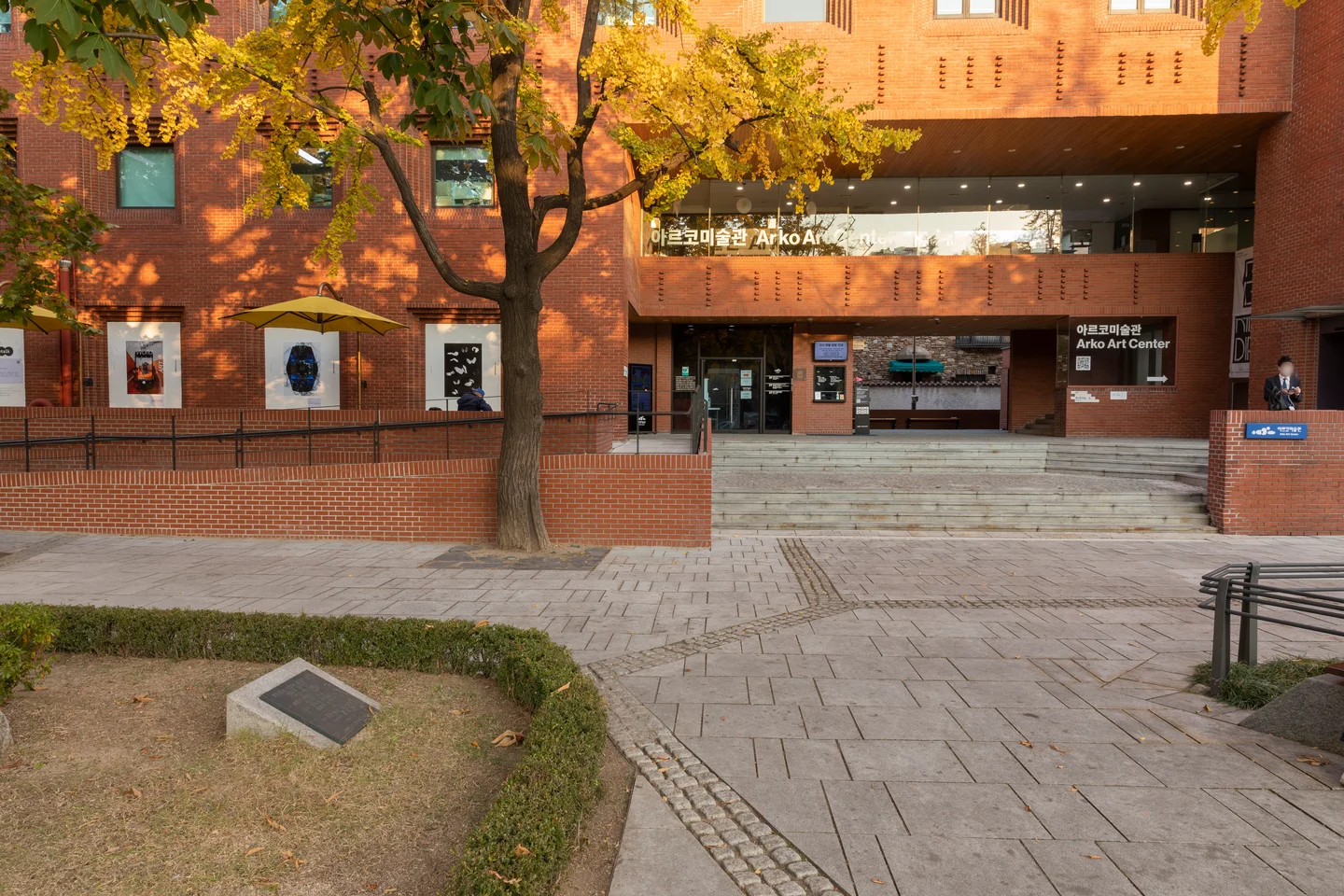
Yes, if you choose the production carefully. Check the performance language and whether English surtitles or another form of language support are provided. A dialogue-heavy comedy can be hard to follow without Korean, while a dance, music or movement-led piece may offer a more accessible starting point. “Musical” doesn't automatically mean language-free, so read the synopsis as well as the title. Check the age guidance, running time and venue before booking. Arko Arts Theater and Daehangno Arts Theater are separate buildings, and each has distinct performance spaces. Keep the full venue name and your auditorium details with the ticket. Arriving early enough to locate a small entrance and collect tickets is much more comfortable than searching the lanes at curtain time. Arko Art Center, beside Marronnier Park, is an alternative if you'd rather see an exhibition than commit to a show. Its red-brick building is a neighborhood landmark, and the changing program offers a way into the local arts scene without a performance ticket. As checked on October 12, 2026, admission is free and Monday is the regular closing day. Check which exhibition is on, since installation periods can limit access. For a theater-first evening, eat near the venue and keep the earlier walk modest. A distant dinner reservation or a last-minute attempt to catch sunset on Naksan can turn a relaxed show night into a scramble.
Walking up to Naksan Park
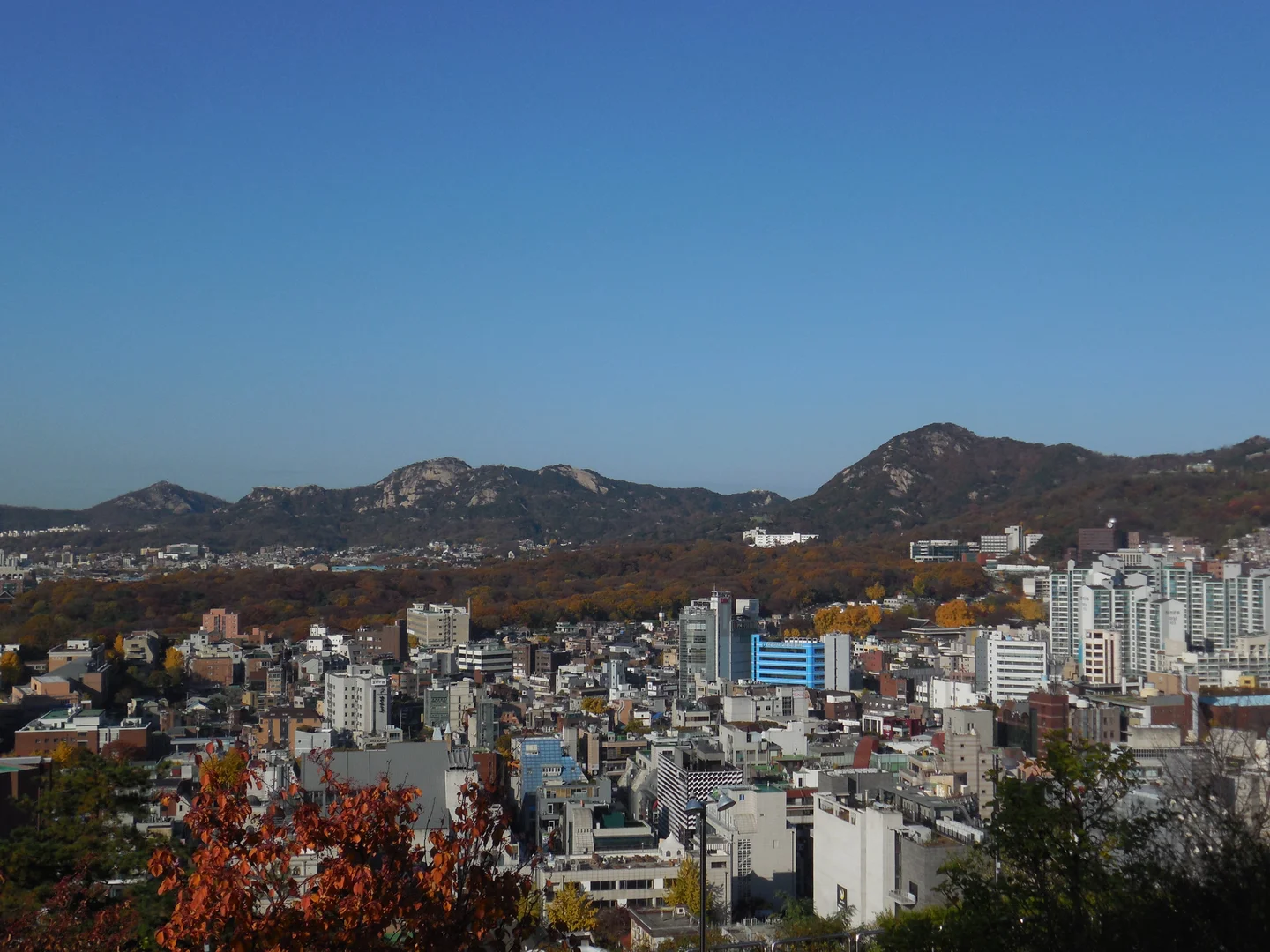
From Marronnier Park, use a specific destination such as Naksan Park's central plaza when finding the route uphill. The Naksan-gil approach and the stair-heavy lanes through Ihwa Village aren't interchangeable. Following signs toward the central plaza makes the outing easier to understand than choosing whichever tiny lane looks shortest on a map. Naksan is a modest hill, but the climb is real. Expect slopes and, depending on the route, flights of stairs. Bring water in hot weather and choose footwear that stays secure on steps. A paved road doesn't make every connecting path suitable for a stroller or wheelchair; those visitors need to check the full approach rather than only the destination. If you'd prefer to reduce the uphill walk, the official city-wall guide lists local bus Jongno 03 from the Dongdaemun Station area to the Naksan Park terminus. This is a different starting direction from Hyehwa. It can make sense to visit the viewpoint first, then walk downhill toward Daehangno for a meal or show. The route was checked on October 12, 2026; use the current stop information on the day. The reward is a view close enough to make out individual neighborhoods, with roof after roof below and mountain ridges beyond. You don't need a perfectly clear horizon to enjoy it. On a hazy day, the nearer houses and the curve of the wall can be the most compelling part of the scene.
Follow the wall, then choose your way down
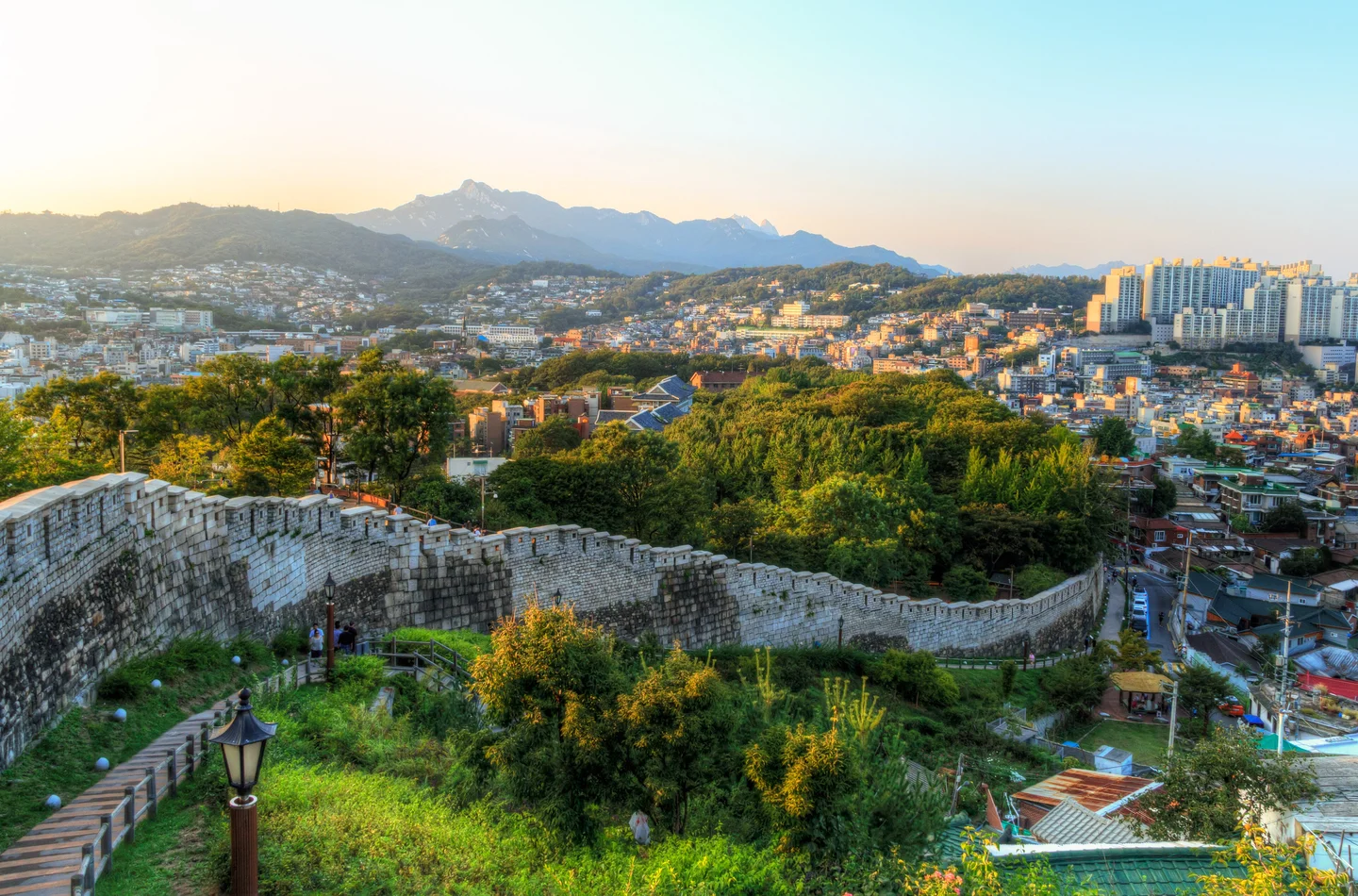
KO BYUNGSUK (Van sinsy) · Original · CC BY-SA 4.0 ·
The Seoul City Wall follows the hill's contours, rising and dropping alongside paths and residential streets. From outside the wall, you can appreciate the height and texture of the stonework; from the inner paths, openings in the view reveal the city. Use the designated passages between the two sides rather than climbing the masonry. Your best finish depends on what comes next. Return toward Hyehwa if you have dinner or a performance in Daehangno. For a longer one-way walk, continue toward Heunginjimun and finish near Dongdaemun Station. A viewpoint visit and a full wall-section walk aren't the same commitment, so choose an endpoint before following the path farther than intended. For sunset, go up while it's still light and identify the route you'll use to descend. Steps are less obvious after dark, and the exposed viewpoints can feel cooler than the streets below. After rain or snow, shorten the walk if the footing is slippery. Ihwa Village and Jangsu Village are residential neighborhoods along the wider wall area. Stay on the public walking routes and keep evening conversation low near homes. Old mural photographs aren't a reliable inventory of what remains today; the enduring attraction is the way the city wall, hillside houses and skyline meet. End with that view, or return to the concentrated energy of a small theater. Both belong to this part of Seoul.