Olympic Park, Seoul: A Walk Through Ancient Earthworks and Olympic Landmarks
Matt Kieffer from London, United Kingdom · Original · CC BY-SA 2.0 ·
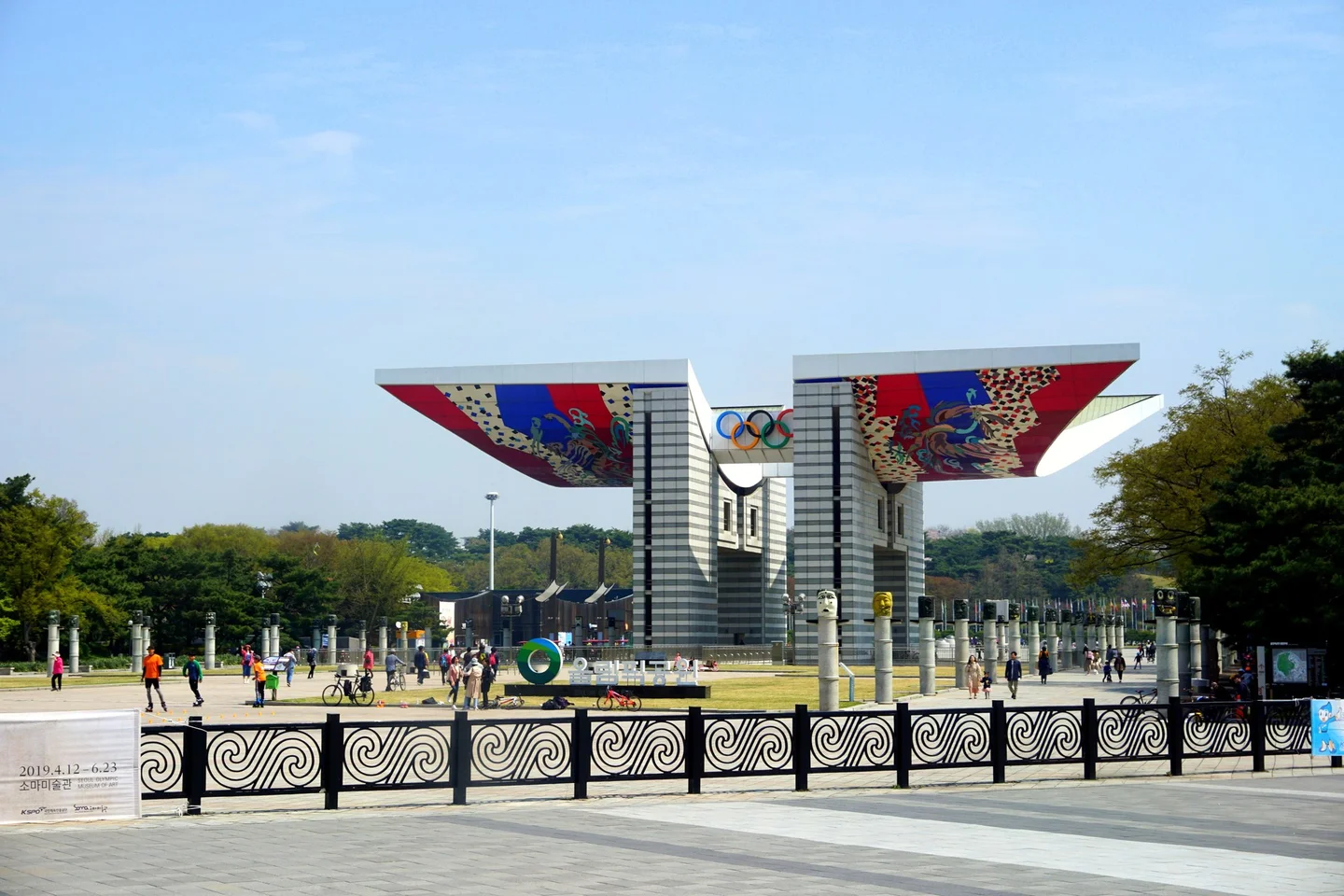
At Olympic Park, an enormous winglike gate announces Seoul's 1988 Games, but the landscape beyond reaches much further back. Grassy earthworks from the Baekje kingdom rise above the water, sculptures punctuate the paths, and sporting venues sit among the trees. For visitors who want a substantial outdoor break with something to discover along the way, this is one of Seoul's most rewarding combinations of history, art and open space. The World Peace Gate makes a memorable starting point. Designed by architect Kim Chung-up for the Olympics, it rewards both a distant view of its sweeping silhouette and a closer look at the brightly colored underside. From the plaza, you can continue toward the moat and ancient ramparts or turn the visit into an art walk. A first visit works well as a two- to three-hour outing; add more time if an indoor exhibition or concert is part of the plan.
Choose the entrance that fits your visit
Tristan Surtel · Original · CC BY-SA 4.0 ·
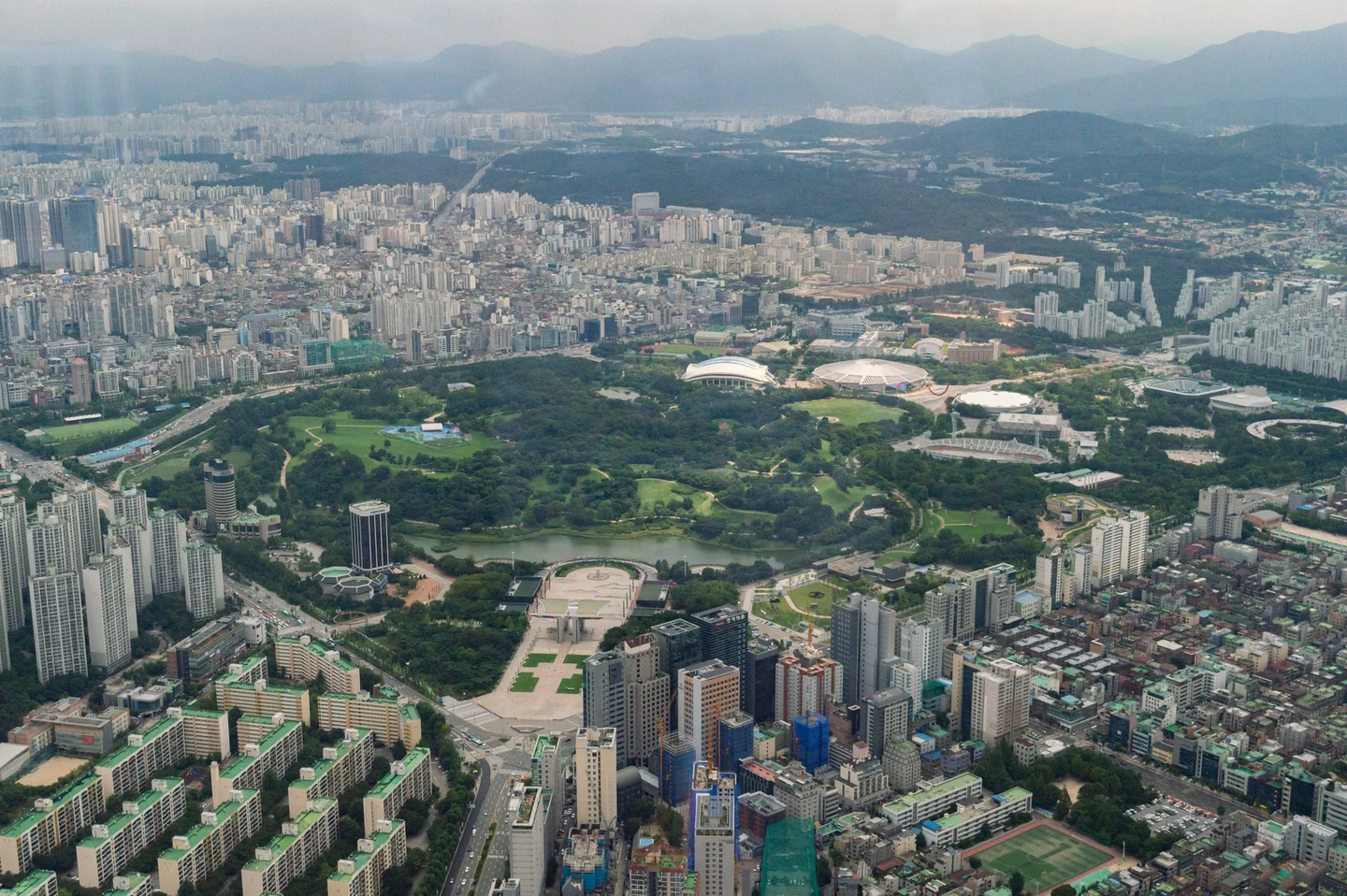
The most useful planning decision happens before you board the subway. Olympic Park is large, and the station named after it serves the eastern side. For the World Peace Gate and a history-focused walk, use Mongchontoseong Station on Line 8, Exit 1. Olympic Park Station on Lines 5 and 9, Exits 3 or 4, is useful for the eastern entrances. Hanseong Baekje Station on Line 9, Exit 2, offers another approach from the south. A manageable first route starts at the World Peace Gate, follows part of the waterside path, climbs a section of Mongchontoseong and ends among the sculptures toward the southern side. You can then leave toward Hanseong Baekje Station rather than crossing the entire park to return to your arrival point. This is a suggested self-guided route, flexible enough to shorten at the water or extend farther into the grounds. If your main purpose is a concert, enter the actual venue name in your map. KSPO DOME and Olympic Hall are different buildings, and neither should be confused with the separate Jamsil Sports Complex. Select your entrance around that destination first, then add a walk nearby if time allows.
Take the waterside route for an easier walk
by nagyman (a flickr user) · Original · CC BY-SA 2.0 ·
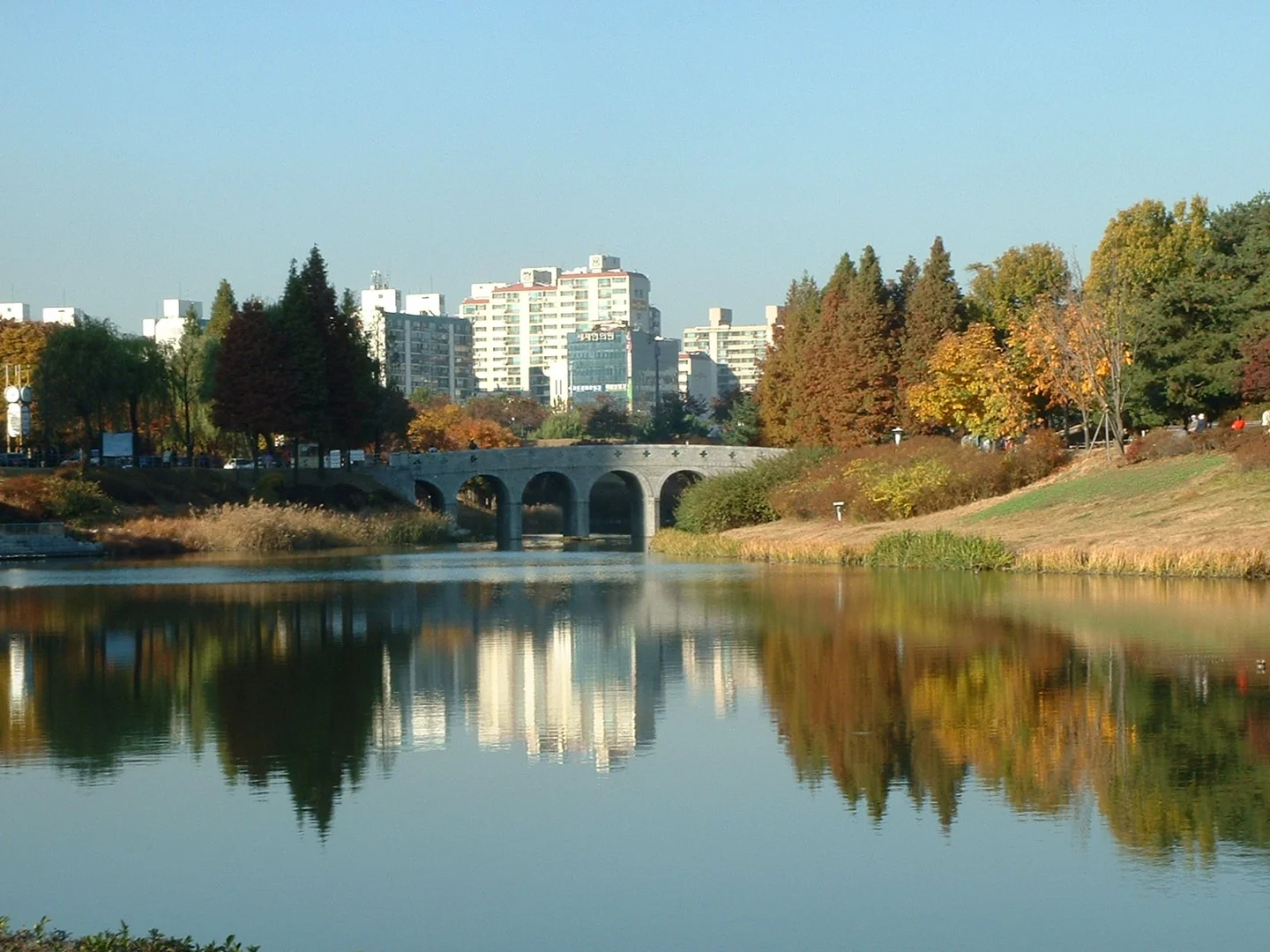
The water around Mongchontoseong belongs to the setting of an ancient fortification: a moat was part of its defenses. Today, reflections of trees and arched bridges give this stretch a gentle rhythm. The lower paths offer an appealing alternative to climbing the earthworks, especially when you want a short visit or are traveling with someone who prefers less uphill walking. In fall, the combination of foliage and reflections is a strong reason to bring a camera. Spring changes the palette to fresh greens, while bare winter branches reveal more of the shape of the banks. Walk a little before settling on a viewpoint; a few steps can separate the bridge, trees and city buildings into a more interesting composition. For a low-effort outing, begin at the gate, follow the water and return when you are ready for a break. With a stroller or wheelchair, use the broad paved approaches and consult the park map for the next section rather than committing to a full rampart circuit. The lower walk already connects the Olympic landmark with the older landscape.
Mongchontoseong: the green hills are the historic site
Straitgate · Original · CC BY-SA 3.0 ·
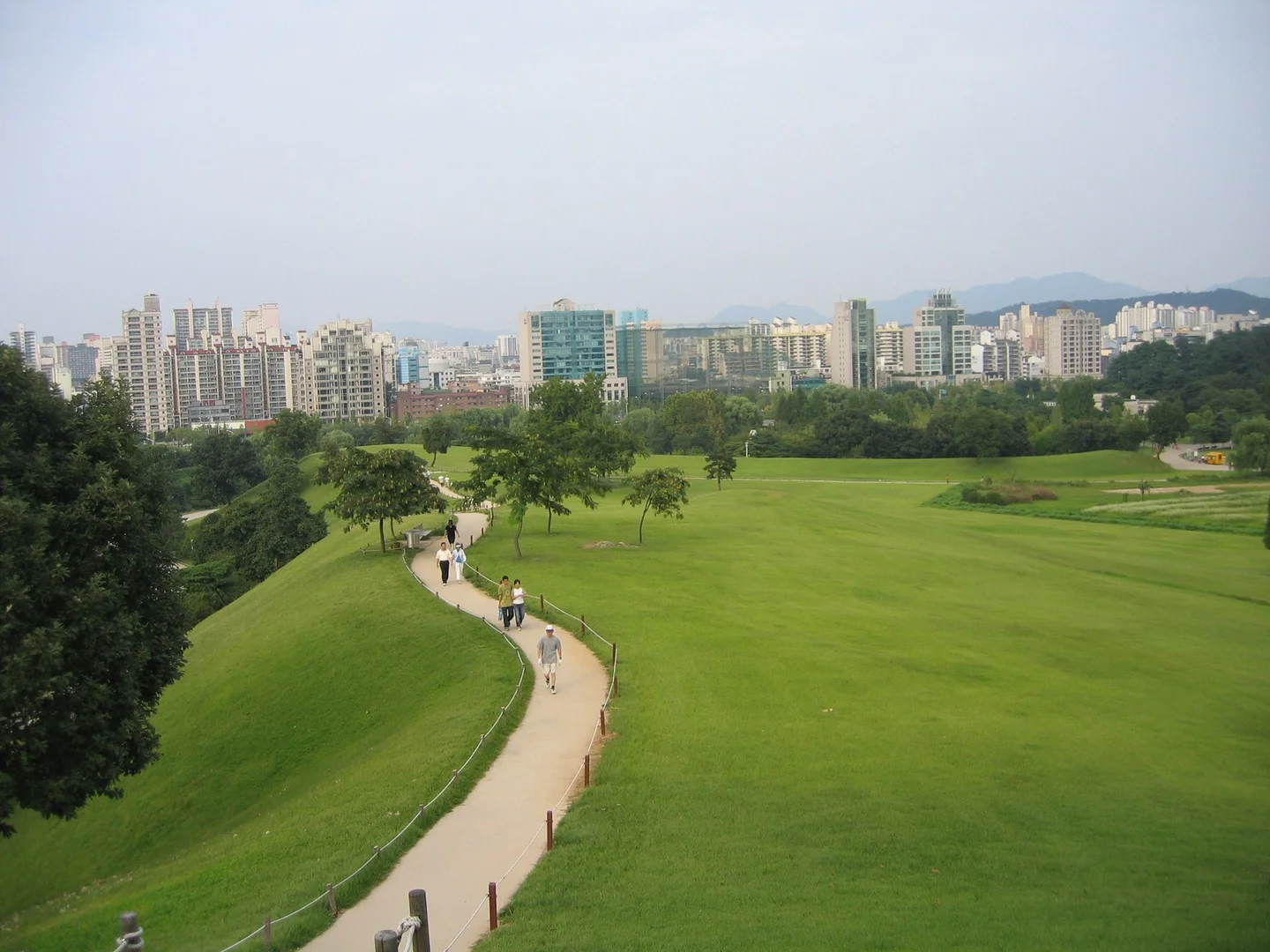
Mongchontoseong is an earthen fortress associated with Baekje, one of Korea's ancient Three Kingdoms. Its surviving form is a series of slopes and ridges, so the visit feels very different from walking beside Seoul's later stone city wall. As you gain height, the relationship between the ramparts, water and surrounding city becomes easier to read. Follow the established paths along the contours. Their rises and dips provide changing views across the grass, with apartment towers at the edge reminding you how completely modern Seoul surrounds this early settlement. You can walk just one section and descend again; a short climb adds the elevated perspective without turning the day into a long circuit. This is the sunniest, more physically demanding part of the suggested route. On a hot afternoon, shorten it and spend more time by the water or inside a museum. The rampart paths are for walking, with bicycles and inline skates restricted, so a bike rental elsewhere in the park does not replace this part of the visit. Staying on the paths also protects the earthworks themselves.
Use the sculpture map to build your own art walk
Pectus Solentis · Original · CC BY-SA 4.0 ·
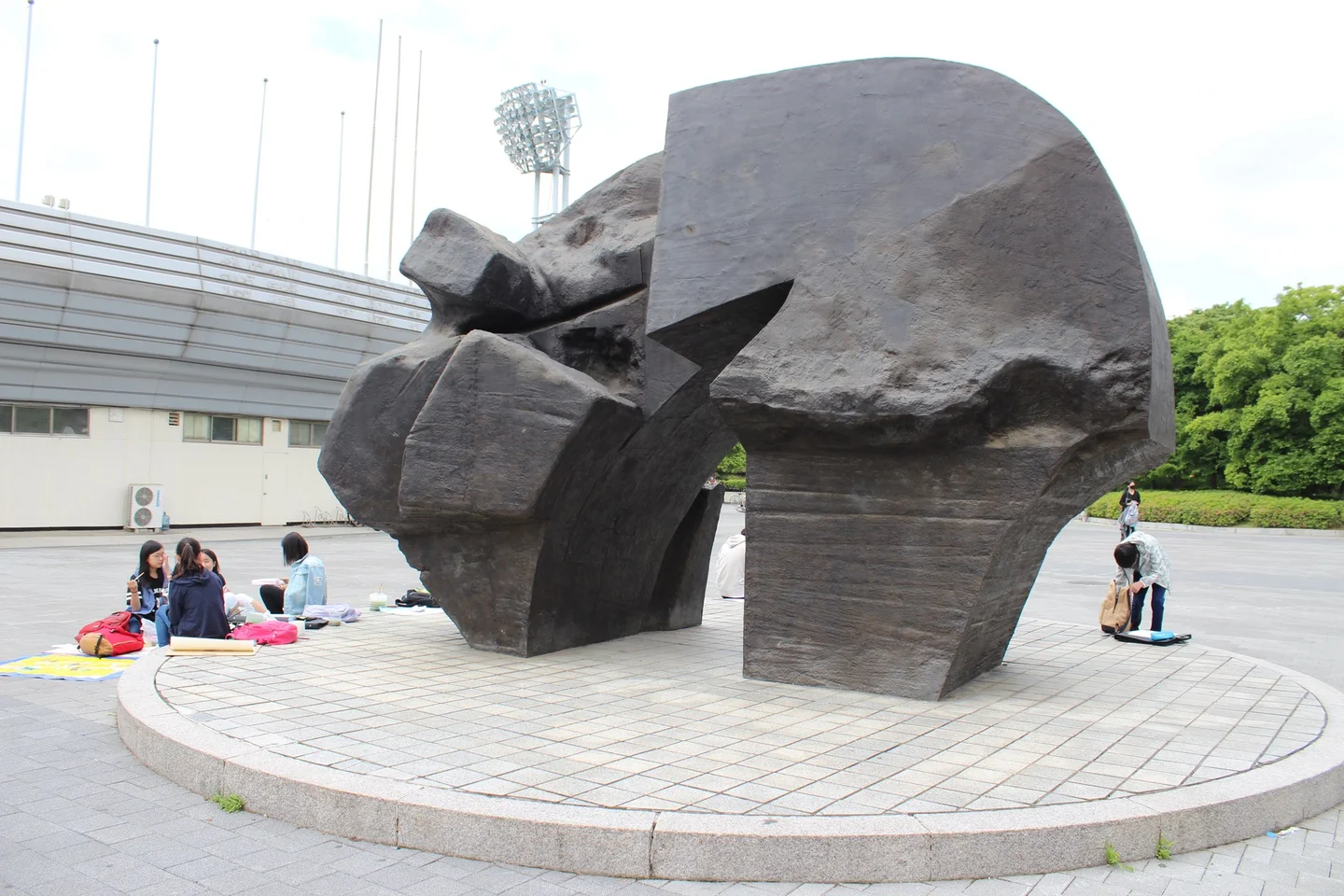
Outdoor sculpture is spread across the park, from the museum area to plazas and the surroundings of the sports venues. Some works are monumental enough to catch your eye from a distance; others become interesting as you circle them and see how their outlines change. Start with the shape, material and setting, then use the nearby label to find the artist and title. SOMA's online sculpture map organizes the collection by location. The red zone centers on the museum, the yellow zone on sports venues, and the green zone on natural settings such as the lake and picnic areas. Choose two or three works along the route you already want to walk. This turns the collection into a set of useful stopping points without sending you back and forth across the grounds. SOMA Museum of Art adds an indoor option near the southern side. As checked on October 12, 2026, its regular hours are 10 a.m.–6 p.m., with last admission at 5 p.m.; it closes Mondays, January 1, and the days of Seollal and Chuseok. Admission policies differ by exhibition and building. If a particular show interests you, give it a definite slot before the outdoor walk expands to fill the afternoon.
Olympic venues, picnic plans and evening visits
User:주전자 · Original · CC BY-SA 3.0 ·
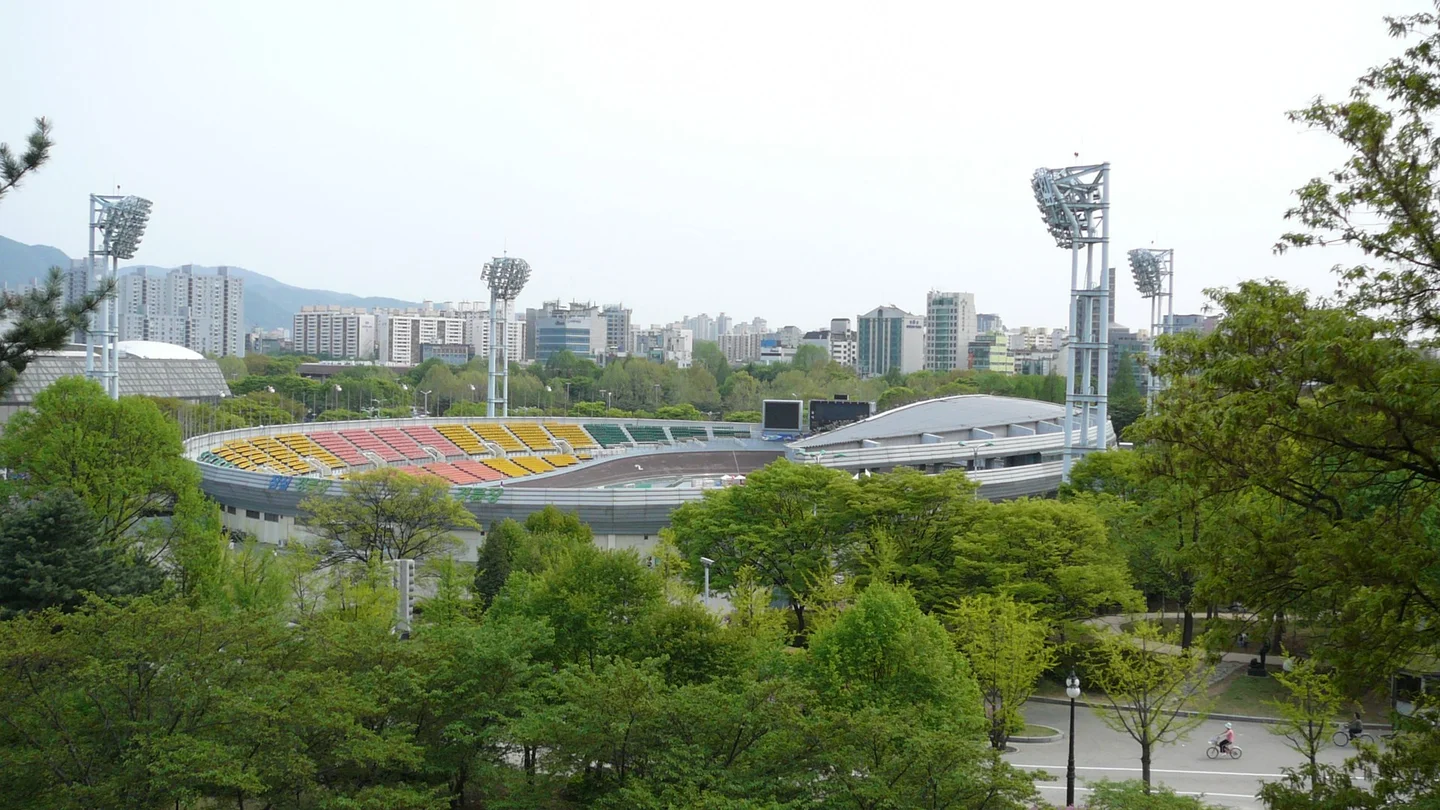
The venues give the park a second life as a destination for performances and sports. Seeing the stadium forms and lighting towers from the paths is part of the landscape; going inside depends on the venue's program or event ticket. On a concert day, plan your meeting point around a specific entrance or numbered venue gate. “At Olympic Park” leaves a lot of room for people to end up far apart. A packed lunch can work well between the history and art sections. Use an area currently open for picnicking and follow lawn access signs; the broad green slopes include protected and managed spaces. Cooking is prohibited. Pick up what you need before a long circuit so that lunch does not require retracing your route to a shop. The park itself is free. The operator's published pedestrian hours, checked October 12, 2026, are 5 a.m.–10 p.m., with plaza areas open until midnight; access farther into the park is restricted after 10 p.m. Those later plaza hours do not extend the time available on the interior trails. Exhibitions, performances and facility use have their own admission arrangements. For an unhurried finish, return to the lower paths before dusk and head toward your chosen station. The most satisfying first visit pairs the gate with the water, a stretch of ancient earthwork and a handful of sculptures, leaving the far side of the park for a concert or a longer walk another day.