Gyeongdong Market and Cheongnyangni: Explore Seoul’s Pantry
Gaël Chardon · Original · CC BY-SA 2.0 ·
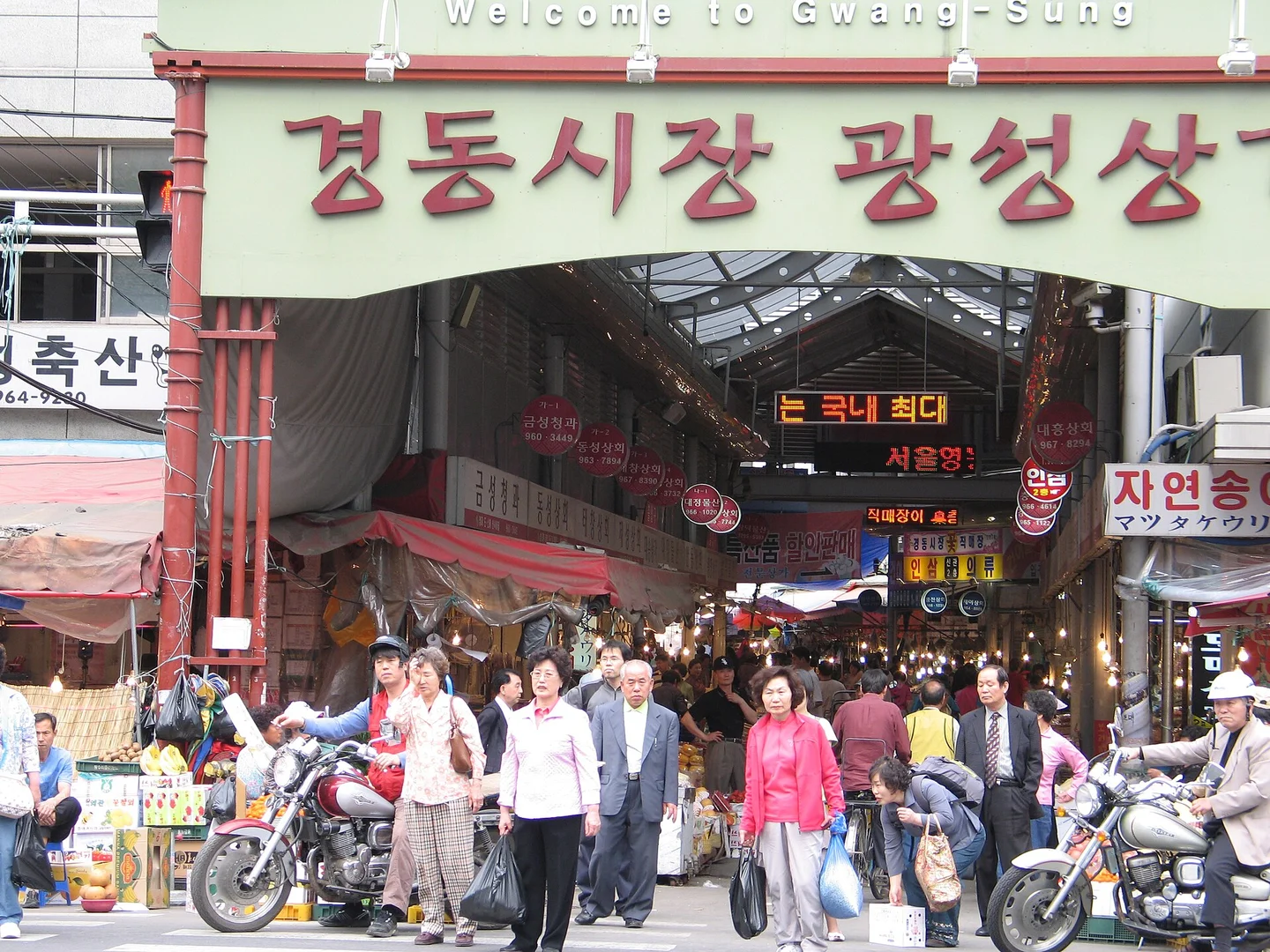
If eating your way around Seoul has made you curious about what goes into the food, spend a morning at Gyeongdong Market. Bundles of kelp, sacks of dried chilies, tangled roots and bricks of fermented soybeans reveal ingredients that usually arrive at your table already transformed. There’s plenty to eat here too, but the real pleasure is connecting a finished dish with the raw materials behind it. Gyeongdong sits within the larger market district between Jegi-dong and Cheongnyangni. Food wholesalers, neighborhood shoppers, herbal-medicine traders and newer cafés share a busy patchwork of lanes and buildings. The market officially opened in 1960, and everyday food trading remains central to its identity even as an old movie theater has become a destination coffee shop. A useful first visit combines the herbal-medicine streets, a food-market walk and lunch, with the Seoul K-Medi Center or the theater café as an optional stop. Allow a few hours to follow your curiosity. You don’t need a shopping list, and you don’t need to recognize every ingredient to enjoy the experience.
Start at Jegi-dong and keep Cheongnyangni as your far end
Gaël Chardon · Original · CC BY-SA 2.0 ·
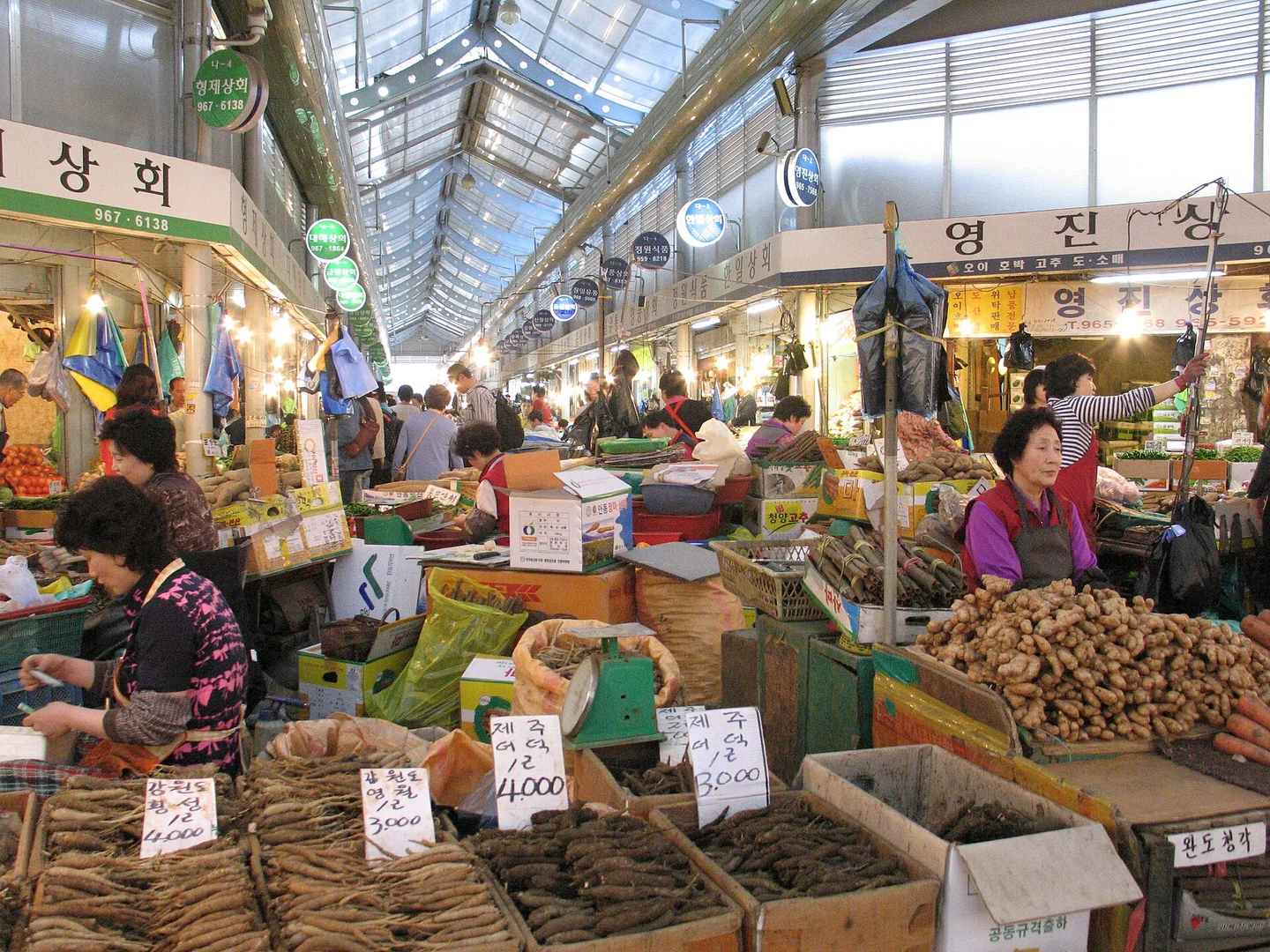
Jegi-dong Station on Line 1, Exit 2, is a practical starting point for Gyeongdong Market and the Seoul Yangnyeongsi herbal-medicine district. Save the Seoul K-Medi Center if you want to begin with the museum, or the particular Gyeongdong building you plan to visit. A general market pin can leave you several turns from the stall or café you had in mind. Cheongnyangni Station, Exit 1, approaches from the fruit-market and traditional-market side. It’s a useful finish for a one-way walk, although the station’s mainline trains and subway platforms can involve a longer internal walk than the street map suggests. Gyeongdong Market, Seoul Yangnyeongsi and Cheongnyangni’s fruit market are neighboring destinations, each with its own lanes and entrances. Come in daylight for the ingredient stalls. The Korea Tourism Organization lists opening hours and days off as shop-specific, so an evening café visit won’t necessarily coincide with the trading day downstairs. Some aisles are covered and others open directly onto streets. Keep the route flexible around deliveries and handcarts, especially where merchandise narrows the walking space.
Give the roots and herbs names
Gaël Chardon · Original · CC BY-SA 2.0 ·
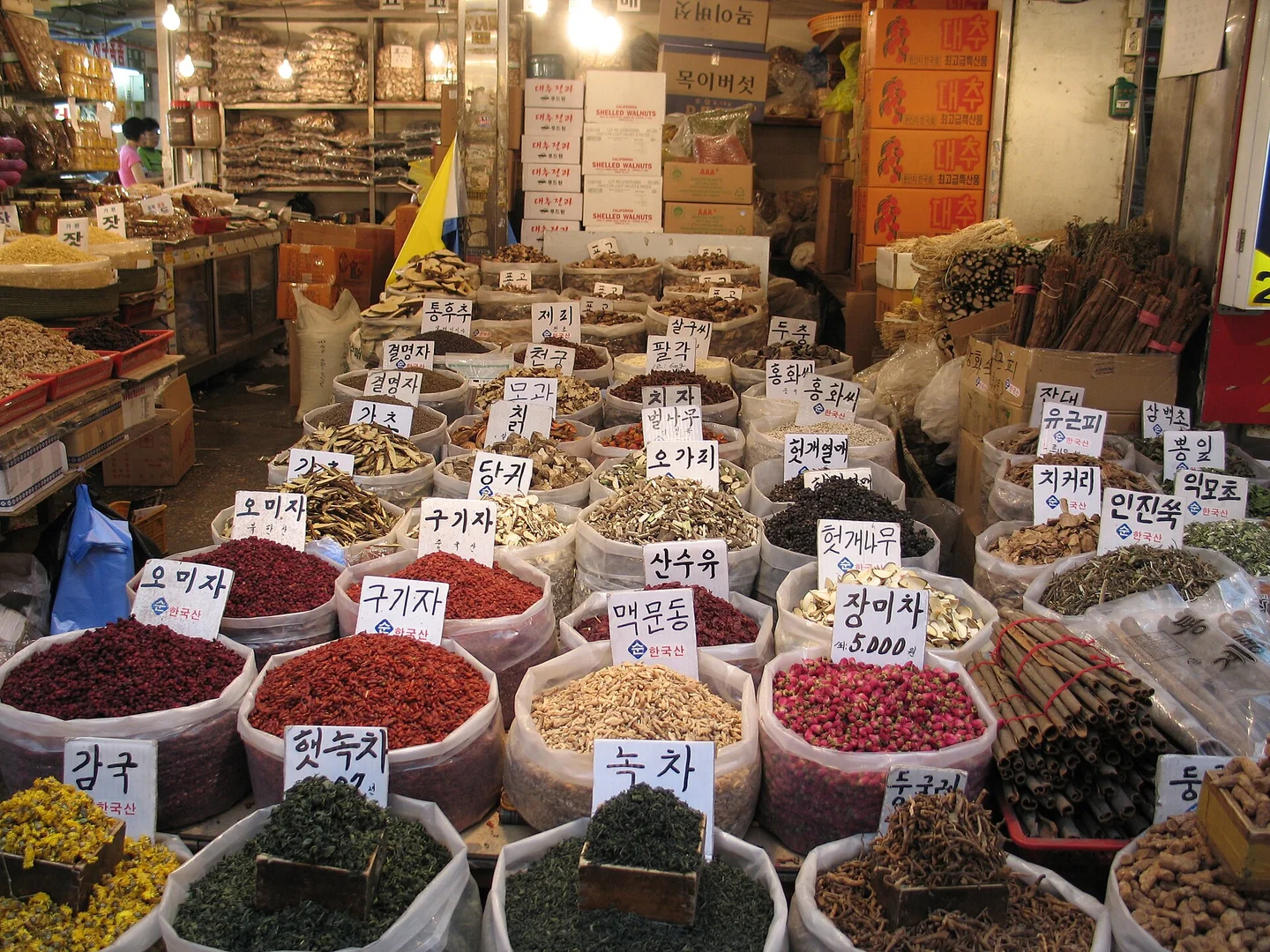
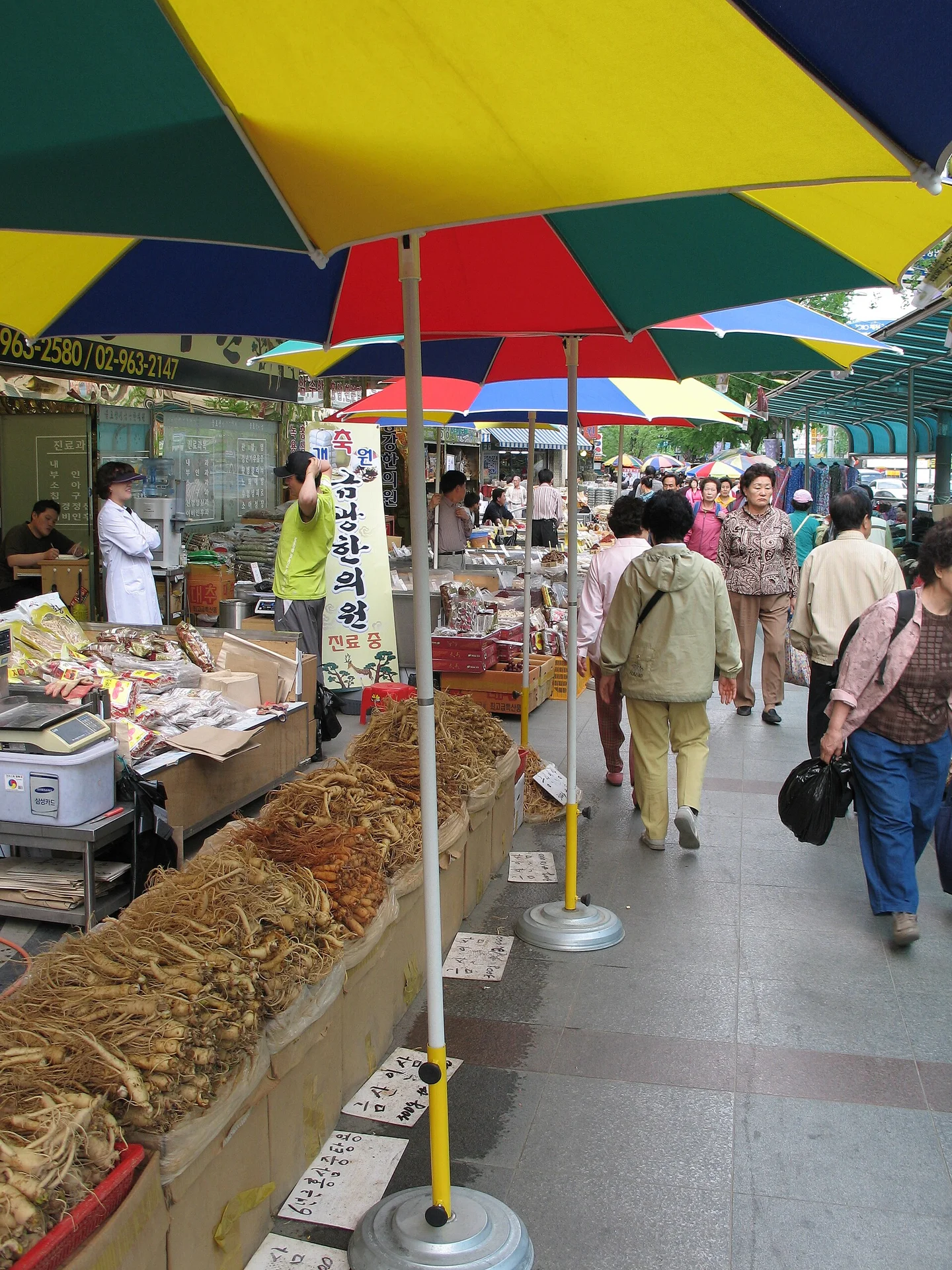
In the herbal-medicine area, the variety is more interesting than the uniform brown tones first suggest. Dried berries, bark, leaves and flower buds each have a different texture and shape. Read a few labels as you browse: omija refers to the red “five-flavor” berry, while gugija is the name used for goji berries. Learning even two or three names makes the next stall easier to understand. The nearby root-vegetable trade is another reason to slow down. Insam means ginseng, but roots sold in this district also include deodeok and doraji, the latter commonly known as balloon-flower root. These have culinary uses as well as associations with traditional herbal culture. Ask what an item is sold for before assuming every pale root is ginseng or every dried plant is ready to brew as tea. Add the museum if you want the background
Gaël Chardon · Original · CC BY-SA 2.0 ·
The Seoul K-Medi Center provides context for what you’ve been seeing in the shops. Its museum displays equipment used to gather, weigh, grind and prepare ingredients, alongside a collection of medicinal materials. The focus can be historical and cultural even if you have no interest in buying herbal products. The center’s current visitor guide, checked October 12, 2026, lists 10 a.m.–6 p.m. from March through October and 10 a.m.–5 p.m. from November through February, with admission ending an hour before closing. Standard adult museum admission is ₩1,000. January 1, Lunar New Year and Chuseok are listed closures, with additional temporary closures possible. Experiences are separate from museum entry. The herbal foot bath, for example, runs seasonally from March through November and has its own fee and arrangements. It can make a pleasant seated break in a traditional-style pavilion; choose it as an activity rather than expecting a treatment outcome. Unfamiliar medicinal ingredients are best left for informed professional guidance rather than improvised self-treatment.
Follow the ingredients behind Korean broth
Gaël Chardon · Original · CC BY-SA 2.0 ·
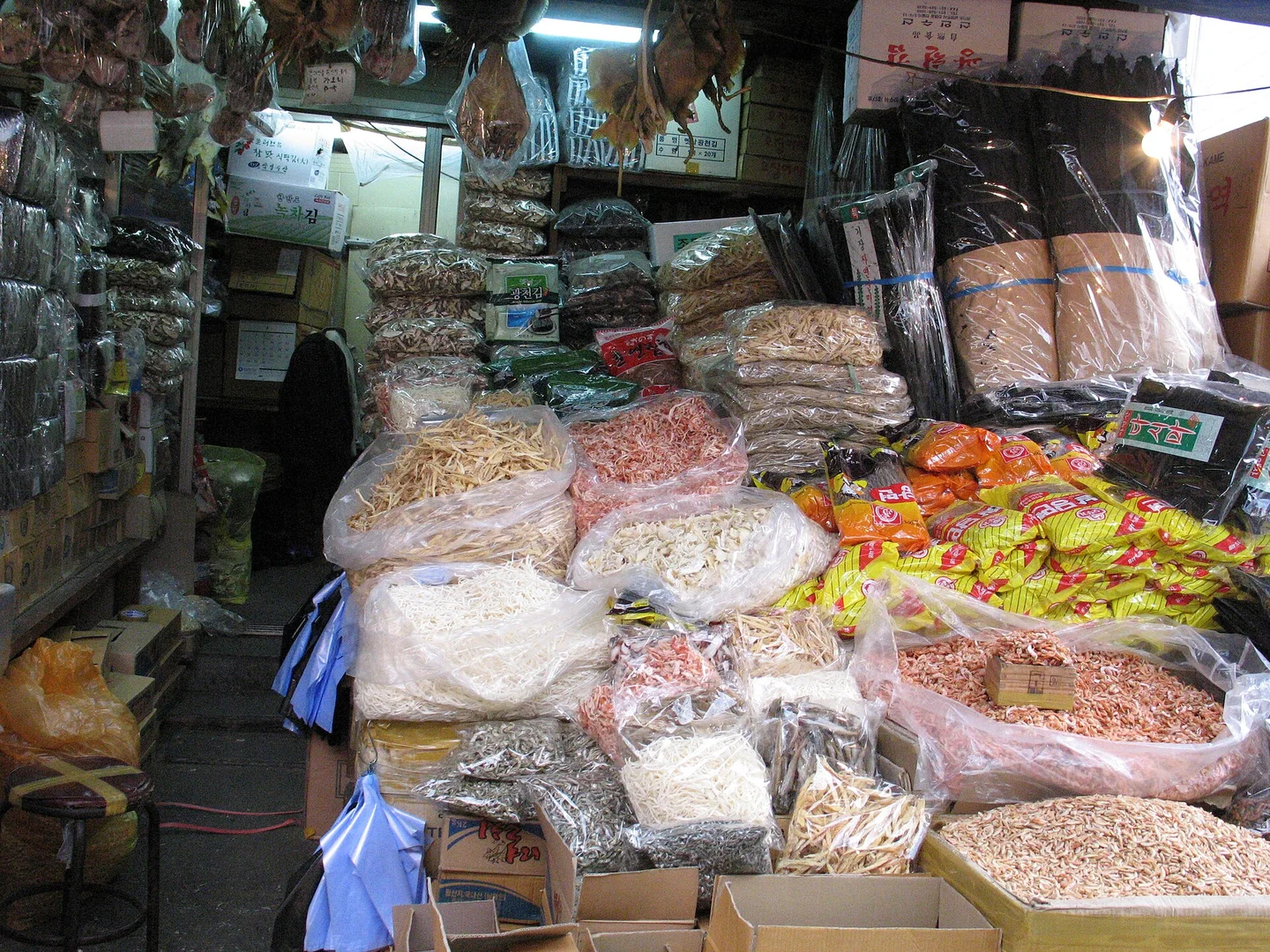
The dried-seafood stalls bring another set of shapes: tiny shrimp, small fish, pale strips and dark seaweed sheets packed into bags or stacked in bundles. For a home cook, this is a chance to see how ingredients are sorted by size, preparation and intended use. Small anchovies for a stir-fried side dish and larger ones for stock aren’t interchangeable purchases simply because they share a name. Myeolchi is the Korean word for anchovy. If you want to buy some, explaining the dish you plan to make is more useful than pointing at the largest sack. The same applies to seaweed: a seasoned snack, a sheet used for rolling gimbap and a piece used for broth belong in different parts of the kitchen. Dasima: a familiar flavor in an unfamiliar form
Gaël Chardon · Original · CC BY-SA 2.0 ·
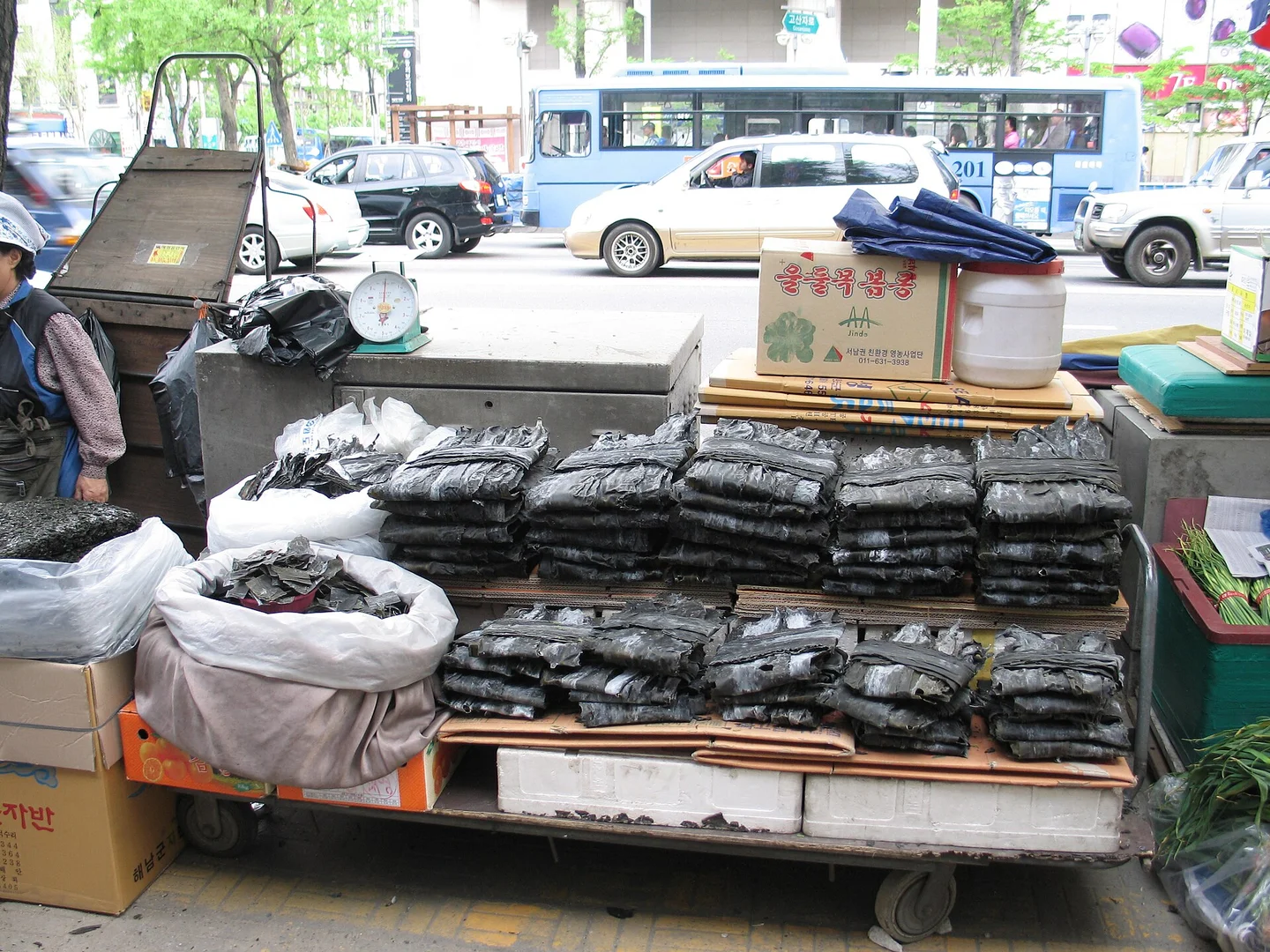
Dasima is kelp, sold in broad, leathery sheets and bundles. It’s one of the ingredients that can help build the savory foundation of Korean soups and noodle dishes. Seeing it beside dried seafood gives a useful mental link between the market and a bowl of broth at lunch. For travelers with a kitchen, a small, clearly labeled package is easier to use than an unidentified bulk purchase. If you’re buying food to take overseas, check the destination’s official import rules before paying, particularly for plant and animal products. Being sold openly in the market doesn’t establish that an item can enter your home country.
From soybeans and chilies to familiar seasonings
hwayoungjung · Original · CC BY-SA 2.0 ·
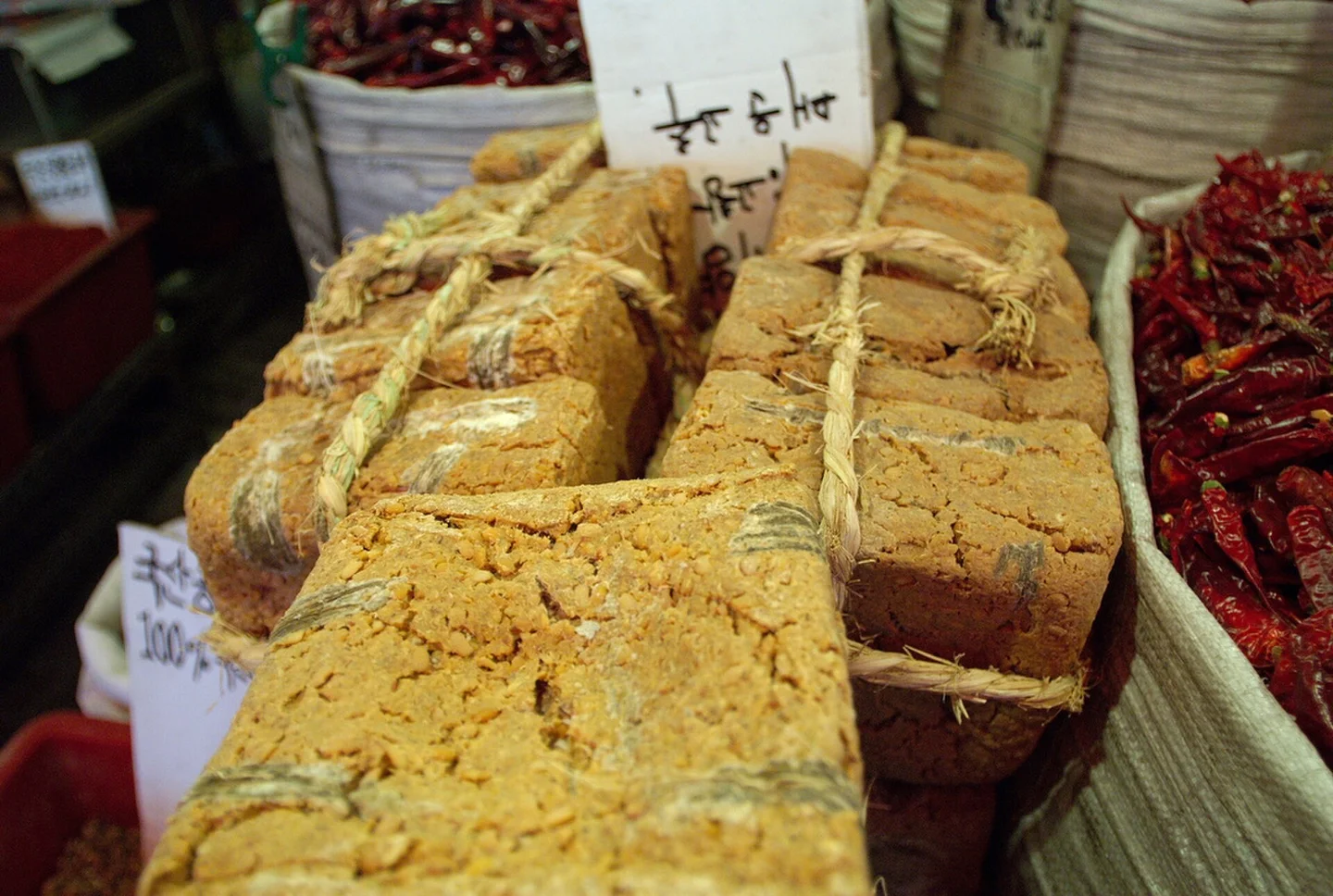
Meju is one of the market’s most intriguing ingredients: blocks of cooked, crushed soybeans shaped and fermented as part of traditional sauce-making. The straw ties and rough surfaces give little hint of the familiar condiments that can follow. Meju is used in making doenjang, soybean paste, and traditional soy sauce, linking the market to Korea’s broader culture of fermentation. The National Folk Museum’s introduction offers more background on the process. Here, simply noticing the form is enough to change how you think about a jar of paste or a bowl of doenjang stew. These are ingredients for further preparation, rather than ready-to-eat market snacks. Choose gochugaru by what you’ll cook
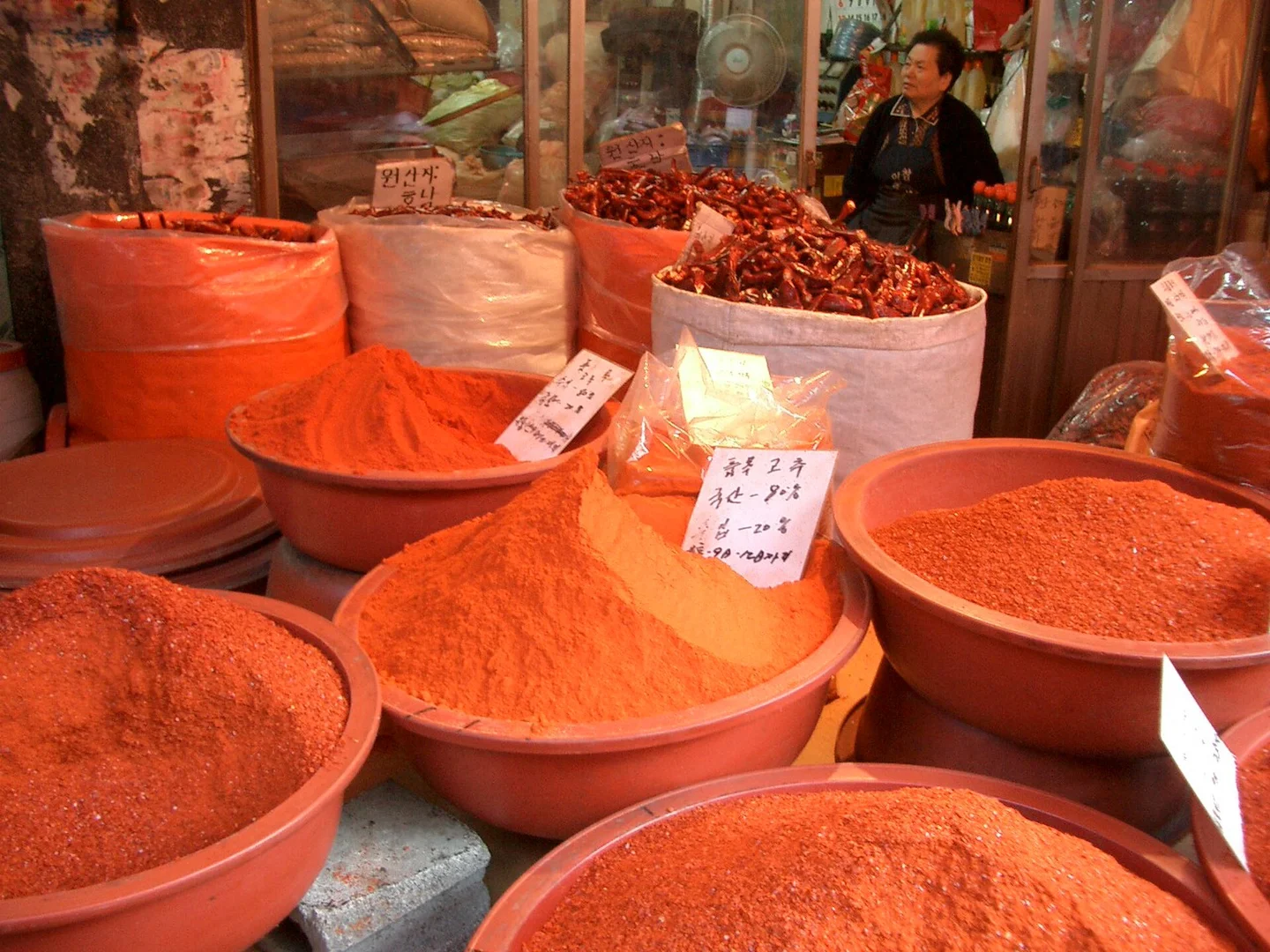
Gochugaru, Korean ground red chili pepper, brings a vivid change of color. Coarse flakes and finer powders have different uses, and heat levels vary. If you’re buying some for cooking, tell the seller whether it’s for kimchi, a sauce or a small batch of home cooking, then confirm the weight and total price. This is a working wholesale-and-retail district, so a large display doesn’t necessarily indicate the smallest quantity sold. Ask about a modest amount, packaging and storage. For visitors who aren’t buying, comparing textures and reading ingredient names can be just as rewarding. Leave room at the counter for customers placing orders, and ask before taking close-up photographs of a stall.
Lunch in the market, coffee in a former movie theater
For a meal that connects neatly with the ingredients you’ve just seen, look for kalguksu, hand-cut noodle soup. One specific option is Andongjip Sonkalguksu in the new building’s basement. Visit Seoul’s June 2026 listing describes noodles made with a soybean-and-wheat flour mixture, served with cabbage in an anchovy-based broth. Cabbage pancakes and boiled pork are additional choices if you’re sharing. The clear-looking broth contains fish, an important detail for vegetarian diners. For something casual as you continue toward Cheongnyangni, the traditional market’s fried-chicken alley offers another direction for lunch. Tongdak means a whole chicken, so think about whether you want a shared meal or a small snack before ordering. The broader district has plenty of food stops; choose one along your route instead of walking back across the entire market when you’re hungry. The best-known coffee stop is Starbucks Kyungdong 1960, created inside the former Gyeongdong Theater. Its large auditorium-like space makes an unusual finale after the tighter market lanes. Head for the main building and the café’s own signs, rather than the Youth Mall in the new building. These are different destinations within the complex. The café is worth considering for the architecture, but the market supplies the substance of the outing. By the time you leave for Jegi-dong or Cheongnyangni Station, a few ingredients that once seemed anonymous should have names, uses and a place in the meals you’ve been enjoying around Seoul.