Ewha Womans University: Landmark Architecture, a Museum and the Streets of Edae
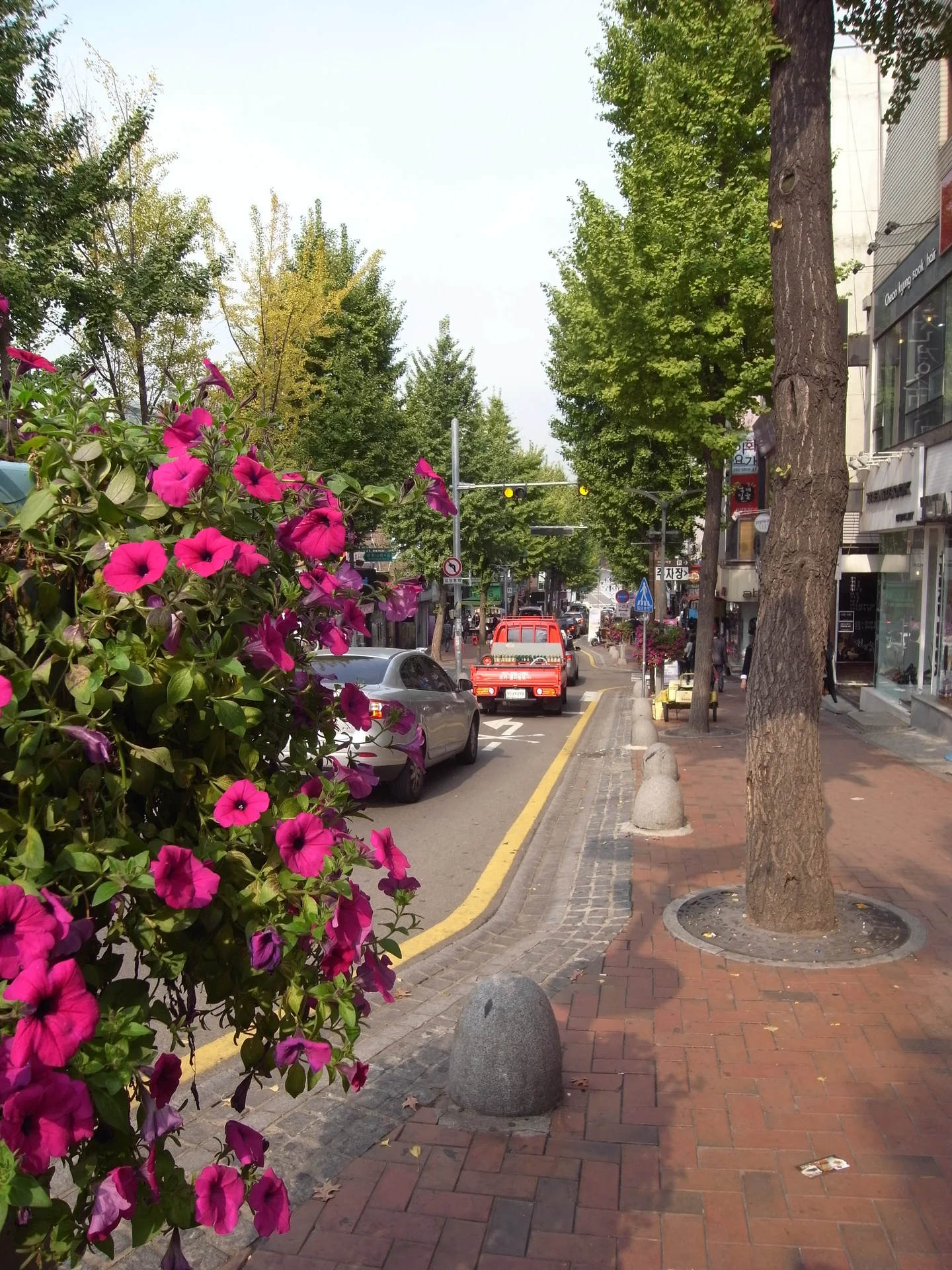
The Ewha area offers an easy way to combine contemporary architecture with a few hours of neighborhood exploring. Shops line the approach from the subway, then the university's main entrance opens onto a campus where a dramatic glass-sided valley sits beside older stone buildings. The contrast is the main attraction: you can appreciate a major architectural work, add a Korean art museum on a weekday, and finish with coffee or browsing outside the gate. “Edae” is the Korean shorthand for Ewha Womans University and the area around it. Use the university's full name when searching for the campus, and Edae when looking for surrounding shops and cafés. The official English name is “Ewha Womans University,” including that distinctive spelling. A two- to three-hour visit gives you time for the publicly accessible outdoor areas and a break in the neighborhood. Add more time for the museum. If the exhibition is important to you, choose the day around its schedule first; a weekend campus walk and a museum visit have different possibilities.
Walk from the station toward the main gate
LERK · Original · CC BY-SA 4.0 ·
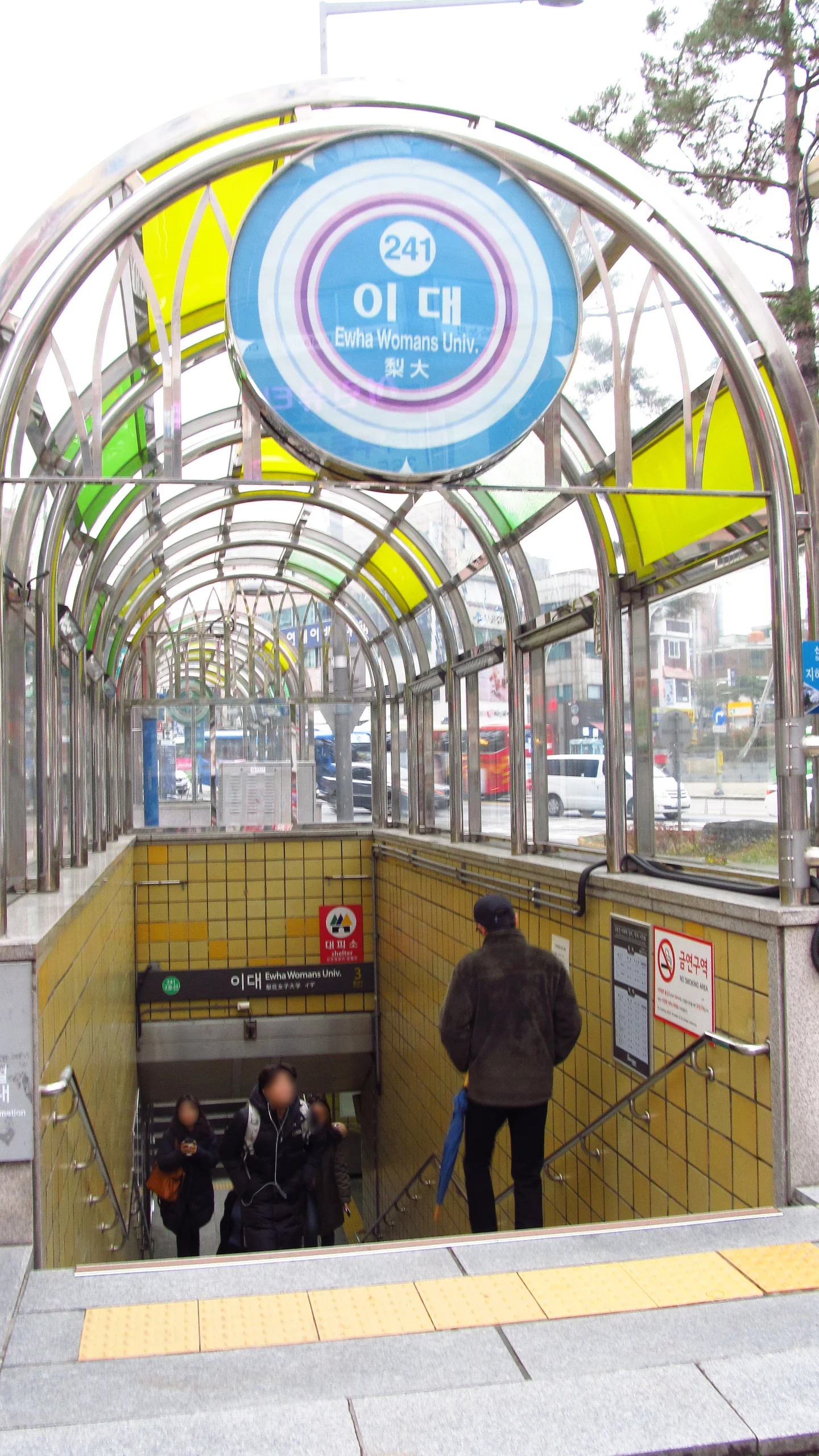
Ewha Womans University Station is on Subway Line 2. Set the main gate as your walking destination rather than the university's general map pin, which may lead you deeper into the grounds. The streets on the approach give you a preview of the area's small-scale retail and café scene, and you can note places to revisit on the way down. The neighborhood slopes upward toward the campus. For a straightforward route, do the university first and leave browsing for the return: that keeps the uphill walk together and gives you a natural reason to sit down afterward. If you are using a stroller or wheelchair, plan around the station elevator and accessible approach rather than choosing a stair exit solely because it is closest. Once at the gate, check the university's visitor information and orient yourself with its campus map. The ECC is the architectural centerpiece, while the museum is a separate destination within the grounds. You can keep your visit to these focal points instead of setting out to see every building on the hillside.
The ECC: a building shaped like a valley
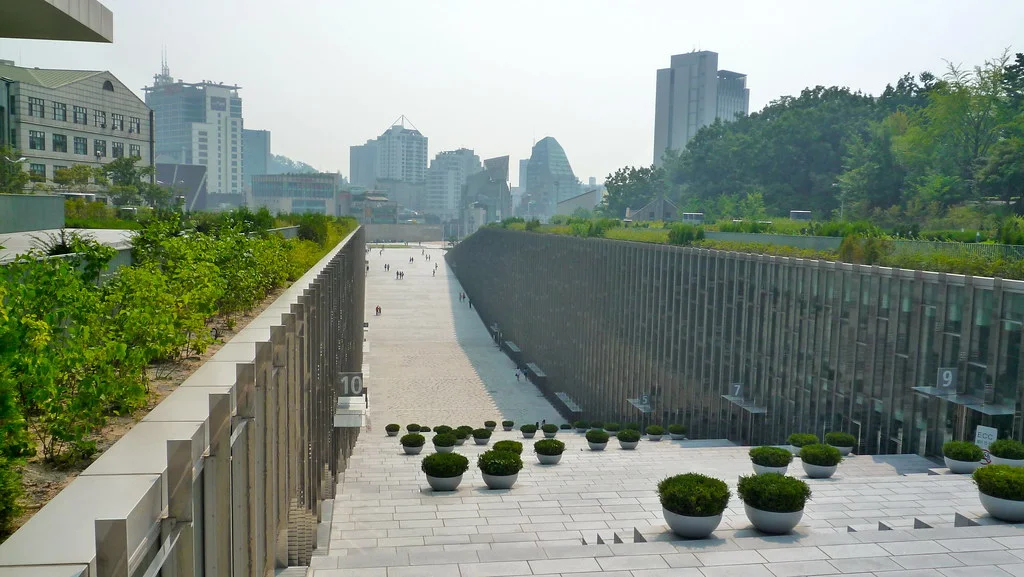
The Ewha Campus Complex, usually shortened to ECC, was designed by French architect Dominique Perrault and completed in 2008. Much of the complex sits below the landscape. A long open passage cuts between glass facades, with broad steps rising at one end and planted areas above. It is a particularly interesting stop for anyone who enjoys architecture that changes how people move through a place. Begin by taking in the length of the opening from an allowed outdoor viewpoint. The repeated vertical divisions of the facades give the space its rhythm, while reflections and light change as you move. The building is doing more than creating a striking backdrop: the central opening brings daylight and a sense of orientation into a large underground complex. You do not need to enter the teaching spaces to understand the design. Look at how the ground slopes, how the steps connect the levels and how the view opens back toward the city. Keep to the visitor routes rather than assuming that every glass door leads to a public corridor.
Look at how the landscape continues above
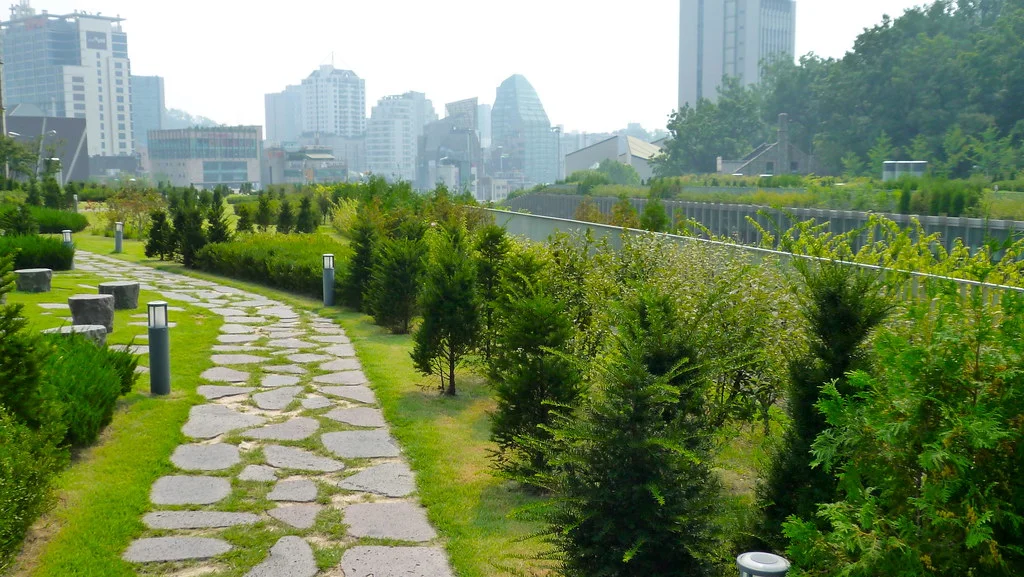
The planted upper surfaces make another part of the ECC's design clear. From the outdoor areas open to visitors, compare the depth of the central passage with the greenery around its edges. The complex alternately reads as a building, a path and a piece of landscape, depending on where you stand. This makes a short, focused architecture walk more rewarding than simply heading for the center of the steps and leaving. Try a wider view first, then pay attention to details such as the spacing of the glass panels or the meeting of paving and planting. Use the paths indicated on the day and leave space for students moving between classes. The university's published English campus guide limits visitor access to learning and research spaces, with exceptions for exhibition halls and the ECC's B4 level. It also asks visitors to avoid photographing students or filming for commercial purposes, and states that the campus closes to visitors after 10 p.m. These are working university facilities, so plan this as a daytime architectural visit and use the current signs to determine which routes and entrances are available.
Add the older campus and a weekday museum visit
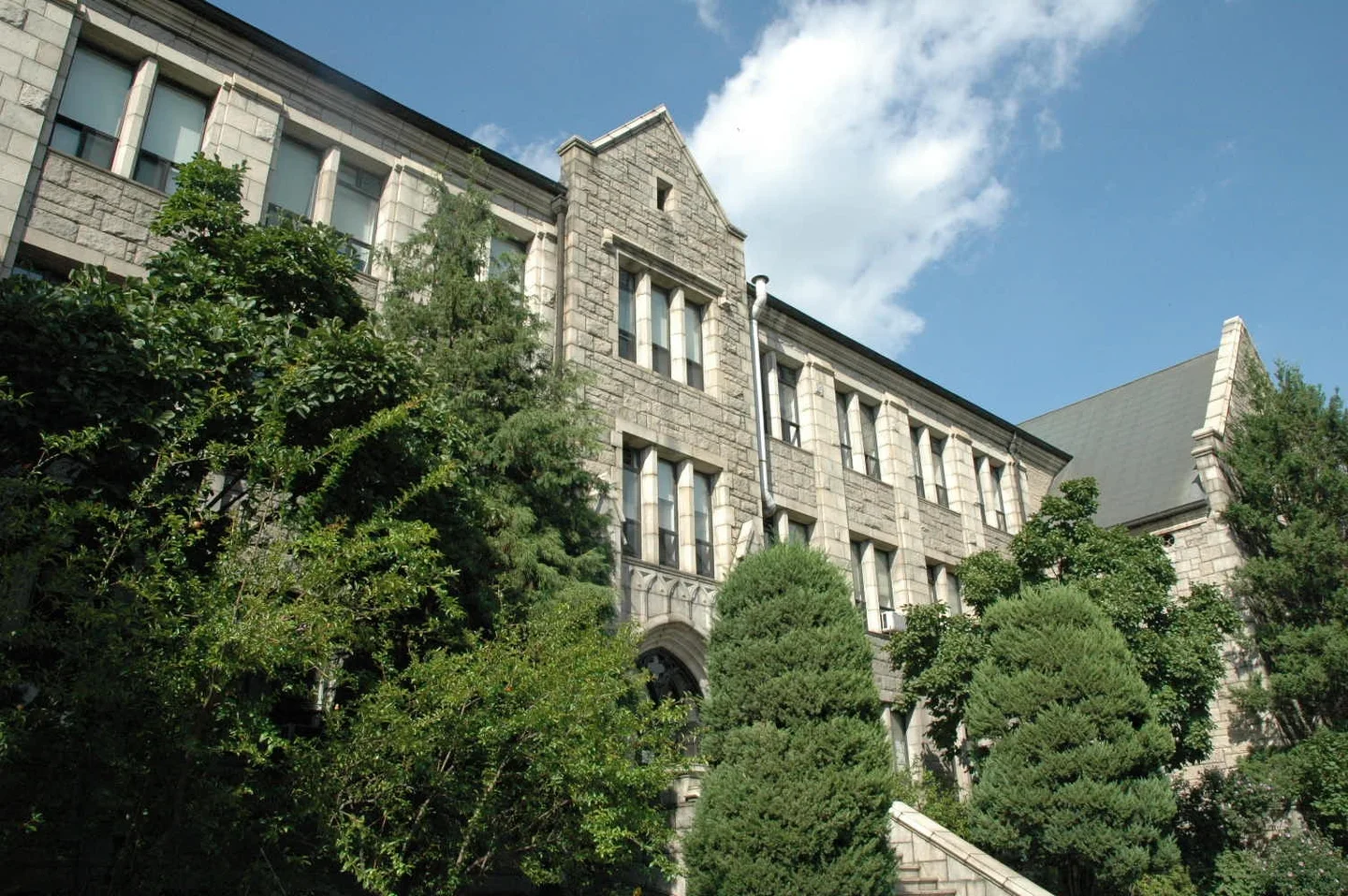
Otraff · Original · CC BY-SA 3.0 ·
Pfeiffer Hall provides a clear contrast with the ECC. Completed in 1935, when Ewha moved to this campus, it has the stone surfaces, vertical windows and pitched rooflines of the university's earlier architecture. Today it is the main administration building, so the interest for a casual visitor is its exterior and its place in the campus landscape. Ewha's history reaches back to 1886 and the beginnings of modern education for women in Korea. That background gives the campus more substance than an attractive set of facades. As you move between the newer and older buildings, you are seeing different stages of an institution that developed around that educational mission. For an indoor cultural stop, choose Ewha Womans University Museum. Its collections include Korean ceramics, painting and calligraphy, craft and clothing, with exhibitions drawing on different parts of those holdings. Look at the current exhibition description to choose a focus; a collection category does not mean every object is always on display. As checked on October 12, 2026, admission is free and regular hours are Monday–Friday, 9:30 a.m.–5 p.m. The museum closes on weekends, public holidays and during exhibition changeovers, normally including a period in January and February. If visiting in winter, check that an exhibition is open before making a special trip. On an operating weekday, see the museum first if you arrive later in the afternoon, then return to the outdoor architecture.
Finish with browsing and a café outside the gate
The streets between the university and the station have long been associated with fashion, accessories and beauty businesses. Browse the stores that catch your attention rather than relying on an old list of shop names. Smaller stores make it easy to compare a few items without committing the whole afternoon to shopping. For clothing, one useful Korean retail term is “free size,” usually meaning a single size offered by the store. It is not a guarantee that the item fits every body. Check measurements and fitting-room availability, then ask about exchanges before paying. With accessories, material information can be more useful than a low price, especially when buying for someone with a metal sensitivity. Choose a café or meal stop after the campus visit, when you know how much time you want to spend in the neighborhood. If architecture is the reason you came, a coffee break can be enough. If you are continuing to Sinchon, plan the next destination from your current position so you can browse in that direction rather than returning to the station unnecessarily.
A compact route for each season
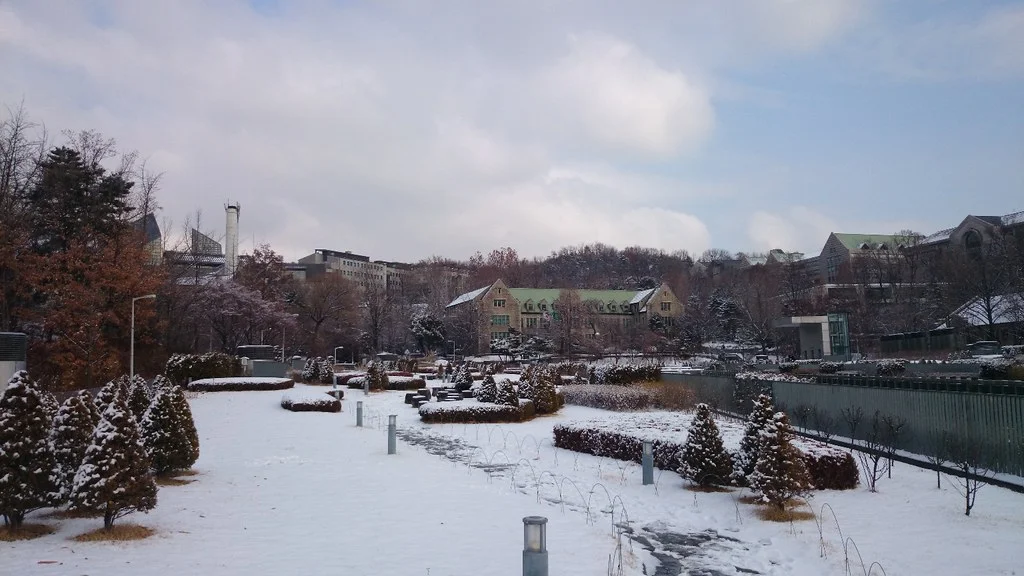
The open campus spaces change noticeably through the year. Leaves soften the geometry in warmer months, while winter exposes the lines of the buildings and planting beds. After snow, the broad steps and sloping approaches deserve extra care; in summer, a museum visit can give the outdoor sections a useful indoor break. For a short visit, keep the route to the main gate, the permitted ECC outdoor areas and the street back to the station. For a fuller weekday outing, add the museum and a closer look at the older campus exteriors. Either version leaves time to enjoy the neighborhood outside the university, with the ECC's unusual relationship between architecture and landscape as the day's centerpiece.