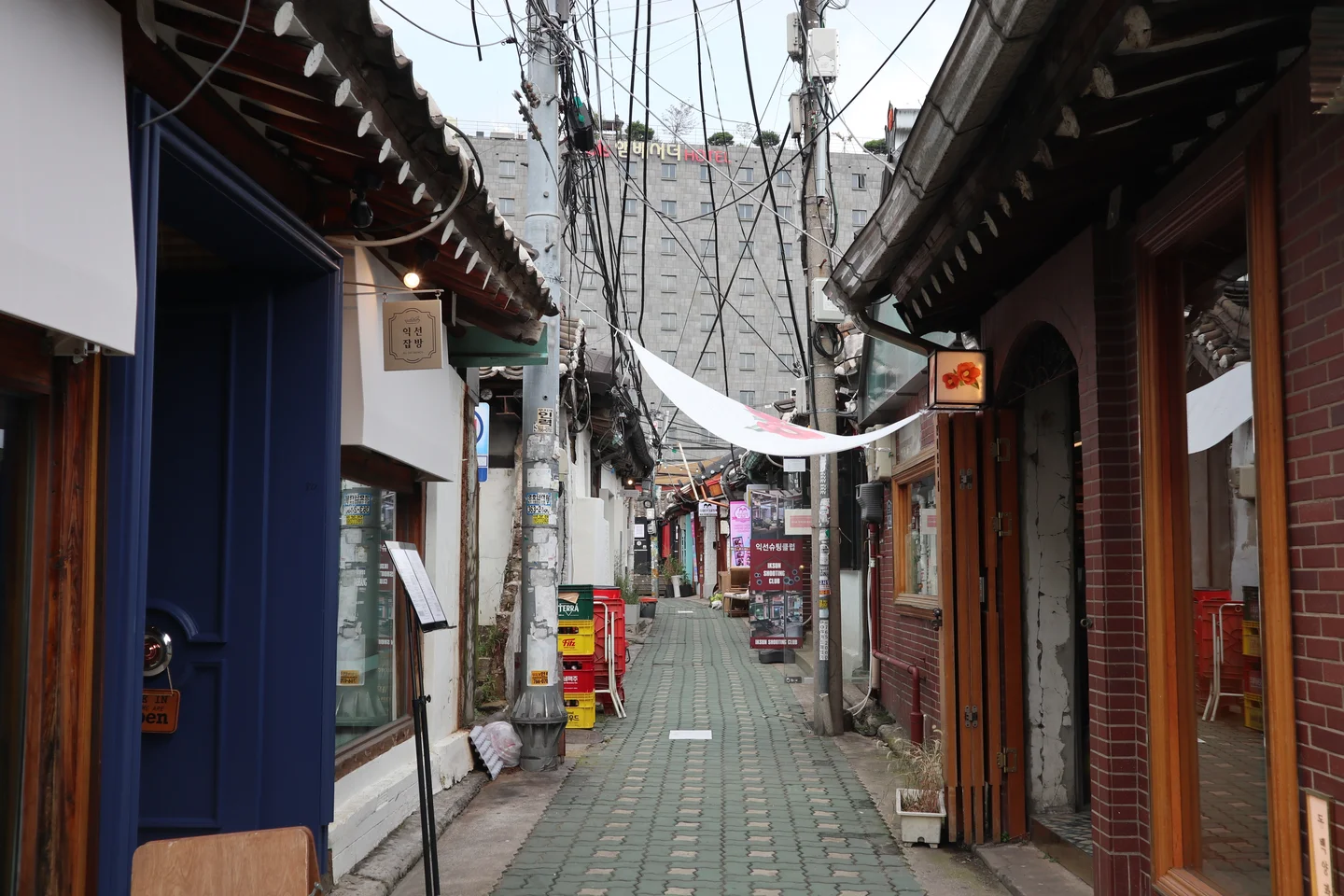
A coffee break is part of the sightseeing in Ikseon-dong. Small hanok houses have become cafes, restaurants and shops, their tiled eaves hanging over lanes barely wide enough for people to pass comfortably. Glass doors, colorful storefronts and new menus sit beneath the old rooflines. Come for the pleasure of choosing somewhere to sit as much as for the walk itself.
This is a compact commercial neighborhood rooted in a residential area developed in the 1920s. Compared with Bukchon's hillside lanes, the emphasis is on eating, browsing and spending time inside converted buildings. It's a good match for a relaxed date, a cafe-focused afternoon or a break between larger heritage sites. Busy periods can feel crowded rather than tranquil, so the setting works best when you have time to pause.
There are rewarding ways to extend the outing. Seosulla-gil follows Jongmyo Shrine's outer wall to the east, while the Seoul Museum of Korean Folk Music and Changdeokgung's front gate lie to the north. Those nearby stops turn a cafe visit into a walk through very different parts of Jongno.
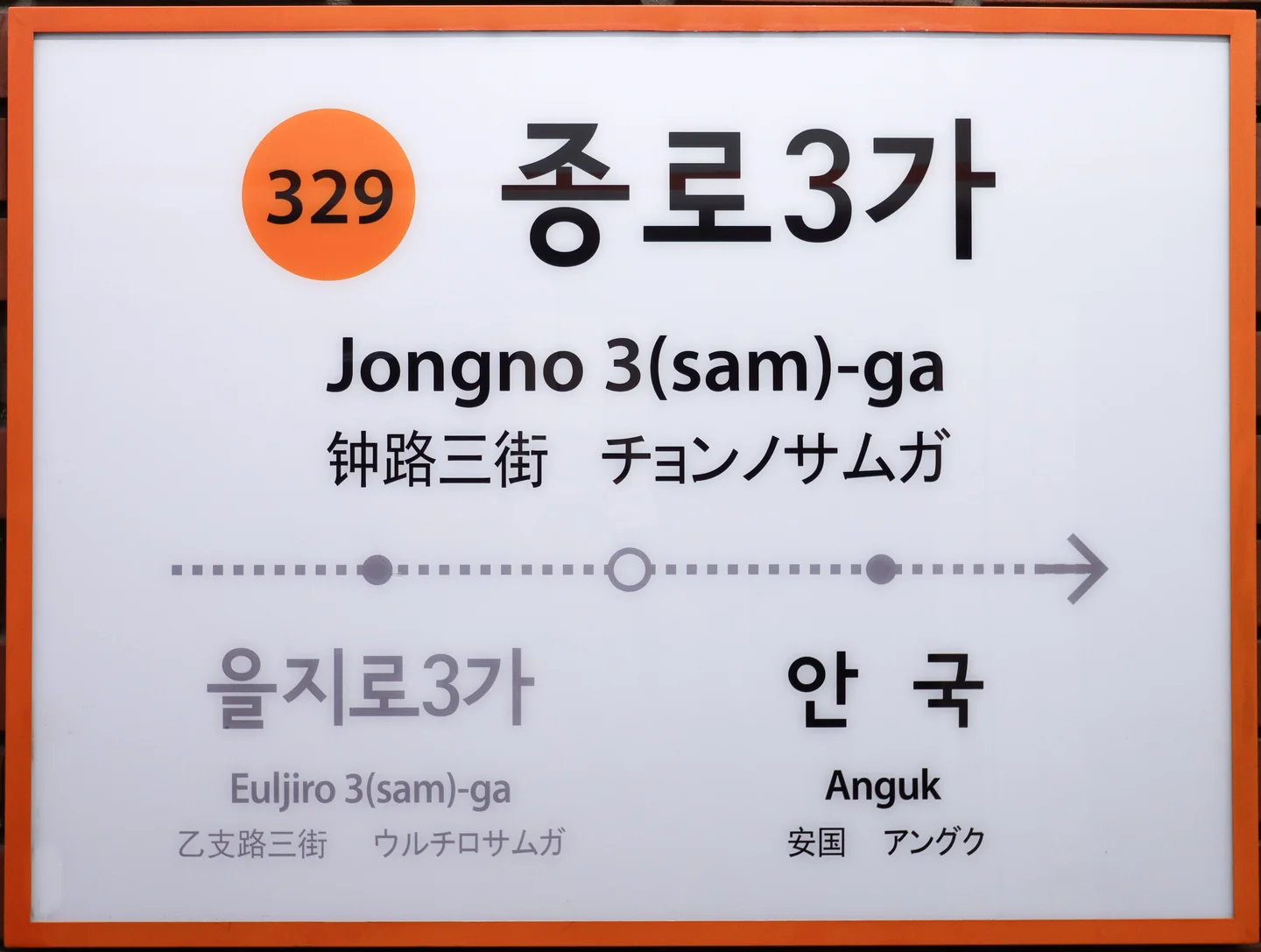
Start from the right side of Jongno 3-ga Station
Station name sign at Jongno 3-ga Station on Subway Line 3
Jongno 3-ga Station serves subway Lines 1, 3 and 5. Exit 4 is the approach recommended for Ikseon-dong Hanok Village. Because the interchange spreads underground, follow the exit signs before going up to street level; simply choosing the nearest staircase can leave you on a less convenient side of the neighborhood.
Use an exact exit or a particular cafe as your meeting point. Inside the lanes, similar roofs and closely spaced turns make it surprisingly easy to lose a shop you noticed earlier. Saving its Korean name along with the map pin helps match the screen to the sign outside.
The alleys are awkward with rolling luggage, and an apparently level street doesn't guarantee step-free entry into a shop. Narrow doors, raised thresholds and tight seating arrangements matter if you're visiting with a wheelchair or stroller. For a planned meal, checking the entrance is more useful than relying on a general accessibility description for the neighborhood.
Choose the cafe experience, then enjoy the lanes around it
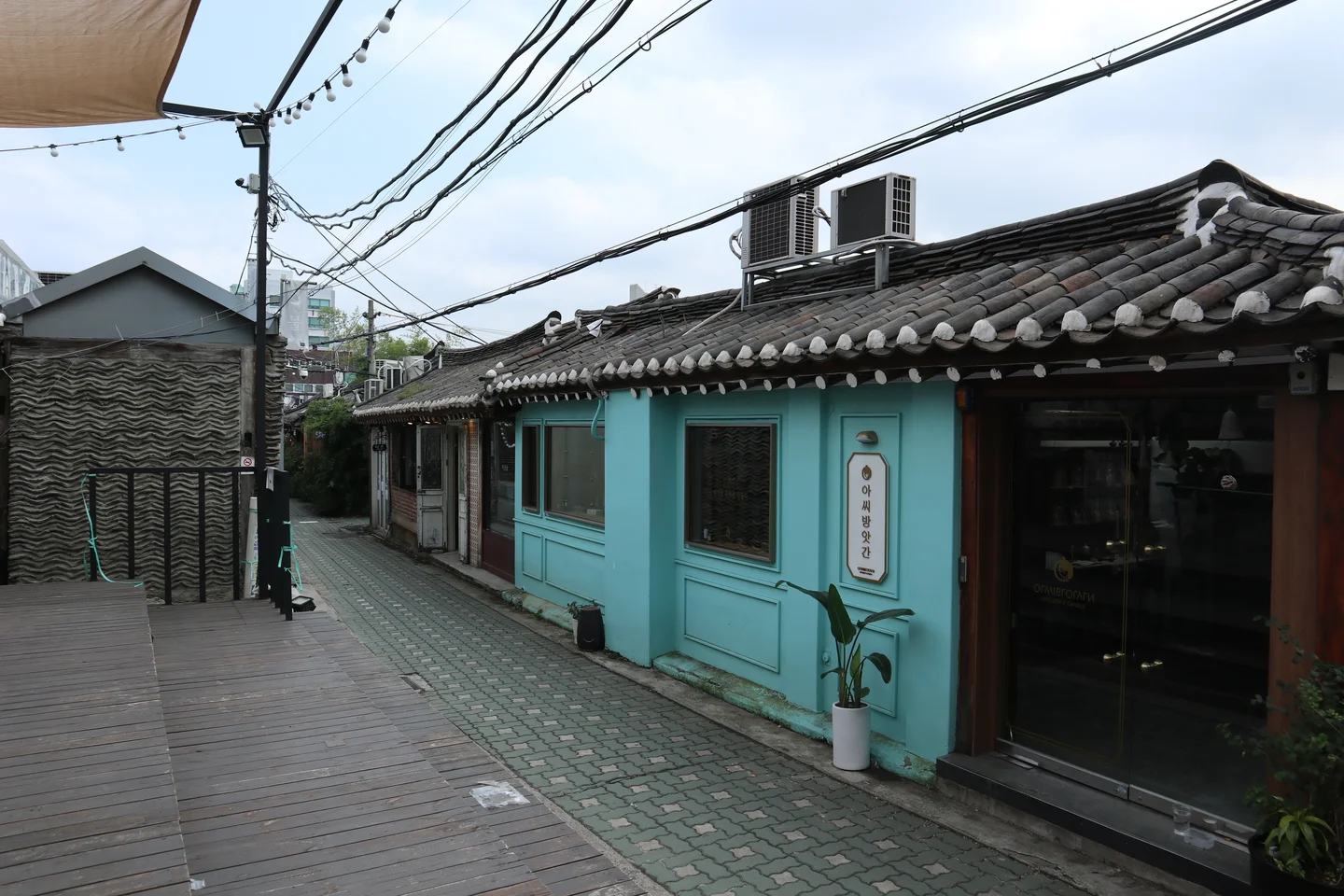
Newly fitted shop beneath tiled eaves in Ikseon-dong
The interesting details are where old houses meet new uses: a timber frame beside a bright wall, a tiled roof above a large window, a tiny entrance opened up to display merchandise. Some businesses preserve a close, enclosed feeling; others have altered the rooms more substantially. Wandering between them gives a more varied impression than treating every hanok as an example of one untouched historical style.
A traditional-looking building doesn't necessarily serve traditional Korean food. Look at the menu first to distinguish a full meal from a bakery or dessert stop, and choose somewhere whose food and seating appeal as much as its facade. If ingredients matter to your diet, a short written question in Korean can make ordering clearer than pointing at a menu photograph.
It helps to have one meal option and one cafe option, so a long line doesn't decide the whole afternoon. You can eat first and browse afterward, or explore a few lanes while waiting for a preferred place to become less busy. Each business keeps its own hours; the neighborhood has no single opening time.
In rain, make the indoor stop the main event. The low eaves don't form a continuous covered passage, and open umbrellas leave less space in the lanes. A short circuit followed by a seat indoors is more comfortable than a long shopping loop.
Follow Jongmyo's wall along Seosulla-gil
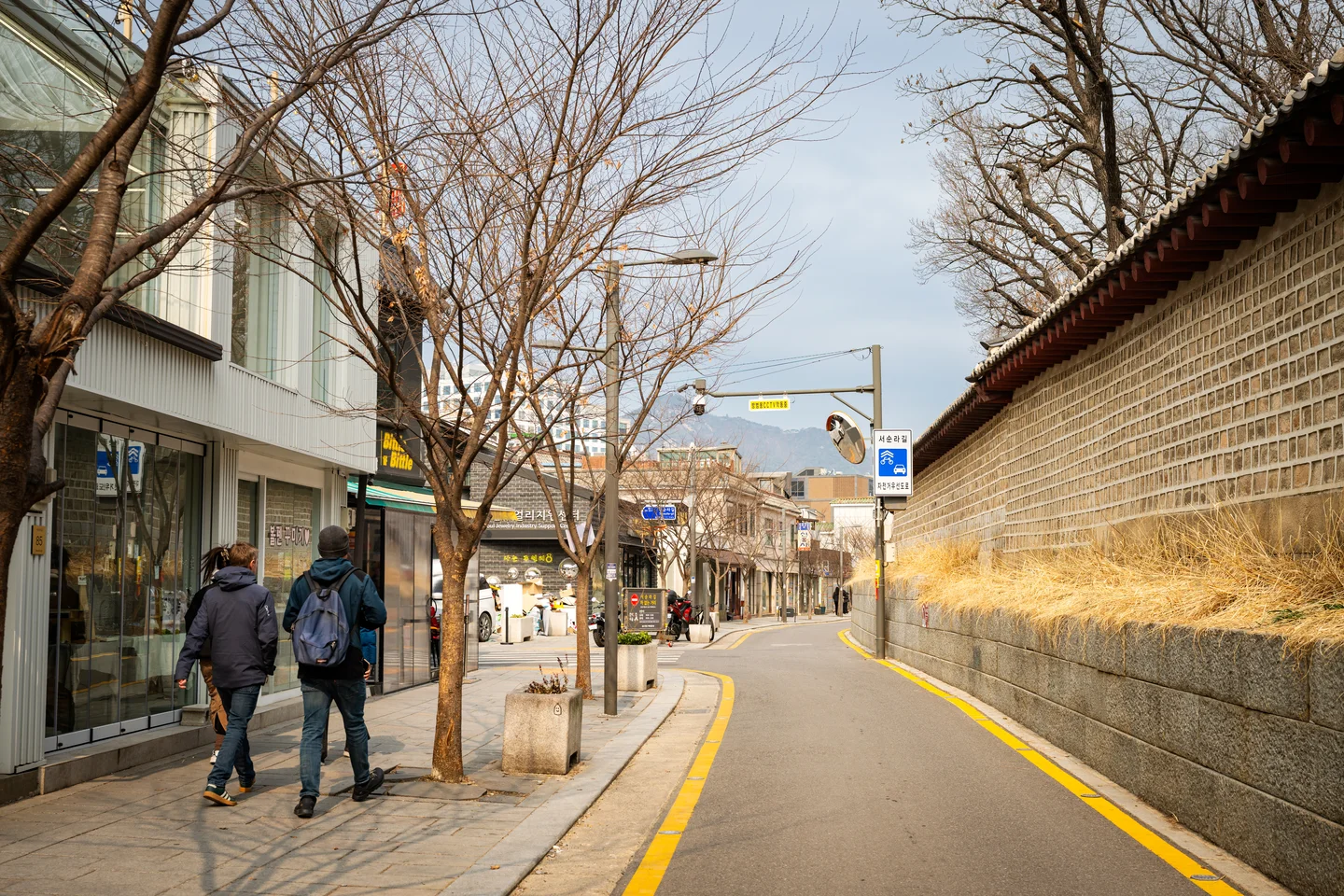
Seosulla-gil along the western wall of Jongmyo Shrine
East of Ikseon-dong, Seosulla-gil opens into a longer, more legible street. Jongmyo Shrine's wall and trees line one side, with small businesses and workspaces opposite. After the quick turns of the hanok lanes, you can follow the wall and notice its stonework, tiled cap and changing relationship to the shops across the road.
The name recalls the patrols that once watched over the city. Today, the draw is the street's combination of a major royal site and everyday commercial life. It's a useful walking section after lunch, with more continuity than another circuit of the cafe alleys.
This route stays outside Jongmyo. A visit inside the shrine needs its own entrance and admission plan; following the wall isn't a substitute for that visit. Seosulla-gil also carries traffic, so use the pedestrian space rather than assuming the whole street is a promenade.
Listen to folk songs, then reach the palace gate
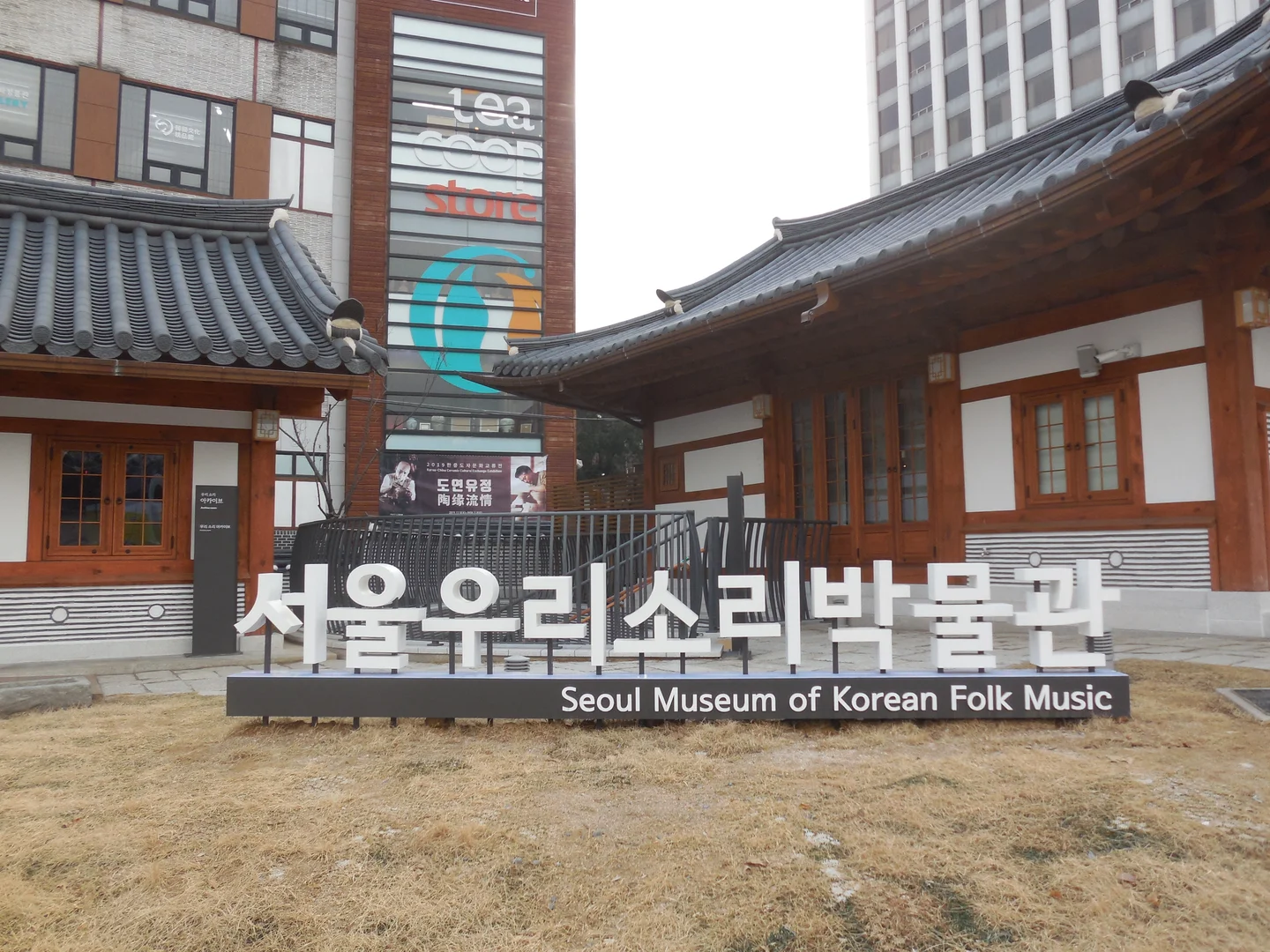
Hanok exterior of the Seoul Museum of Korean Folk Music
Near the northern end of the walk, the Seoul Museum of Korean Folk Music offers an unusual change of focus. Its subject is the singing that accompanied work, play and ordinary life. Listening for rhythm, repeated phrases and the way voices answer one another gives you a way into the material even if you don't understand every Korean lyric. It adds something you can't get from looking at buildings alone.
Donhwamun and the approach to Changdeokgung
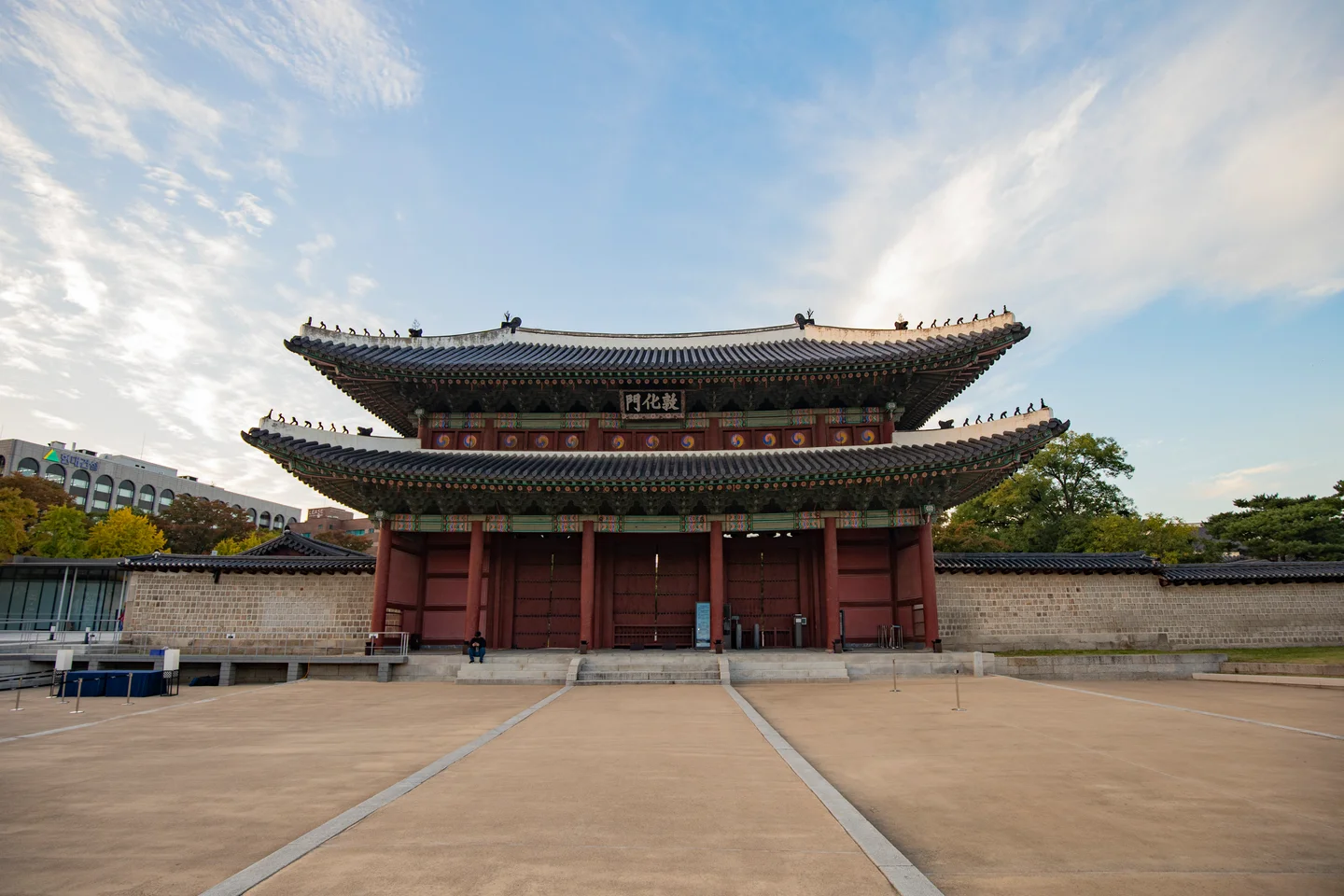
Donhwamun Gate at Changdeokgung Palace and the space in front
Donhwamun is Changdeokgung Palace's historic main gate, with a tall timber structure and layered roofs that contrast with Ikseon-dong's small houses. Restoration work affects this approach. As checked on October 12, 2026, official visitor guidance directs palace entry through Geumhomun on the west side during the repairs. Follow current entrance signs rather than navigating to Donhwamun alone; the gate's unobstructed appearance isn't guaranteed during construction.
If you do want to go inside Changdeokgung, give that visit a proper place in the schedule rather than treating it as whatever time remains after a cafe. Museum opening days and palace admission arrangements need to align with your plans. Check the two official visitor pages together when choosing the date.
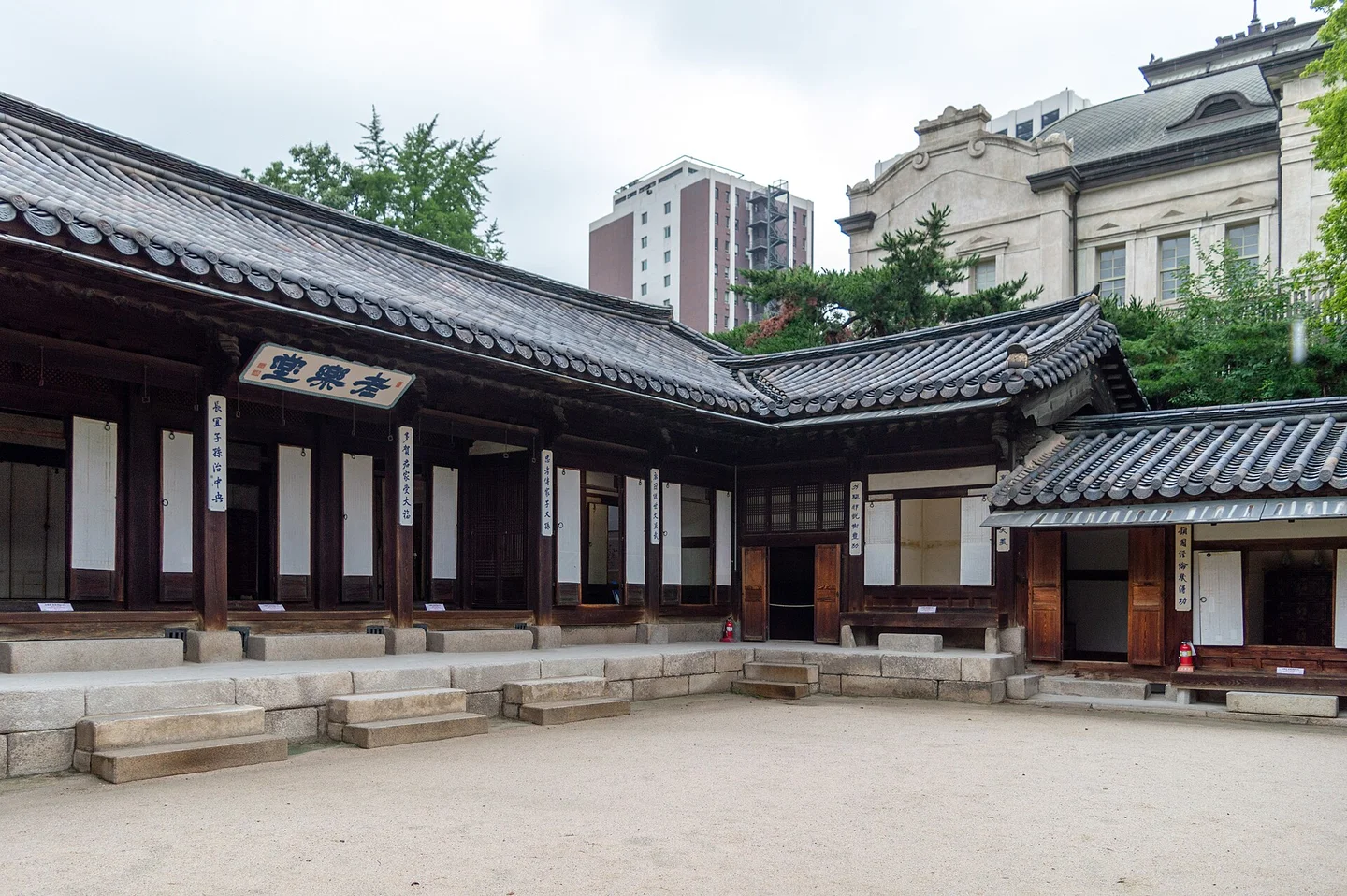
For an Anguk-side finish, consider Unhyeongung, where Gojong lived before becoming king. Norakdang and its courtyard introduce a more spacious arrangement of rooms, raised wooden platforms and connecting doorways. After seeing hanok adapted for commerce, it's a useful place to consider how residential and ceremonial spaces were organized.
Return toward Jongno through Tapgol Park
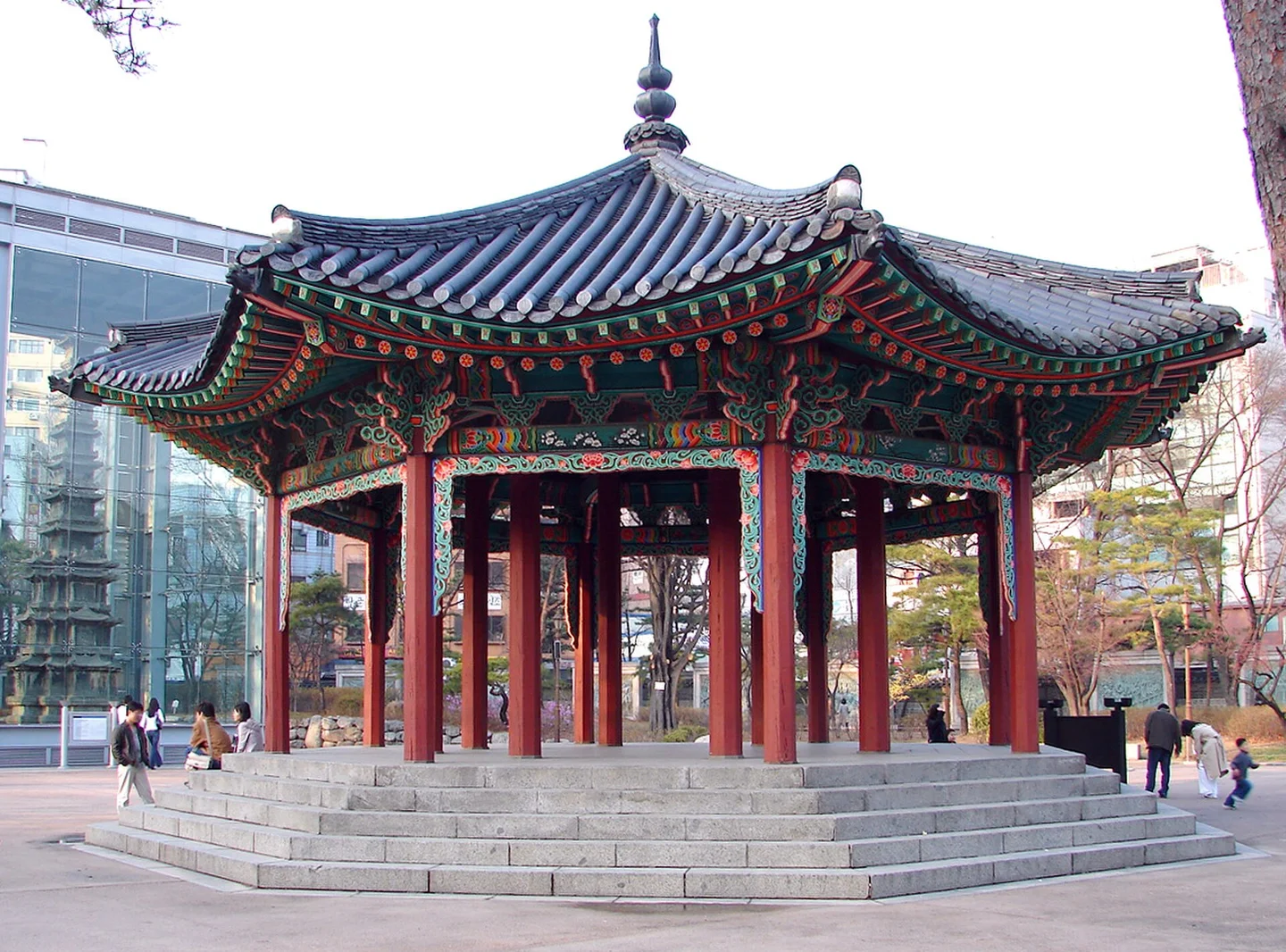
Pillars and painted decoration of the octagonal pavilion in Tapgol Park
If you're heading back toward the main Jongno street instead, Tapgol Park offers a different historical stop. Its octagonal pavilion, ten-story stone pagoda and monuments connect the site with Buddhist heritage and Korea's independence movement. Plan this as a park visit during its opening hours, rather than assuming it can always be added to an evening cafe walk.
A first visit can follow a simple shape: Ikseon-dong for a meal and browsing, Seosulla-gil for a longer walk, then the museum and palace gate. Choose Unhyeongung or Tapgol Park according to where you're heading next. Leaving time to sit is part of making this route work; the neighborhood's appeal is in how its old buildings are being used, as well as how they look from the street.
Sources서울관광 익선동 한옥거리: https://korean.visitseoul.net/palace/%EC%9D%B5%EC%84%A0%EB%8F%99%ED%95%9C%EC%98%A5%EA%B1%B0%EB%A6%AC/KOP037008
서울우리소리박물관 소개: https://museum.seoul.go.kr/sekm/front/use/intro/introduce.do?locale=KO
서울시 서순라길: https://mediahub.seoul.go.kr/archives/2011841
궁능유적본부 창덕궁: https://royal.cha.go.kr/ROYAL/contents/R701000000.do?schGroupCode=cdg&schGroupCodeNm=%EC%B0%BD%EB%8D%95%EA%B6%81
서울시 운현궁 리플릿: https://culture.seoul.go.kr/culture/cmmn/file/fileDown.do?atchFileId=ATH_MAT_000000000000000000001110&bbsId=B0000009&fileSn=4396
서울기록원 탑골공원: https://archives.seoul.go.kr/post/2697
English place names and subway approach: https://english.visitseoul.net/attractions/IkseongdongHanokVillage_/37013
English museum name, folk songs and visitor information: https://museum.seoul.go.kr/eng/about/annex/Seoul%20Museum%20of%20Korean%20Folk%20Music.jsp
Tapgol Park heritage context: https://english.visitseoul.net/nature/tapgol-park/ENP001577
Donhwamun restoration and temporary Geumhomun entrance: https://royal.khs.go.kr/ROYAL/contents/R402000000.do?id=20241125093054576568&schM=view
Current Changdeokgung visitor guidance naming Geumhomun: https://royal.khs.go.kr/ROYAL/contents/R706020000.do?schGroupCode=cdg
확인일: 2026-10-12 (Asia/Seoul). 기본 근거: seoul-004 한국어 완료 원고의 사실·선택 사진. 영어는 독립 구성·집필.