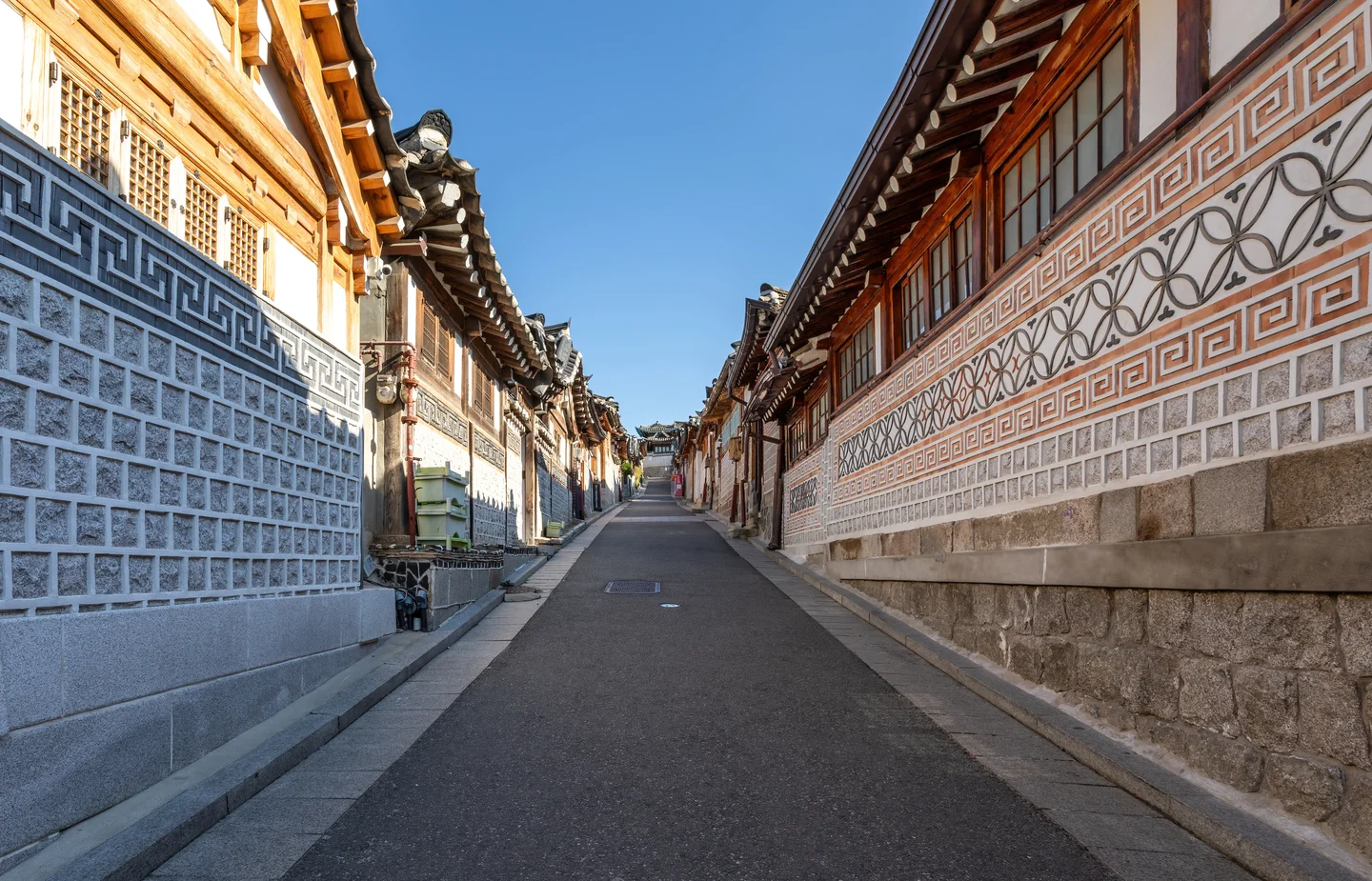
In Bukchon, tiled roofs follow the slope of the hill, wooden gates open onto hidden courtyards, and houses sit close enough for their eaves to frame the street. It is a rewarding place to look closely at hanok, Korea's traditional houses. The pleasure is in the details: the pattern of a brick wall, the shade beneath a roof, the way a home turns inward from a narrow lane.
Pair the hillside with Anguk, the area around the subway station below, and the visit becomes much more varied. Public hanok let you explore domestic architecture, Gyedong-gil adds small shops and cafés, and the Seoul Museum of Craft Art connects buildings with the objects used inside them. Architecture lovers, curious walkers and anyone interested in Korean design have good reasons to linger. Choose a house to visit, a stretch of lanes to walk and a place to pause; that makes a more satisfying outing than chasing every rooftop viewpoint.
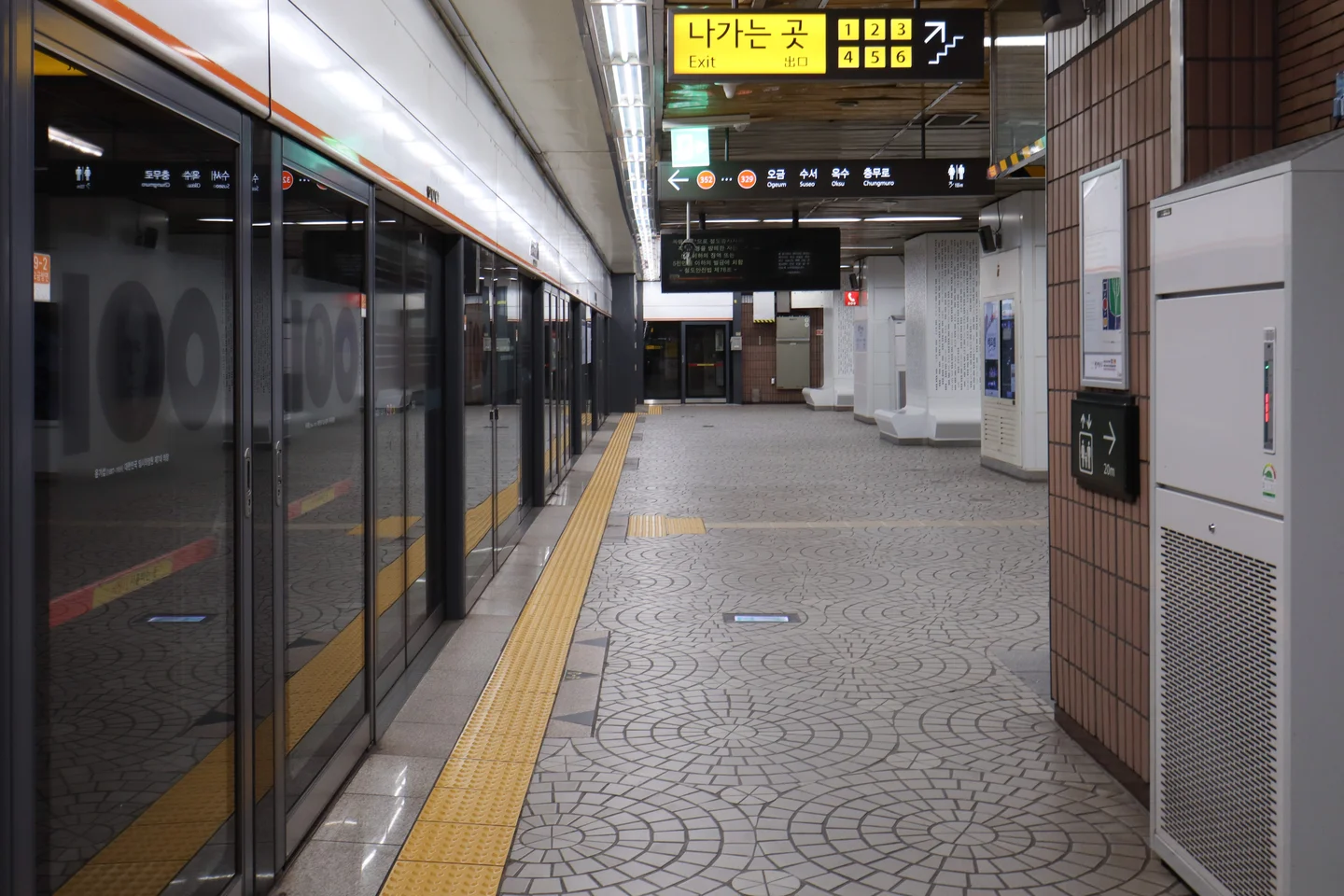
Anguk Station on Line 3 is a convenient starting point for this route. Think of the neighborhood in three parts: Gyedong-gil and Bukchon Cultural Center lie to the east, the Gahoe-dong residential lanes climb to the north, and Jeongdok Library and the craft museum sit toward the west. Save the individual places on your map before setting off. A pin for “Bukchon Hanok Village” alone may send you straight to a hillside viewpoint.
For a first visit, head along Gyedong-gil to the cultural center, continue to the residential lanes during their visitor hours, then work west toward Baek In-je House and Jeongdok Library. Finish at the craft museum near Anguk Station. This gives the walk a natural progression from street life to house interiors and craft. Keep the uphill section optional if you are traveling with someone who finds slopes or steps difficult.
Gyedong-gil: shops, cafés and a courtyard you can enter
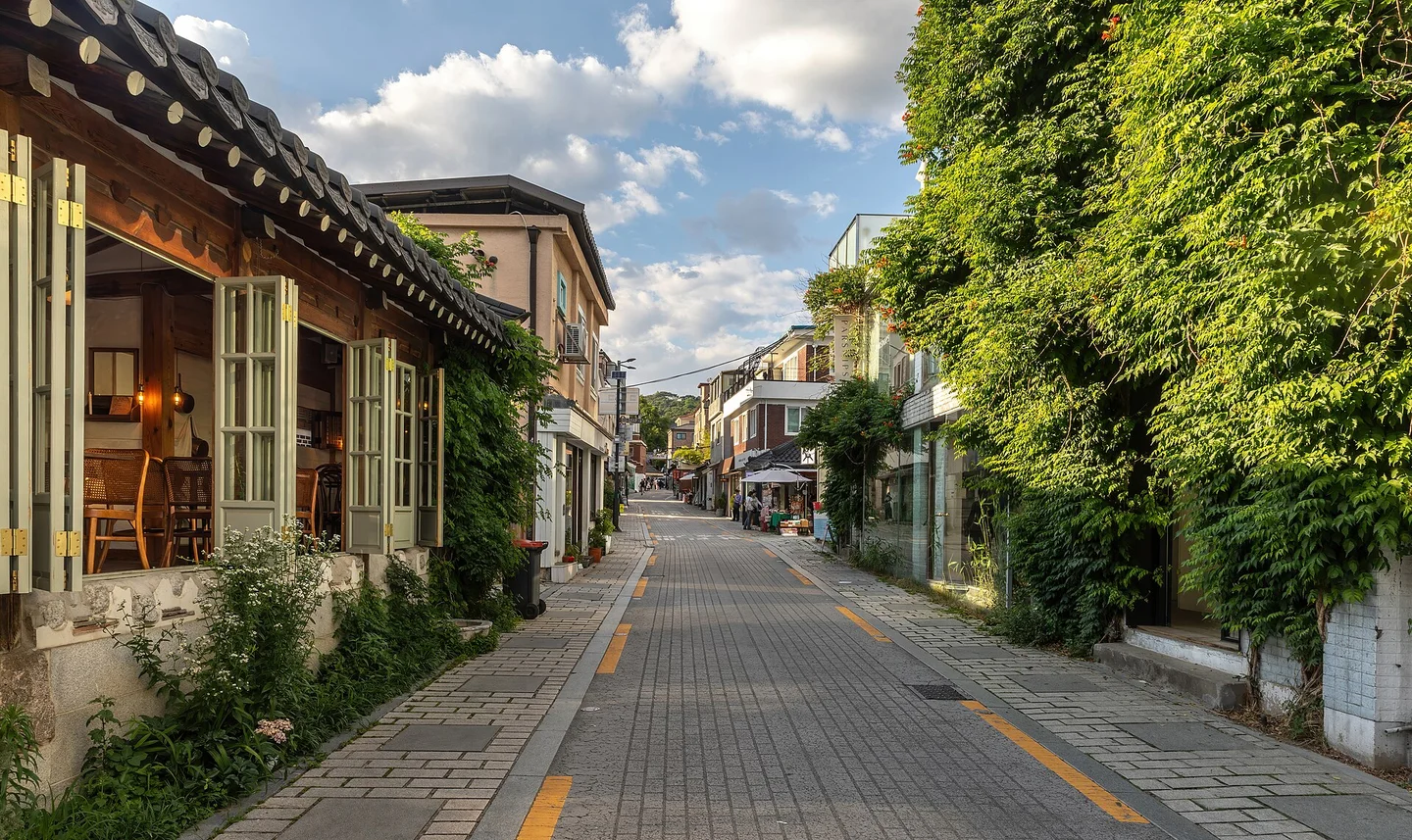
Low-rise shops and pedestrian space along Gyedong-gil
Gyedong-gil is a useful introduction to Bukchon's everyday character. Low storefronts meet the street, cafés occupy some of the older buildings, and tiled roofs mingle with later architecture. The changing heights and building materials are part of the interest. Bukchon has continued to adapt as a neighborhood, so there is more to notice here than a single period style.
Make this the browsing and coffee-break part of the walk. A converted hanok can offer a different view of the architecture from the street, but choose a café for its menu and seating as well as its façade. Leave some time for nearby Bukchon Cultural Center, where you can explore a courtyard without needing to order anything.
Step into Bukchon Cultural Center
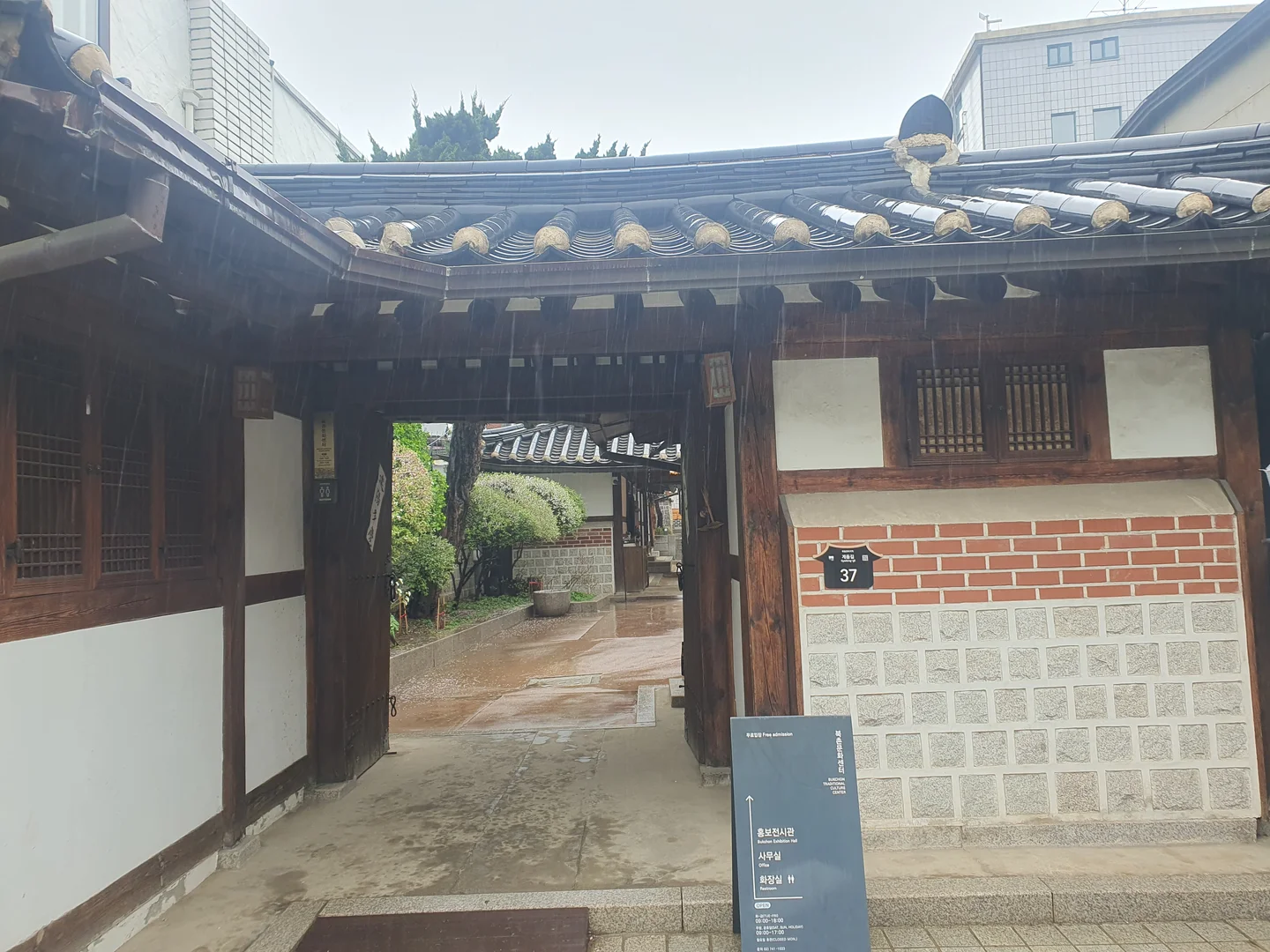
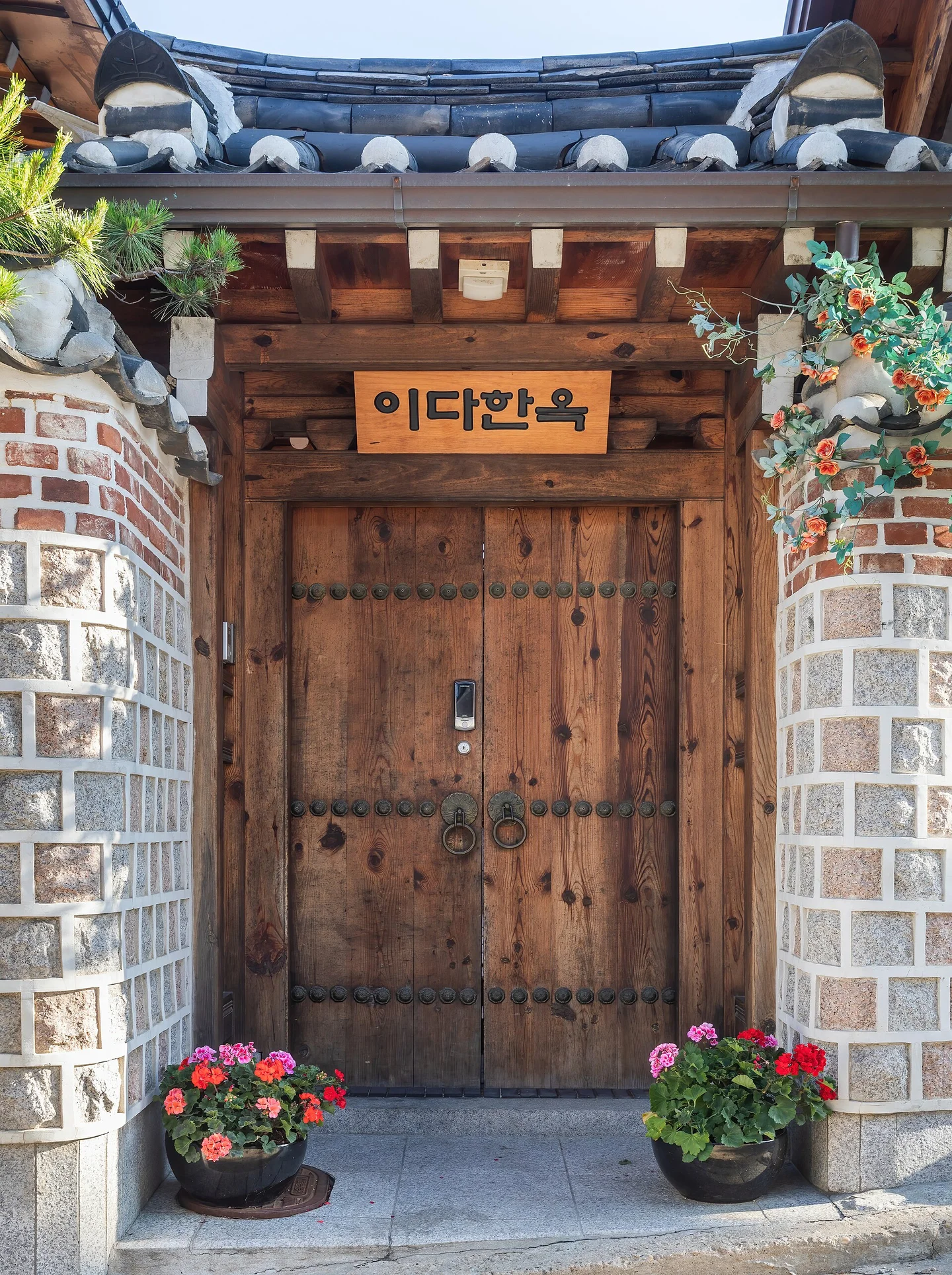
Gate and courtyard of Bukchon Cultural Center at 37 Gyedong-gil
Bukchon Cultural Center, also listed as Bukchon Traditional Culture Center, is a public hanok on Gyedong-gil. Its gateway leads from the street into a much more enclosed setting. Stand in the courtyard and follow the relationship between the rooms, the open sky and the deep eaves. That simple change of viewpoint explains something a row of roofs cannot: how the house brings indoor and outdoor space together.
The center also provides neighborhood information and cultural programs. Pick up the walking information here if you want to explore further. For a class or guided visit, use the program listings on the Seoul Hanok Portal to choose and book the right session. The courtyard visit and a scheduled activity are separate options, so decide which matters most before building the day around it.
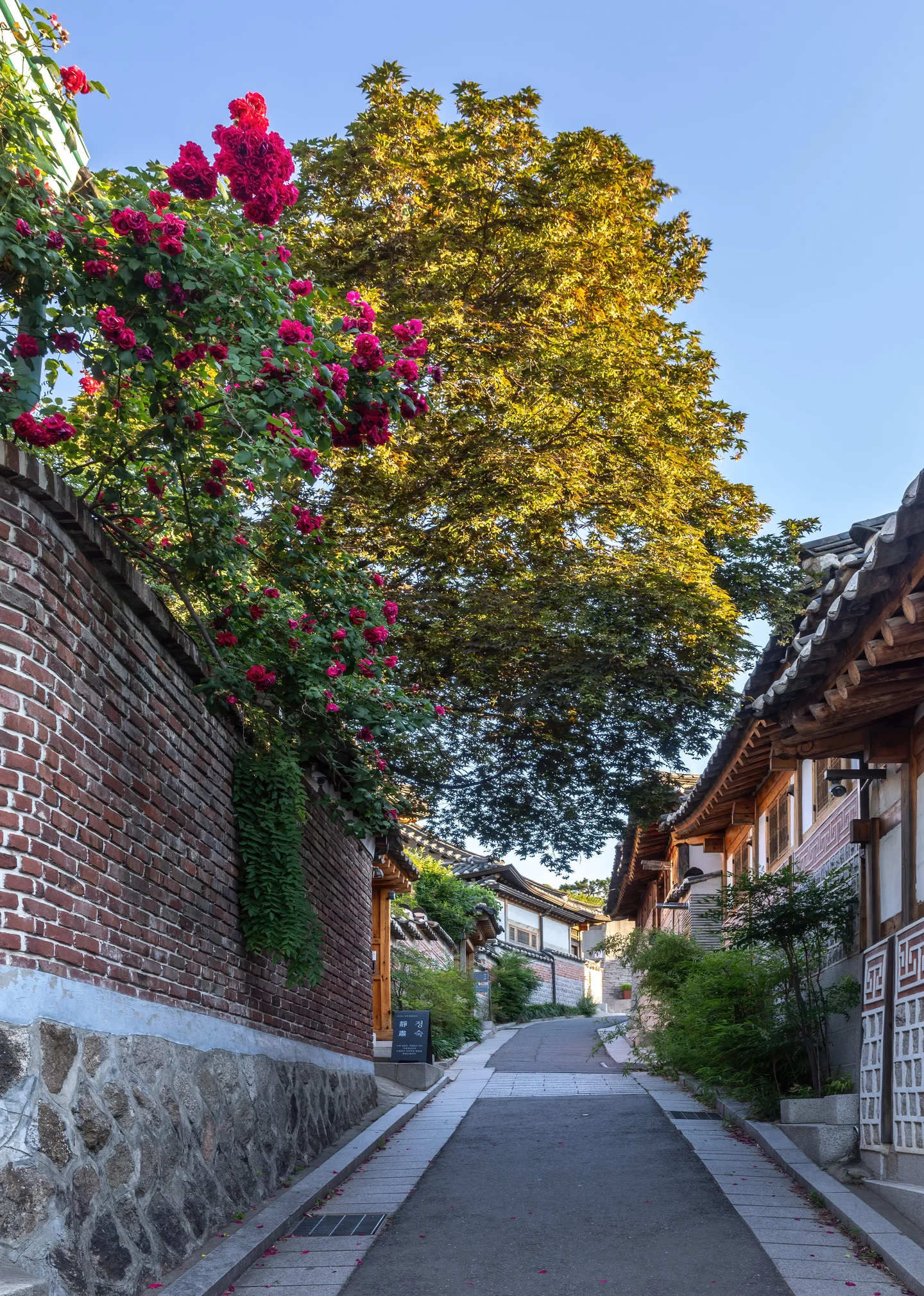
The climb into Gahoe-dong brings the tightly grouped hanok streets that many visitors picture when they think of Bukchon. As a lane bends or rises, the view shifts from a wall and doorway to the roofline beyond. Look at the repeated curves of the roof tiles, exposed timber beneath the eaves and the different patterns made by brick and stone. Flowers add color in season, but the architecture carries the walk throughout the year.
Plan this part for the daytime. Tourist visits to the designated red zone around Bukchon-ro 11-gil are limited to 10:00–17:00, with fines for sightseeing outside those hours. The restriction applies to the mapped residential zone, not to all of Anguk or every part of Bukchon. Save Jongno District's red-zone map and follow the boundary signs on the ground; an early-morning or sunset photo stop is not a way around the visitor hours.
A neighborhood behind the wooden gates
These lanes remain people's home addresses. Enjoy the doors and walls from the street, keep conversation quiet and leave entrances clear. An open gate is not an invitation to look or photograph inside. The public hanok on this route are the places to satisfy that curiosity, with rooms and courtyards set up for visitors.
The other practical consideration is the terrain. Good-grip shoes and a light bag make the inclines easier; wet paving or lingering snow can make them awkward. If you are wearing a rented hanbok, allow for its long fabric on steps. You can still have a worthwhile visit by concentrating on Gyedong-gil and the public cultural spaces, without reaching the highest lanes.
Baek In-je House, then a garden break
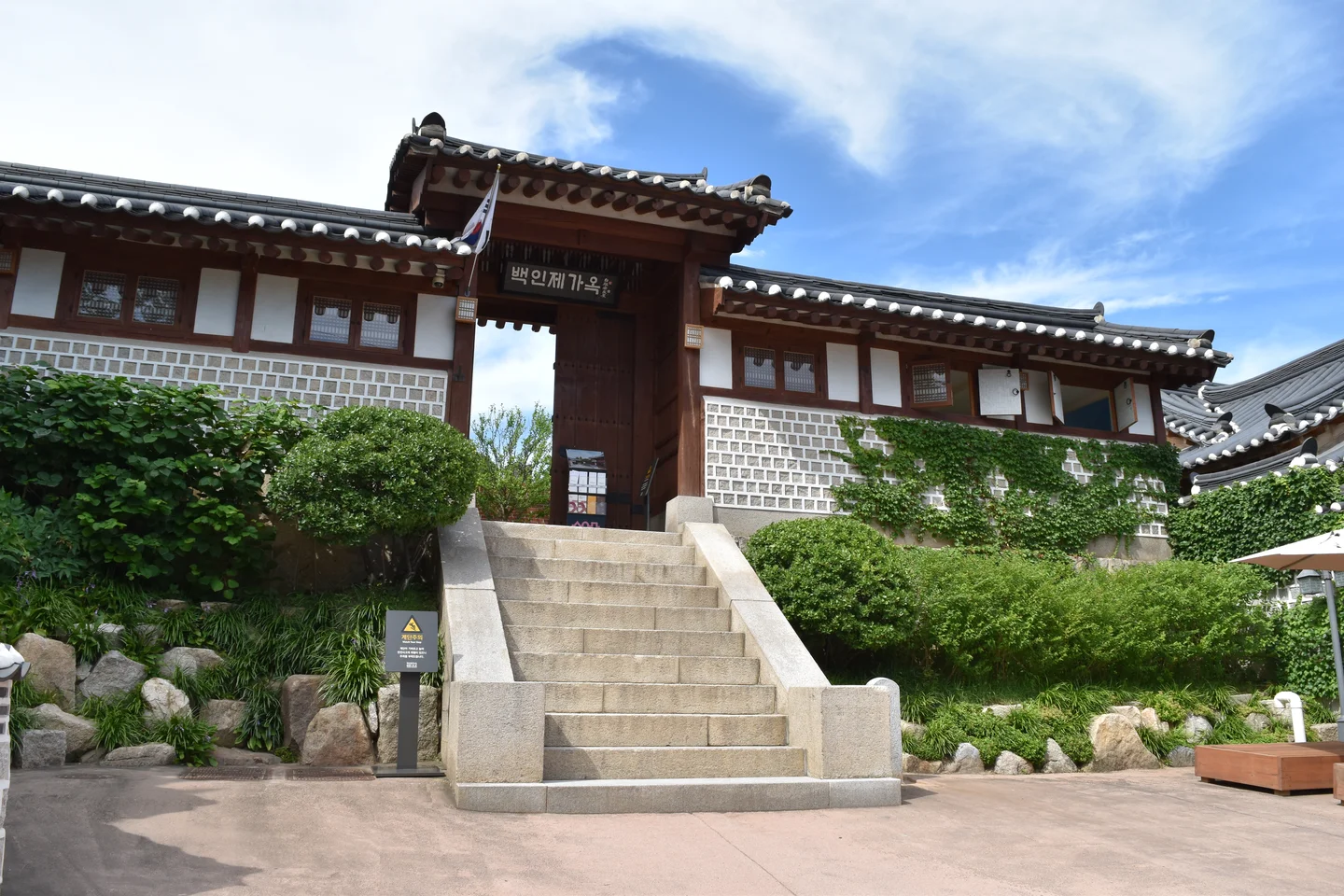
Raised entrance gate and steps at Baek In-je House
Baek In-je House is the stop to choose if you want to understand how a substantial hanok worked as a home. Beyond the tall gate, the reception quarters, family quarters, garden and separate pavilion form a series of distinct spaces. A corridor connects the reception and family areas, while glass windows and red brick show how the house absorbed modern influences. Those details make it an engaging counterpoint to the more uniform impression of the streets outside.
Can you go inside? You can explore the grounds independently, while access to parts of the interior is through a guided tour. If the rooms are the main attraction for you, arrange a tour through the official house information and Seoul Public Service Reservation system. The entrance has steps and changes of level, so visitors who need step-free access should ask about the approach when planning the visit.
Pause in Jeongdok Library's garden
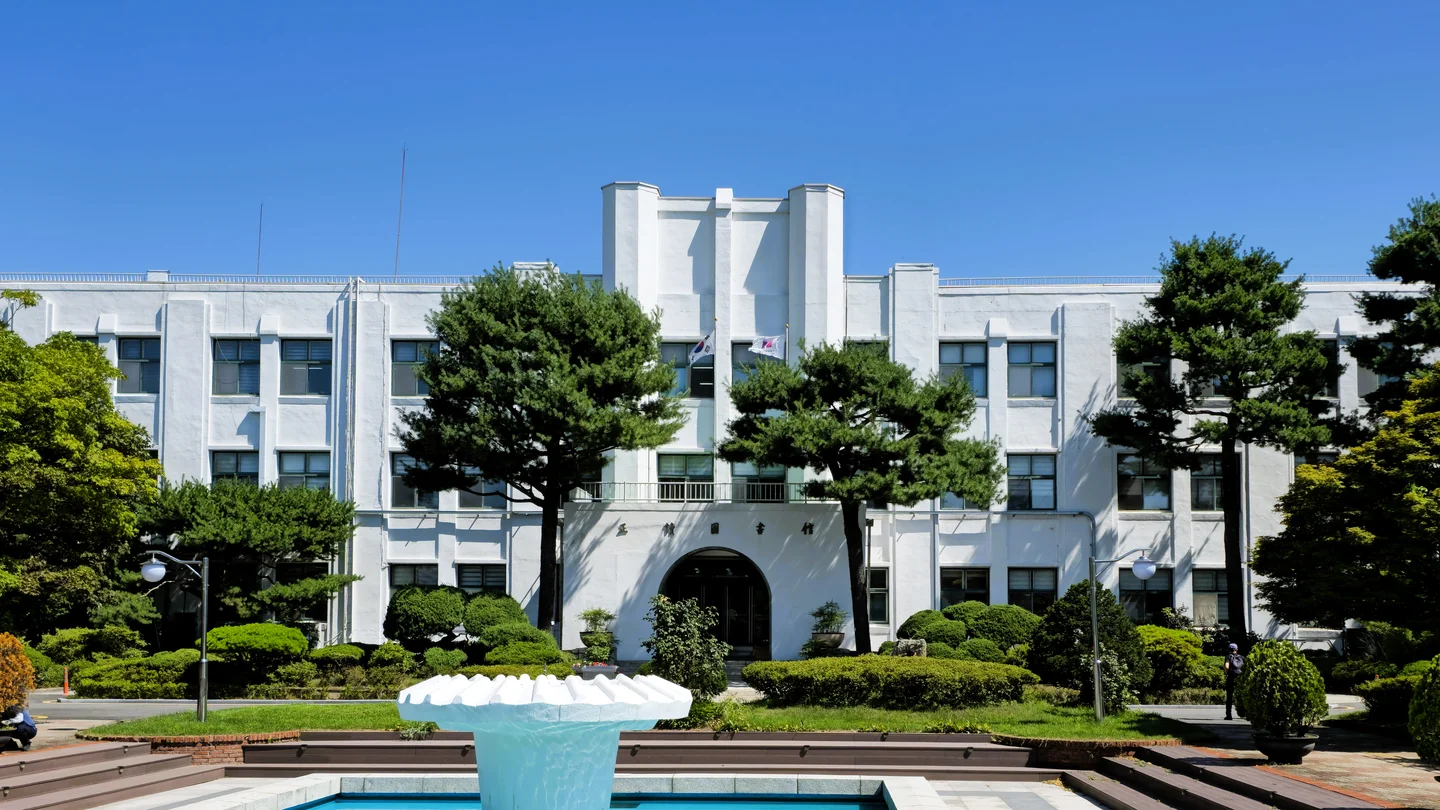
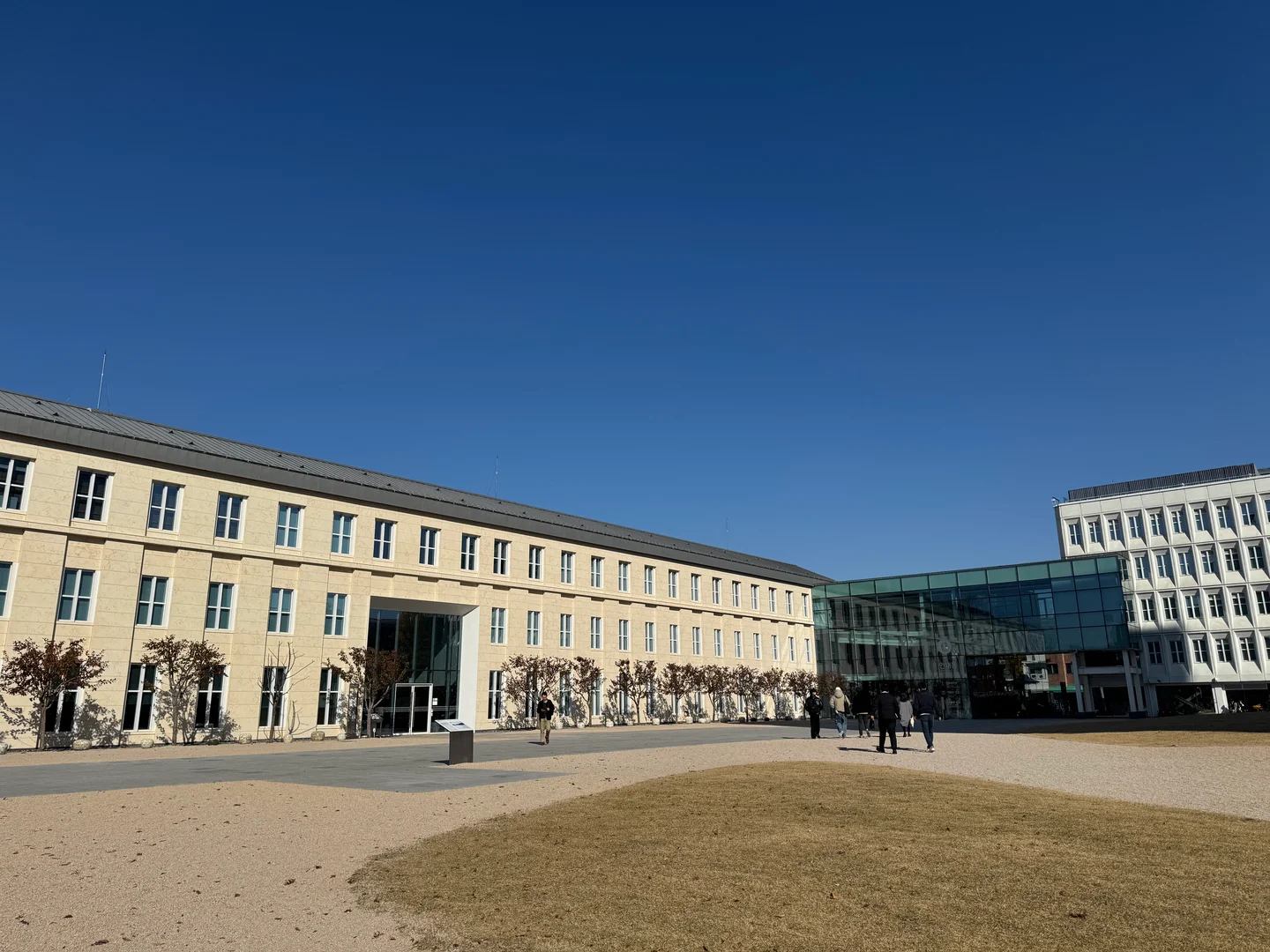
Main building and front garden of Jeongdok Public Library
Continue toward Jeongdok Library for a change of pace and scale. The former Gyeonggi High School site now has a library set behind trees, lawns and a fountain. After the enclosed lanes and courtyards, the space in front of the long building feels generous. It is a good place to sit for a while before heading back toward Anguk.
The garden works as a stop in its own right, with spring flowers and fall foliage adding seasonal interest. Keep the break outdoors rather than treating the reading rooms as sightseeing rest areas: inside, this is a working library. From here, the craft museum makes a useful final stop on the way down to the station.
Finish with Korean craft near Anguk Station
Exhibition building and craft courtyard at Seoul Museum of Craft Art
The Seoul Museum of Craft Art gives the walk another focus: how skilled hands turn materials into objects for daily life. After looking at timber, roof tiles and window frames in Bukchon, exhibitions about making and design feel like a continuation of the same story. The embroidery displays are a good place to slow down over stitches and repeated motifs. Use the museum map to find the exhibition that interests you first, as the galleries occupy several buildings around outdoor spaces.
Individual visitors can explore the main exhibitions without booking. The Children's Museum has its own advance-reservation system, so families should arrange that separately. Monday is the regular closure day for the main museum, with public-holiday exceptions; the Children's Museum closes every Monday. For a visit built around the museum or a house tour, choose the day and booking first, then fit the walk around it.
On a rainy day, reverse the emphasis: spend more time in the museum and add a short walk when the weather improves. For a shorter outing, Gyedong-gil, the cultural center and a café make a compact introduction. For architecture in depth, give more time to Baek In-je House and less to searching for viewpoints. Either way, Anguk Station is a convenient place to finish, with a clearer sense of how Seoul's houses, streets and handmade objects belong together.
Visitor-hour restrictions, access and booking arrangements were checked against official sources on October 12, 2026, and may change. Check the official visitor pages when fixing your date.
Sources북촌 특별관리지역·관광객 방문시간: https://culture.jongno.go.kr/media/ko/conts/111/web.do
북촌문화센터·2026 프로그램: https://hanok.seoul.go.kr/front/index.do
백인제가옥 건축: https://museum.seoul.go.kr/www/guide/vis/BIJHShow/BIJHIntro.jsp?sso=ok
정독도서관 연혁·정원: https://jdlib.sen.go.kr/jdlib/html.do?menu_idx=33
서울공예박물관 전시: https://craftmuseum.seoul.go.kr/main
공예박물관 관람·예약·휴관: https://craftmuseum.seoul.go.kr/preview/visit
Red-zone implementation and penalties; Jongno District: https://www.jongno.go.kr/mayor/bbs/selectBoardArticle.do?bbsId=BBSMSTR_000000001618&menuId=388338&menuNo=388338&nttId=250133
Jongno District red-zone map: https://www.jongno.go.kr/dosi/view/spcl/spcl.html
Bukchon-ro 11-gil visitor-hour scope; Korea Tourism Organization: https://english.visitkorea.or.kr/svc/contents/contentsView.do?vcontsId=97932
Cultural centre information and English naming: https://hanok.seoul.go.kr/m/eng/exp/expCenter.do?tab=1
Current Korean cultural-centre visitor information: https://hanok.seoul.go.kr/front/kor/exp/expCenter.do?tab=1
Baek In-je House public grounds and guided interior access: https://english.visitseoul.net/attractions/Baek-Injes-House/ENP021128
확인일: 2026-10-12 (Asia/Seoul)
기본 근거: 지역ID seoul-002 한국어 완료 원고 KO-v01의 사실·사진. 영어는 독립 구성·집필.
공식 한국어 장소명: 북촌한옥마을 / 안국역 / 계동길 / 북촌문화센터 / 가회동 / 백인제가옥 / 정독도서관 / 서울공예박물관