gil.KOREA

Gwangjang Market: What to Eat and What to See Beyond the Food Stalls
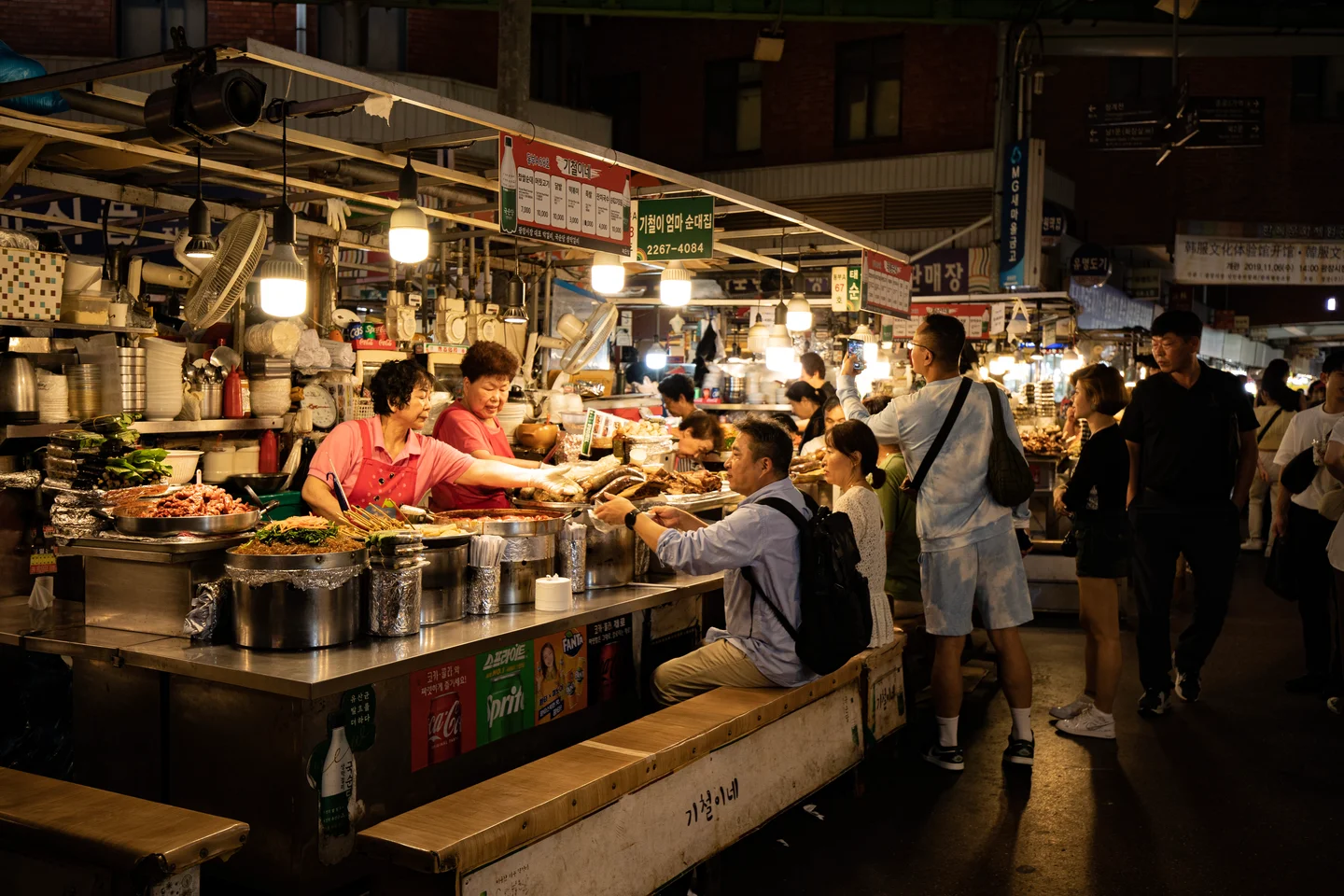
Food stalls and long benches at Gwangjang Market

서울관광아카이브 · Original · KOGL Type 1 ·

Source notices and processing details

Food stalls and long benches at Gwangjang Market

Photo: 서울관광아카이브 · archive.visitseoul.net · KOGL Type 1

WebP conversion; proportionally reduced where needed; no cropping or upscaling.

공공누리 제1유형. 상업적 이용과 변경 가능. 출처 표시. 좌판 이름 기철이네. 시장 전체를 한 장에 담은 사진은 아님. WebP도 같은 라이선스.

360 × 240: EXIF orientation normalized=False; embedded ICC transformed to sRGB; proportional downsample to 360x240; WebP q85; no crop, no synthesis

720 × 480: EXIF orientation normalized=False; embedded ICC transformed to sRGB; proportional downsample to 720x480; WebP q85; no crop, no synthesis

1440 × 960: EXIF orientation normalized=False; embedded ICC transformed to sRGB; proportional downsample to 1440x960; WebP q85; no crop, no synthesis

Gwangjang Market makes lunch an outing. Mung bean pancakes sizzle beside counters piled with gimbap, cooks serve customers across narrow worktops, and long benches put you close to the action. It's a lively place to try Korean market food, especially if you'd rather choose by looking at what's cooking than commit to a full restaurant meal in advance. The food is only one part of the market. Fabric and hanbok businesses belong to a commercial history that reaches back to the founding of Gwangjang Corporation in 1905. A turn away from the busiest food counters can take you past side-dish sellers and colorful rolls of cloth. That mix is what makes the visit more interesting than a checklist of famous snacks. Come hungry, but leave yourself a choice. One substantial dish and something smaller to share can be a better introduction than ordering every well-known item at the first stop. The seating is often close and informal; the appeal is the bustle, not a quiet table for a long conversation.

Getting there from Jongno 5-ga
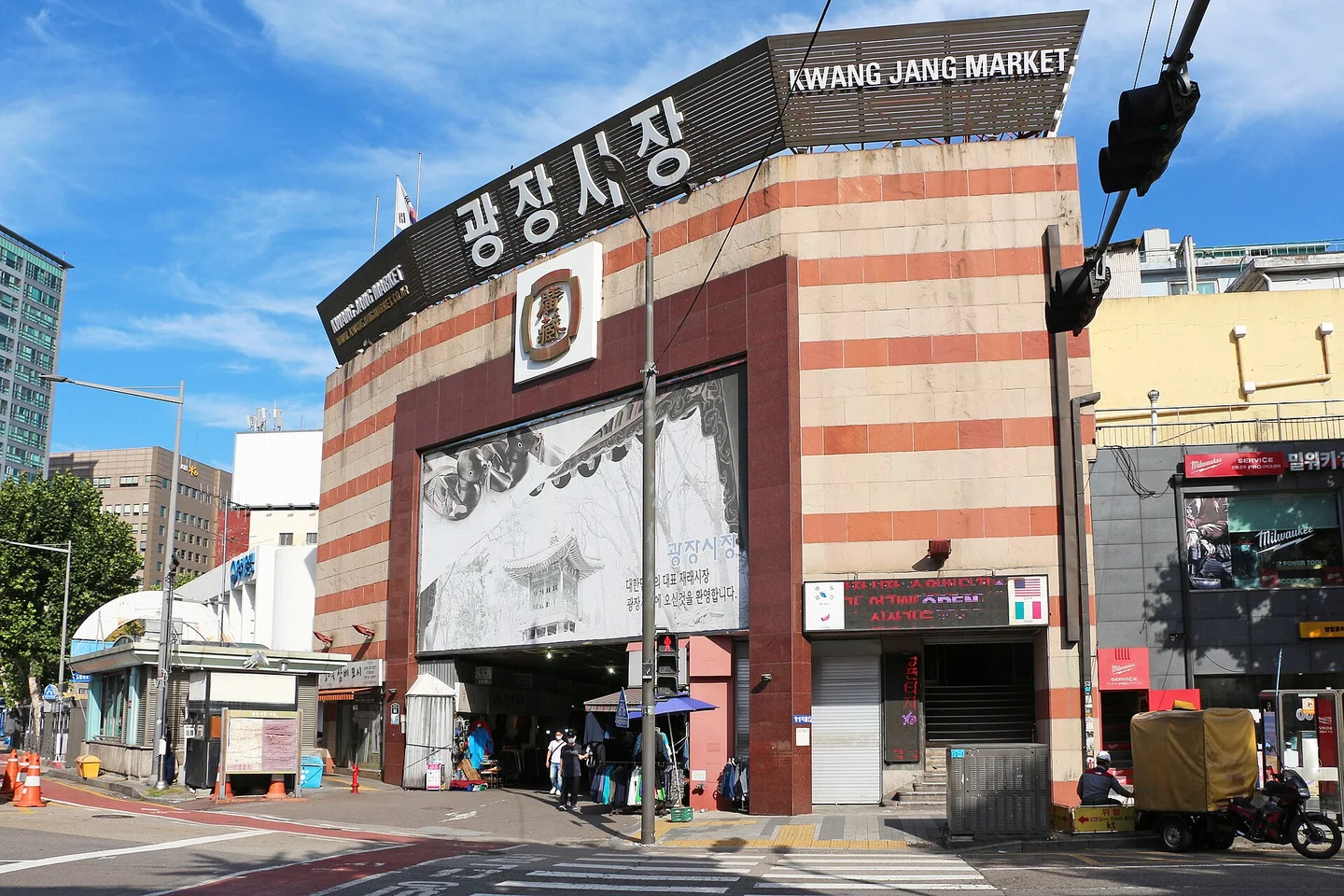
Gwangjang Market sign and building entrance

Bgag · Original · CC0 1.0 ·

Source notices and processing details

Gwangjang Market sign and building entrance

Photo: Bgag · Wikimedia Commons — Gwangjang Market, Seoul 01.jpg · CC0 1.0

WebP conversion; proportionally reduced where needed; no cropping or upscaling.

CC0; http://creativecommons.org/publicdomain/zero/1.0/deed.en; CC0 1.0: 저작권상 출처표시·동일조건변경허락 의무 없음. 저작자·원출처 표시 권장. 저장본 1920×1280; 원본 링크 보존, 제공 축소본 여부 true; 비율 유지 WebP 변환.

360 × 240: EXIF orientation normalized=False; embedded ICC transformed to sRGB; proportional downsample to 360x240; WebP q85; no crop, no synthesis

720 × 480: EXIF orientation normalized=False; embedded ICC transformed to sRGB; proportional downsample to 720x480; WebP q85; no crop, no synthesis

1440 × 960: EXIF orientation normalized=False; embedded ICC transformed to sRGB; proportional downsample to 1440x960; WebP q85; no crop, no synthesis

Take subway Line 1 to Jongno 5-ga Station and use Exit 8 for the approach listed by Seoul's visitor guide. The “5-ga” is part of the station name, not a reference to subway Line 5. If you have a particular stall in mind, save its location separately from the general market pin. Remember which main road you entered from, and pick a specific entrance or shop as a meeting point. The market's many junctions and closely packed signs can make “back at the entrance” less obvious than it sounds. A working market under the roof
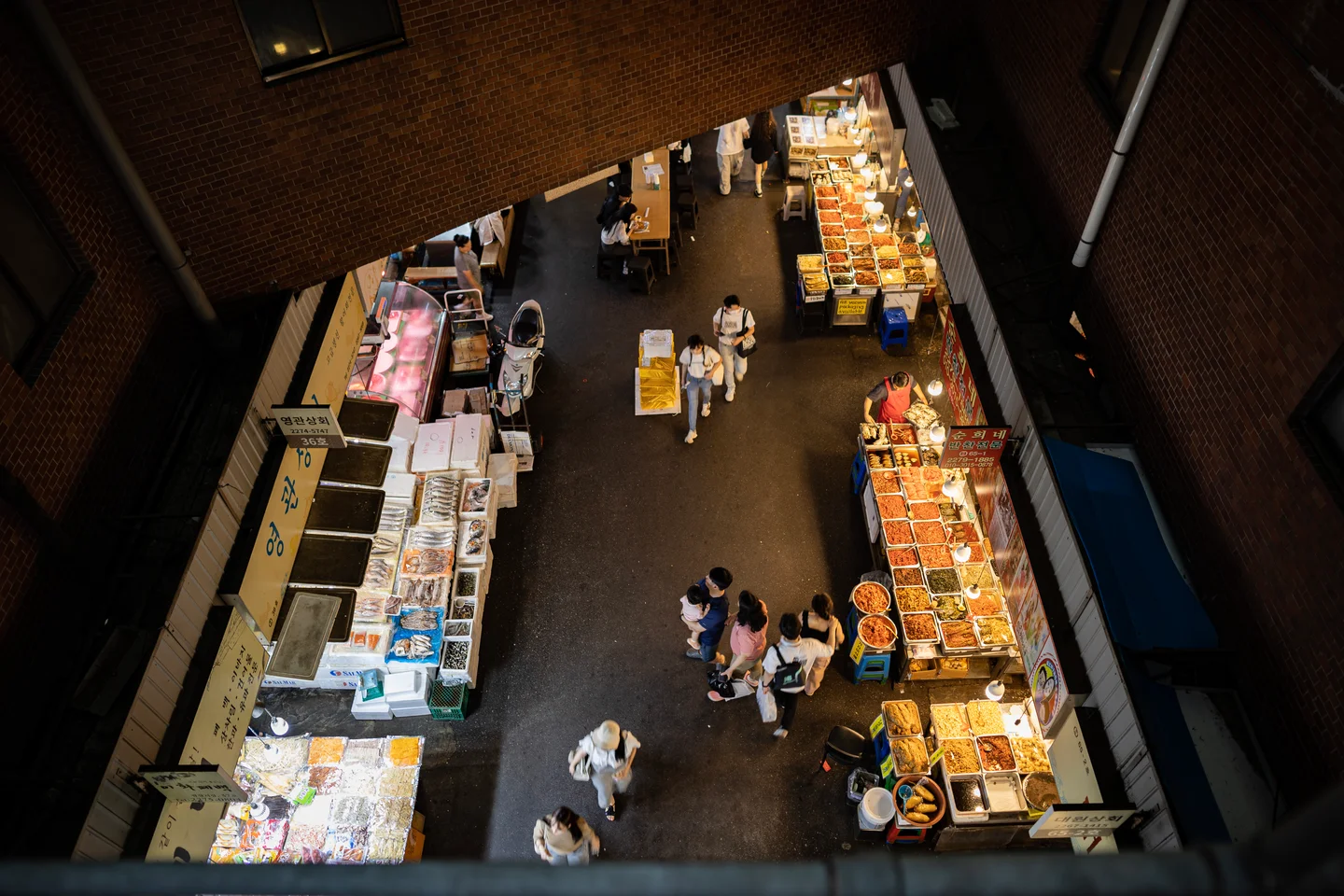
Market aisle between side-dish and ingredient shops

서울관광재단 서울관광아카이브 · Original · KOGL Type 1 ·

Source notices and processing details

Market aisle between side-dish and ingredient shops

Photo: 서울관광재단 서울관광아카이브 · archive.visitseoul.net · KOGL Type 1

WebP conversion; proportionally reduced where needed; no cropping or upscaling.

공공누리 제1유형: 출처표시. 상업 이용·변형 가능. 서울관광재단 서울관광아카이브 ARP0071u1 출처 링크 표시. 비율 유지 축소·WebP 변환.

360 × 240: EXIF orientation normalized=False; embedded ICC transformed to sRGB; proportional downsample to 360x240; WebP q85; no crop, no synthesis

720 × 480: EXIF orientation normalized=False; embedded ICC transformed to sRGB; proportional downsample to 720x480; WebP q85; no crop, no synthesis

1440 × 960: EXIF orientation normalized=False; embedded ICC transformed to sRGB; proportional downsample to 1440x960; WebP q85; no crop, no synthesis

Covered passages provide some shelter, but this isn't a climate-controlled mall. Cooking areas can be warm, and the flow of shoppers continues around people who stop to eat. Light luggage makes the visit easier, particularly when sitting at a bench with a narrow aisle behind you. Walk far enough to see the range before choosing a seat. The central counters offer an immediate view of the cooking; nearby restaurants may suit you better if seating comfort or a less crowded setting matters. A stall's benches belong to that business, so don't assume you can use them for food bought elsewhere.

Start with bindaetteok, the market's mung bean pancake
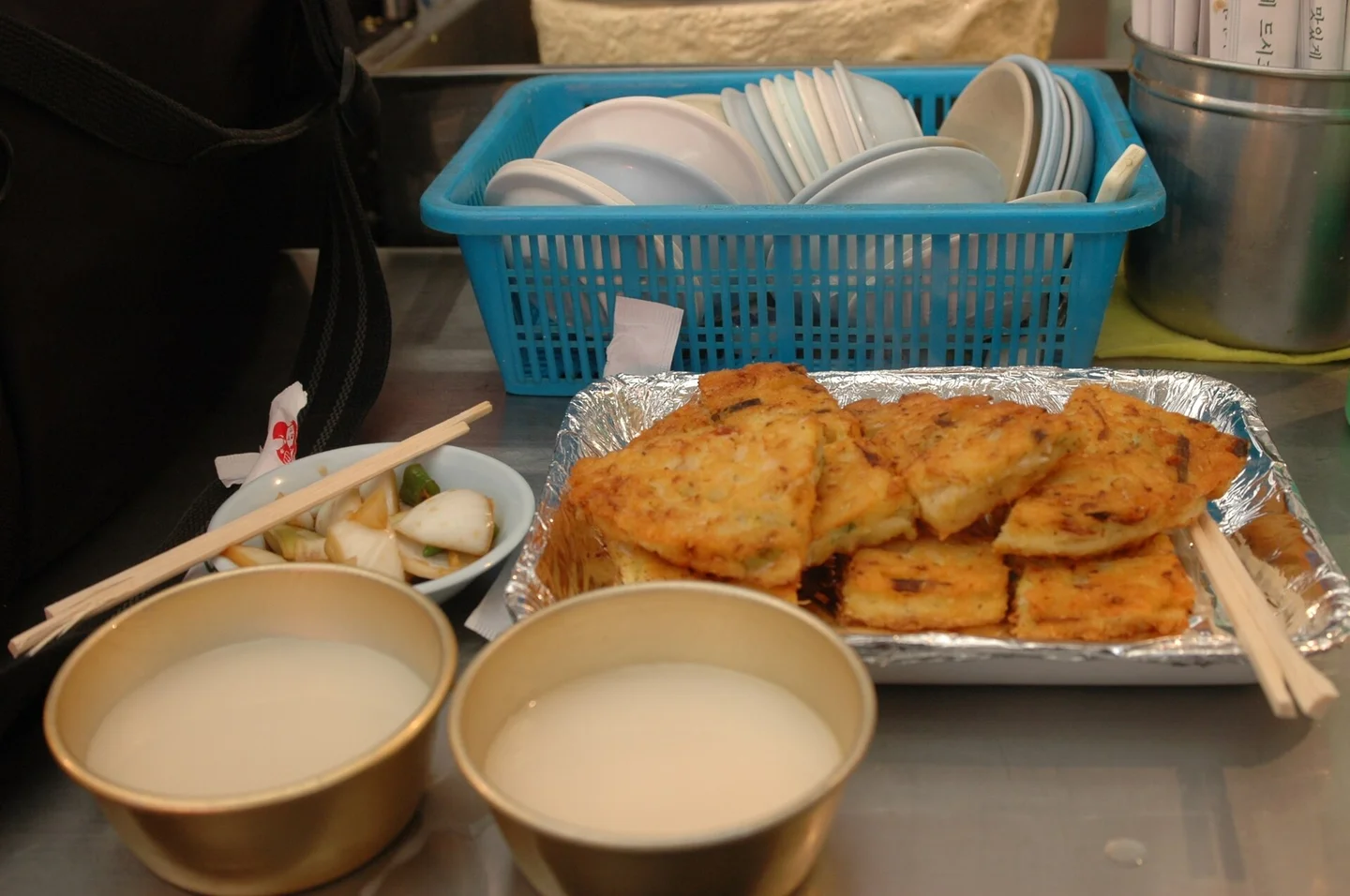
Sliced bindaetteok and cups of makgeolli

Pfc. Bo Park, 2ID PAO, US Army · Original · Public domain — source notice ·

Source notices and processing details

Sliced bindaetteok and cups of makgeolli

Photo: Pfc. Bo Park, 2ID PAO, US Army · Wikimedia Commons — Korean mung bean pancake and rice wine-Bindaetteok and makgeolli.jpg · Public domain — source notice

WebP conversion; proportionally reduced where needed; no cropping or upscaling.

The scope of use in Korea requires separate verification.

Public domain; https://commons.wikimedia.org/wiki/Commons:Public_domain; 미국 내 공공영역(미육군 공무상 저작물) 근거. BY-SA 동일조건 의무 없음. 한국에서의 이용범위는 별도 확인 필요. 저장본 1920×1275; 원본 링크 보존, 제공 축소본 여부 true; 비율 유지 WebP 변환.

한국에서의 이용범위는 별도 확인 필요

360 × 239: EXIF orientation normalized=False; RGB source without embedded ICC; color profile not invented; proportional downsample to 360x239; WebP q85; no crop, no synthesis

720 × 478: EXIF orientation normalized=False; RGB source without embedded ICC; color profile not invented; proportional downsample to 720x478; WebP q85; no crop, no synthesis

1440 × 956: EXIF orientation normalized=False; RGB source without embedded ICC; color profile not invented; proportional downsample to 1440x956; WebP q85; no crop, no synthesis

Bindaetteok is a thick, savory pancake made with ground mung beans. Its browned exterior and substantial center make it a satisfying first dish, and it is usually easy to divide for sharing. The batter and fillings vary: mung beans don't automatically make the finished pancake vegetarian, so ask about meat and other ingredients if needed. Makgeolli is a familiar pairing. This cloudy rice-based alcoholic drink is often served in bowls; its milky appearance doesn't mean it's a soft drink. Choose from the posted menu whether you want just food or a drink alongside it. For another stop, change the texture or portion size rather than ordering a second large plate of pancakes. Small gimbap rolls offer a rice-and-seaweed option. You may see them called mayak gimbap, a nickname referring to their “addictive” appeal. Bibimbap, rice mixed with vegetables and seasoning, is another direction if you're looking for a full bowl rather than several snacks. Check the actual serving size before deciding how much to order, especially when eating alone.

Yukhoe: know what you're ordering
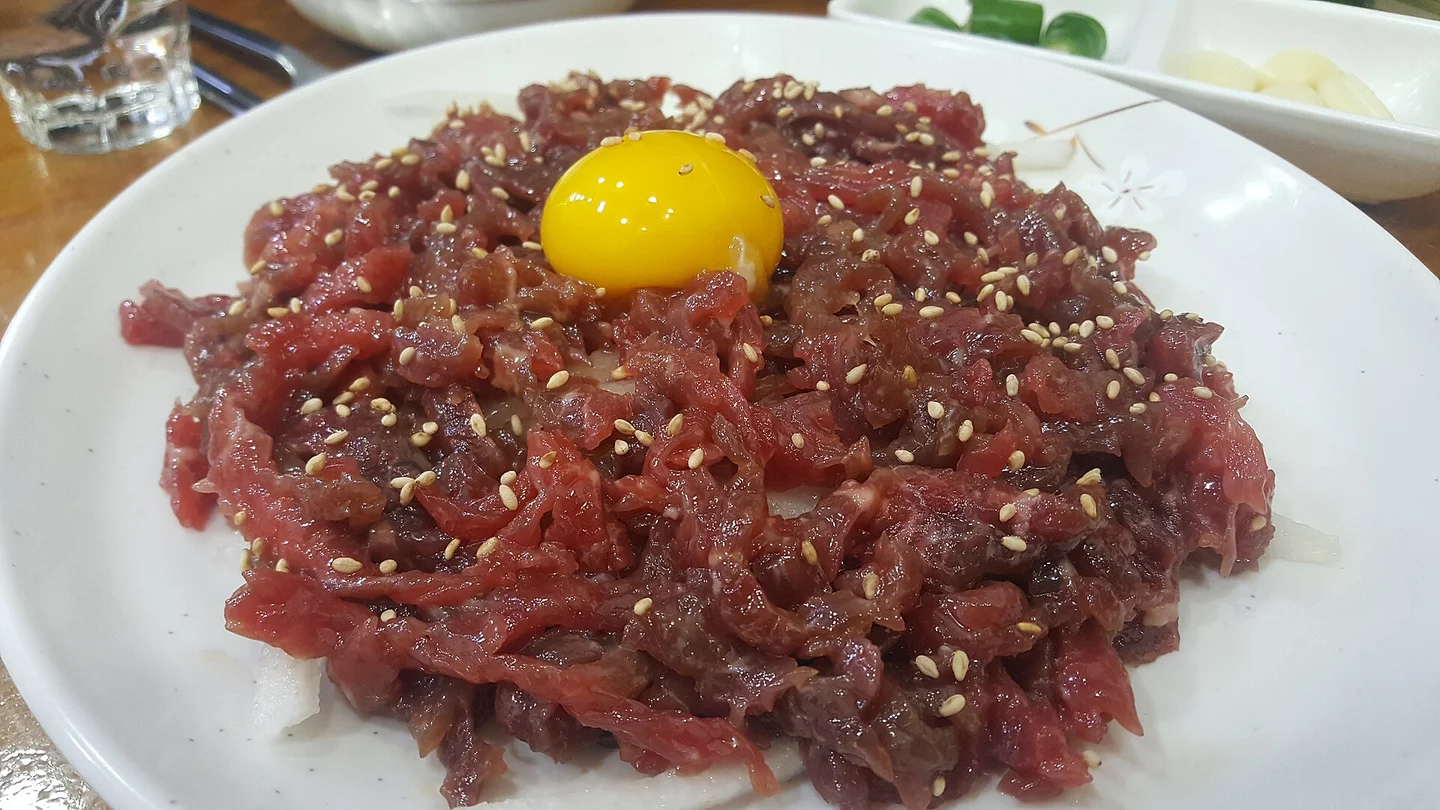
Yukhoe topped with egg yolk and sesame seeds

Choi2451 · Original · CC BY-SA 3.0 ·

Source notices and processing details

Yukhoe topped with egg yolk and sesame seeds

Photo: Choi2451 · Wikimedia Commons — Yukhoe in Gwangjang Market, Seoul.jpg · CC BY-SA 3.0

WebP conversion; proportionally reduced where needed; no cropping or upscaling.

Processed copies are provided under the same license shown above.

CC BY-SA 3.0; https://creativecommons.org/licenses/by-sa/3.0; 저작자·출처·라이선스 표기, BY-SA 동일조건 유지. 저장본 1920×1080; 원본 링크 보존, 제공 축소본 여부 true; 비율 유지 WebP 변환.

360 × 202: EXIF orientation normalized=False; RGB source without embedded ICC; color profile not invented; proportional downsample to 360x202; WebP q85; no crop, no synthesis

720 × 405: EXIF orientation normalized=False; RGB source without embedded ICC; color profile not invented; proportional downsample to 720x405; WebP q85; no crop, no synthesis

1440 × 810: EXIF orientation normalized=False; RGB source without embedded ICC; color profile not invented; proportional downsample to 1440x810; WebP q85; no crop, no synthesis

Yukhoe is seasoned raw beef, commonly cut into thin strips and paired with pear, sesame and an egg yolk. Thinking of it as Korean beef tartare gives a clearer idea than expecting grilled meat or a dish that arrives partly cooked. Its soft texture and seasoning make it quite different from the hot, crisp pancakes elsewhere in the market. If raw beef isn't for you, the market has plenty of cooked alternatives. There's no need to make yukhoe part of the meal simply because it is a specialty. For any dish, ingredients and preparation belong to the individual business, so ask rather than relying on the appearance of another customer's plate. Before ordering, establish whether the price is per piece, per plate or per person, and whether a mixed platter includes the items you want. Confirm the quantity and total, then the payment method. Small amounts of cash can be useful, but don't assume every stall follows the same payment rules. These checks are easiest before you're seated with food arriving.

Side dishes: a glimpse of the everyday Korean table
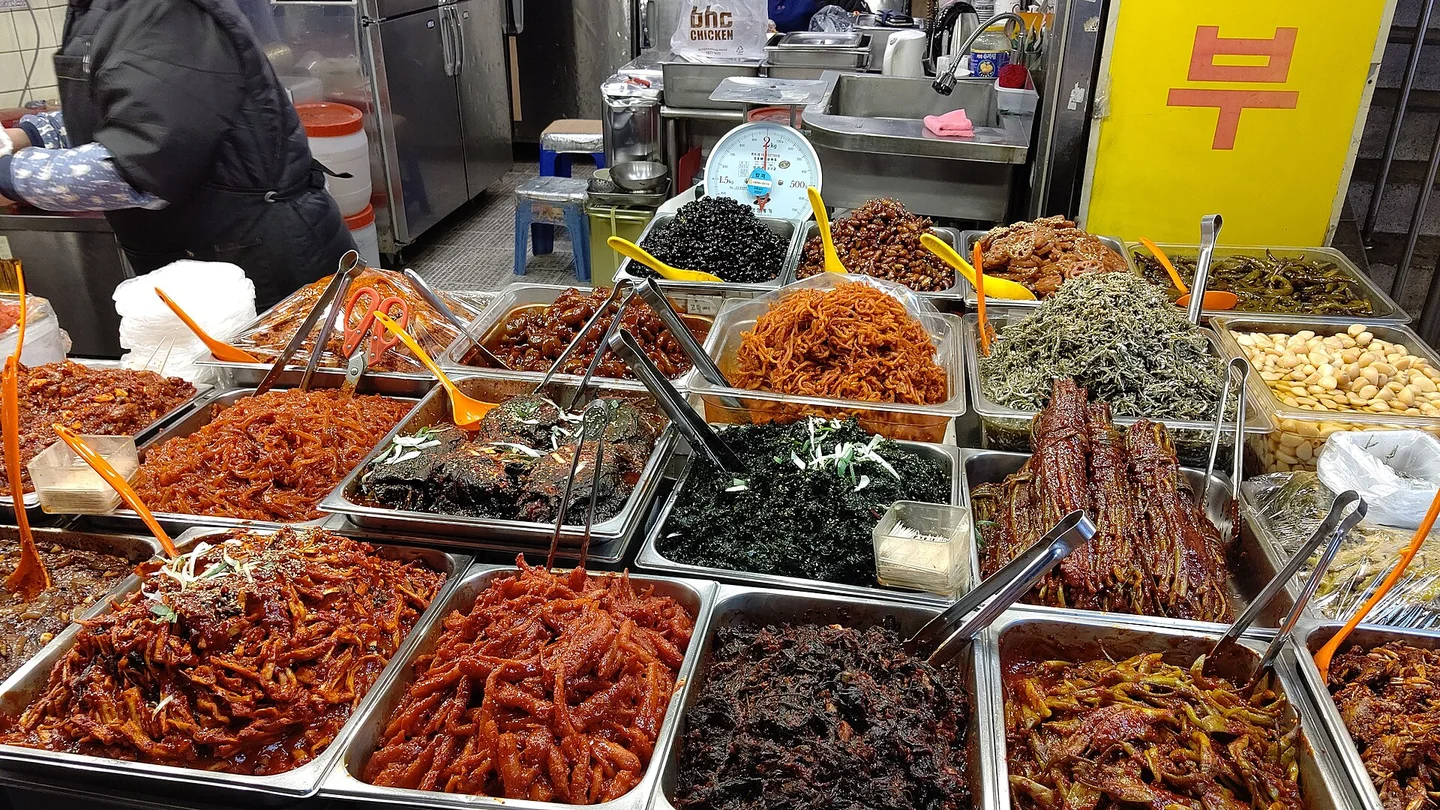
Stall with assorted side dishes in containers

Stck w · Original · CC BY-SA 4.0 ·

Source notices and processing details

Stall with assorted side dishes in containers

Photo: Stck w · Wikimedia Commons — Hong Lim's Banchan stall, Gwangjang Market, Seoul 2020-02-01.jpg · CC BY-SA 4.0

WebP conversion; proportionally reduced where needed; no cropping or upscaling.

Processed copies are provided under the same license shown above.

CC BY-SA 4.0; https://creativecommons.org/licenses/by-sa/4.0; 저작자·출처·라이선스 표기, BY-SA 동일조건 유지. 저장본 1920×1080; 원본 링크 보존, 제공 축소본 여부 true; 비율 유지 WebP 변환.

Stck w  This photo was taken with Sharp Aquos R3

360 × 202: EXIF orientation normalized=False; RGB source without embedded ICC; color profile not invented; proportional downsample to 360x202; WebP q85; no crop, no synthesis

720 × 405: EXIF orientation normalized=False; RGB source without embedded ICC; color profile not invented; proportional downsample to 720x405; WebP q85; no crop, no synthesis

1440 × 810: EXIF orientation normalized=False; RGB source without embedded ICC; color profile not invented; proportional downsample to 1440x810; WebP q85; no crop, no synthesis

Banchan are the side dishes served with Korean meals. At the market, they fill large trays rather than the small dishes you see at a restaurant: pickled vegetables, seasoned greens, stir-fried items and braised foods sit side by side. Browsing this section helps put a familiar restaurant spread into the context of everyday shopping. For takeout, ask how a portion is measured and priced, and how it should be stored. Something intended for a meal back at your accommodations may need refrigeration, making it an awkward purchase before a long afternoon outdoors. Packaging for travel and permission to bring food into another country are separate questions, so check destination requirements before treating prepared food as a souvenir. This is also a good place to be specific about ingredients. A mild-looking dish may contain seafood or meat seasoning, while a red sauce doesn't tell you everything that's in it. A short written dietary question is more reliable than guessing from color.

Hanbok, fabrics and a walk after lunch
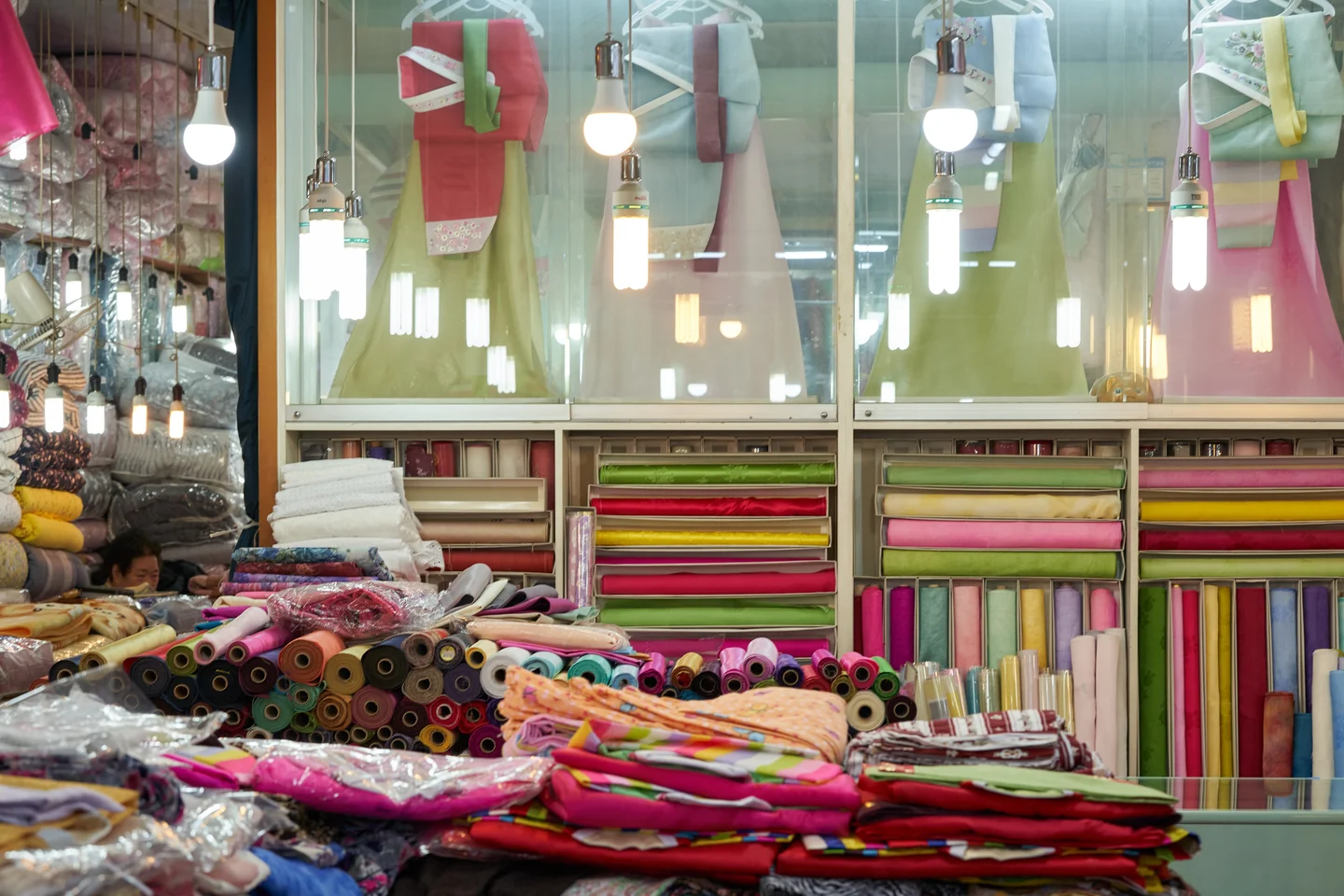
Shop displaying hanbok and colorful fabrics

서울관광재단 서울관광아카이브 · Original · KOGL Type 1 ·

Source notices and processing details

Shop displaying hanbok and colorful fabrics

Photo: 서울관광재단 서울관광아카이브 · archive.visitseoul.net · KOGL Type 1

WebP conversion; proportionally reduced where needed; no cropping or upscaling.

공공누리 제1유형: 출처표시. 상업 이용·변형 가능. 서울관광재단 서울관광아카이브 ARP003pp1 출처 링크 표시. 비율 유지 축소·WebP 변환.

360 × 240: EXIF orientation normalized=False; embedded ICC transformed to sRGB; proportional downsample to 360x240; WebP q85; no crop, no synthesis

720 × 480: EXIF orientation normalized=False; embedded ICC transformed to sRGB; proportional downsample to 720x480; WebP q85; no crop, no synthesis

1440 × 960: EXIF orientation normalized=False; embedded ICC transformed to sRGB; proportional downsample to 1440x960; WebP q85; no crop, no synthesis

The textile shops offer another reason to visit during the day. Bolts of fabric, folded cloth and hanbok jackets and skirts introduce a different kind of color from the food lanes. Even without buying, you can compare textures and combinations and see a side of the market that is easy to miss on a food-only visit. If you do want a hanbok, first distinguish a ready-made garment from a custom order. A fabric you like isn't necessarily an outfit you can take away that afternoon. Ask about measurements, production time and collection. Buying cloth also goes more smoothly when you know the length and width you need. These businesses serve a different purpose from the hanbok rental shops around Seoul's palaces. Food stalls and textile stores don't all share the same hours or days off. Plan around the particular shopping area if buying fabric is the priority; an evening food visit doesn't promise the same range of retail businesses will be open. After eating, head south toward Cheonggyecheon for a change of pace, or return to Jongno 5-ga for the subway. The streamside path sits below street level, so locate a ramp if you need step-free access and follow any weather-related closures. A meal, a look through the fabric aisles and a stretch beside the water make a satisfying visit without trying to fit the entire market onto one plate.

Sources서울관광 광장시장: https://korean.visitseoul.net/Tourist-Attractions-list1/%EA%B4%91%EC%9E%A5%EC%8B%9C%EC%9E%A5/KOP000286 한국관광공사 광장시장: https://english.visitkorea.or.kr/svc/contents/contentsView.do?vcontsId=106345 서울미래유산 광장주식회사: https://futureheritage.seoul.go.kr/futureHeritageMeet/futureHeritage/view.do?htNo=454 한국관광공사 광장시장 한복매장: https://access.visitkorea.or.kr/ms/detail.do?cotId=62115fae-8793-4e9d-ac98-022e880470c8 서울시설공단 청계천: https://sisul.or.kr/open_content/cheonggye/ Exit 8 and separate food/retail schedules: https://english.visitseoul.net/PalaceArea/Gwangjang-Market/ENP000286 Gwangjang dish definitions, ingredients and names: https://english.visitseoul.net/tours/Dongdaemun-More-Than-Just-a-Fashion-Town-EN/ENN008035 확인일: 2026-10-12 (Asia/Seoul). 기본 근거: seoul-005 한국어 완료 원고의 사실·선택 사진. 영어는 독립 구성·집필.

Travel guide