Eunpyeong Hanok Village: Rooftops, Mountain Views, and a Tea Break
Mobius6 · Original · CC BY-SA 4.0 ·
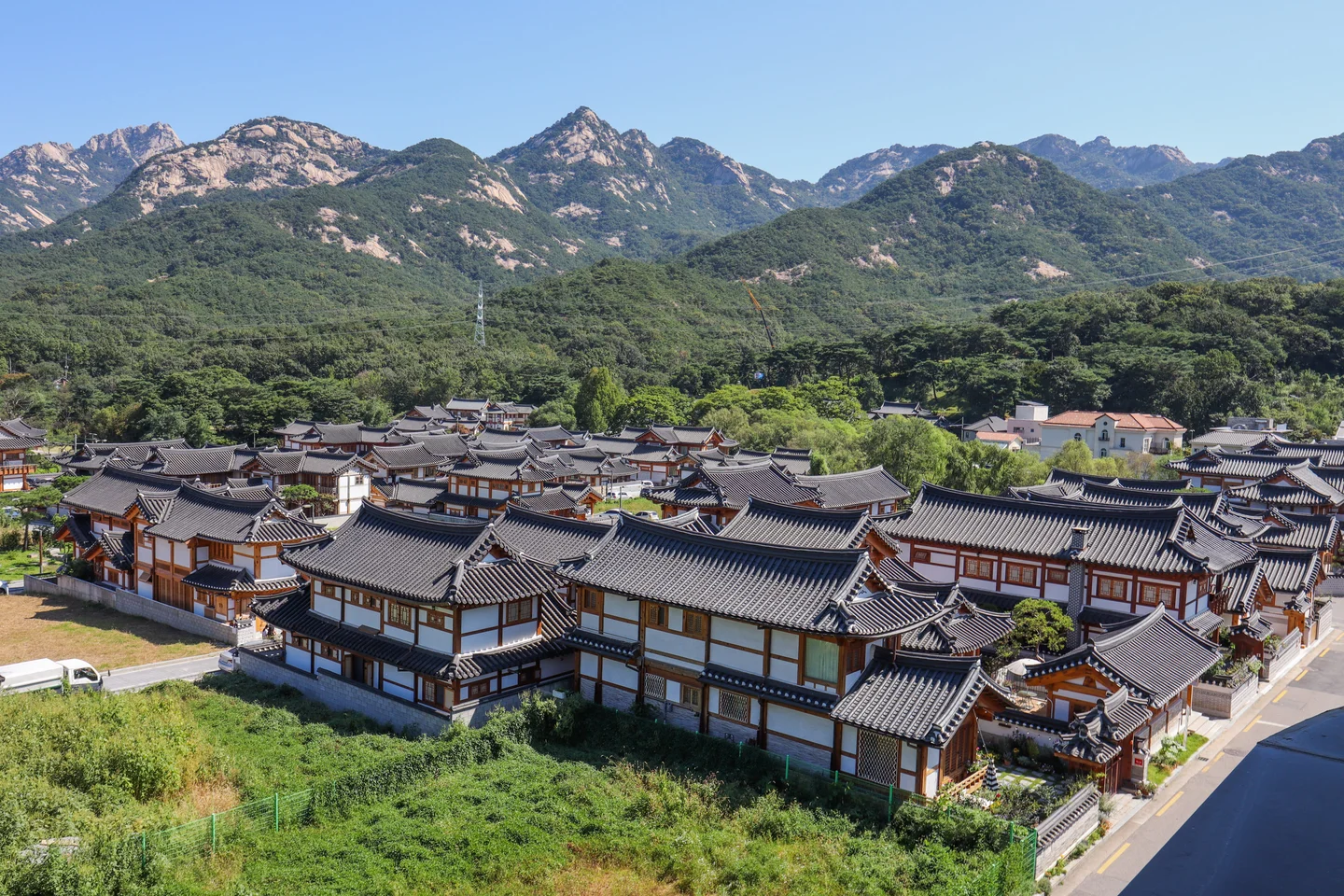
Bukhansan’s granite peaks rise behind a broad patchwork of tiled roofs. That combination is the reason to make time for Eunpyeong Hanok Village: you can enjoy a mountain landscape while staying among streets, cultural spaces, and cafés, with Jingwansa Temple a natural extension of the walk. The village is a modern development of traditional-style Korean houses, established in 2014. Its interest lies in how hanok architecture accommodates life today, from homes and guesthouses to shops with familiar signs beneath deep wooden eaves. Come to explore that living architectural setting rather than expecting an untouched centuries-old settlement. Is it worth the trip if you are already visiting Bukchon? Eunpyeong makes sense when the mountain backdrop, a temple walk, and time over tea are part of the appeal. Bukchon fits more directly into a central palace itinerary. Give Eunpyeong a half day of its own so the extra transit leads to an enjoyable outing, rather than a rushed photograph between appointments downtown.
Getting Here: The Bus Is Part of the Trip
Mobius6 · Original · CC BY-SA 4.0 ·
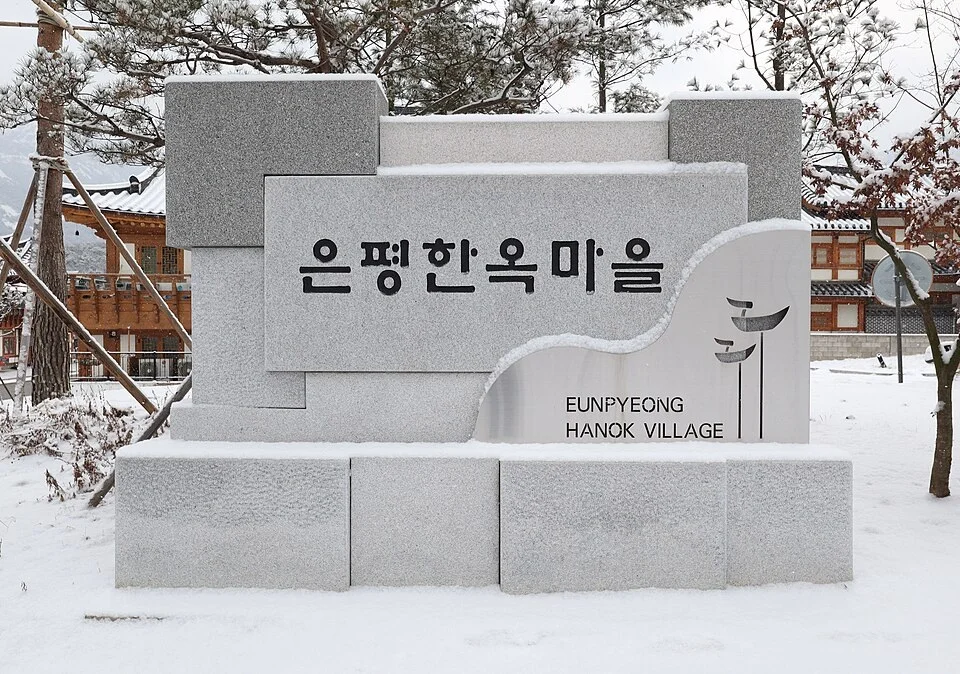
The village is not immediately outside a subway station. Two convenient connections are Yeonsinnae, served by Lines 3 and 6, and Gupabal on Line 3. From either, continue by bus to Hana High School, Jingwansa and Samcheonsa Entrance. Save the Korean stop name, 하나고·진관사·삼천사 입구, to make the final leg easier to recognize. The museum’s official directions, checked October 12, 2026, list buses 701, 709, and 7211 from Yeonsinnae Exit 3, or bus 7723 from the Gupabal/Lotte Mall transfer area by Exit 4. These are alternatives; choose the one that fits your accommodation and the live journey information. From the stop, the museum is a short walk away. A useful order is museum → village lanes → café or tea experience → Jingwansa, with the temple optional. If you have reserved a tea session, let that appointment determine the order instead. Note the return stop before wandering deeper into the neighborhood, especially if you plan to leave after dark.
What to Look for Between the Houses
Mobius6 · Original · CC BY-SA 4.0 ·
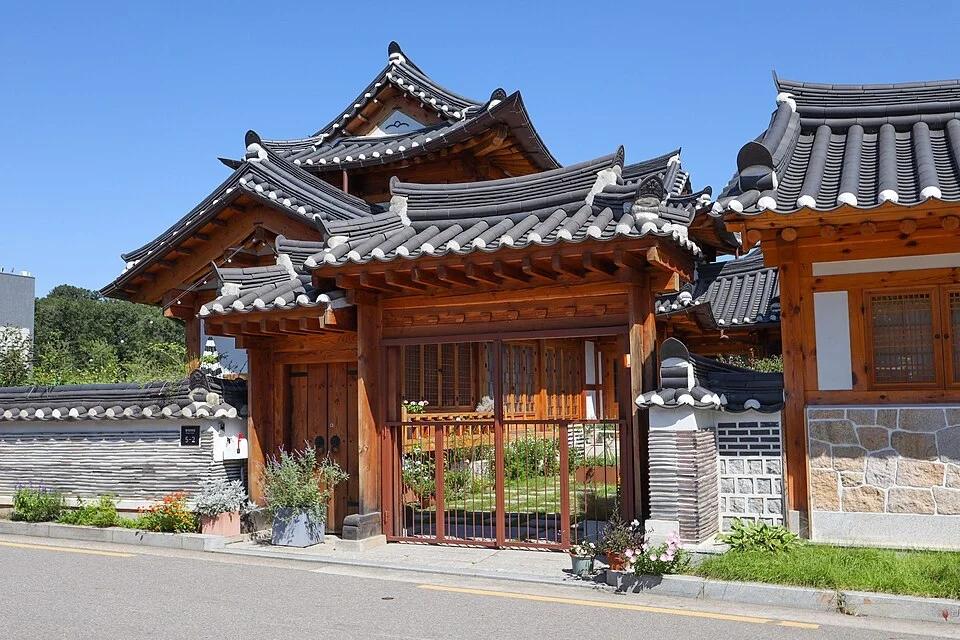
At street level, the view changes from a pattern of roofs to a series of individual buildings. Look at the small roof over a gate, the join between a wooden post and its base, the latticework of a window, and the meeting of stone and brick in a boundary wall. Similar materials produce surprisingly different façades. The houses also invite questions about how a hanok works. How does the roof shelter the rooms beneath it? Where does the courtyard sit in relation to the entrance? Which parts are timber, and which are infill or modern additions? You can notice a great deal from the public lanes without needing to enter a home. This is a residential neighborhood as well as a visitor destination. Keep photographs to exteriors from public paths, leave gates and driveways clear, and treat an open door as a household entrance unless it is clearly marked for visitors. For an indoor hanok experience, choose a public cultural facility or a business that welcomes customers. One small change of position along the street often provides a better view than lingering in front of someone’s window.
The Museum Makes the Architecture More Interesting
Eunpyeong History Hanok Museum is a worthwhile first stop if you want more than a rooftop view. Its history galleries introduce the district and excavated objects; the hanok exhibition explains the materials, construction, and changing forms of Korean homes. Look for the sections on ondol, the floor-heating system, and maru, the raised wooden-floored space. Together, they offer a practical way to think about how a house handles cold weather, airflow, and everyday living. The building-process displays also cover timber assembly and the tools involved. These are details you can carry back into the village walk, where a column or roof joint becomes easier to read. As checked on October 12, 2026, the museum’s visitor guide lists 9 a.m.–6 p.m., with last entry at 5 p.m. Standard adult admission is ₩1,000. It closes Mondays, shifting that closure to Tuesday when Monday is a public holiday, and also closes January 1 and the Lunar New Year and Chuseok holiday periods. Plan a museum-centered visit for an opening day rather than leaving it to the final minutes of an afternoon. The nearby Samgaksan Geumam Art Museum offers another possible cultural stop. Choose an exhibition or a tea session that interests you, rather than trying to fit every small venue into one visit.
Choose Between a Café View and a Tea Experience
Mobius6 · Original · CC BY-SA 4.0 ·
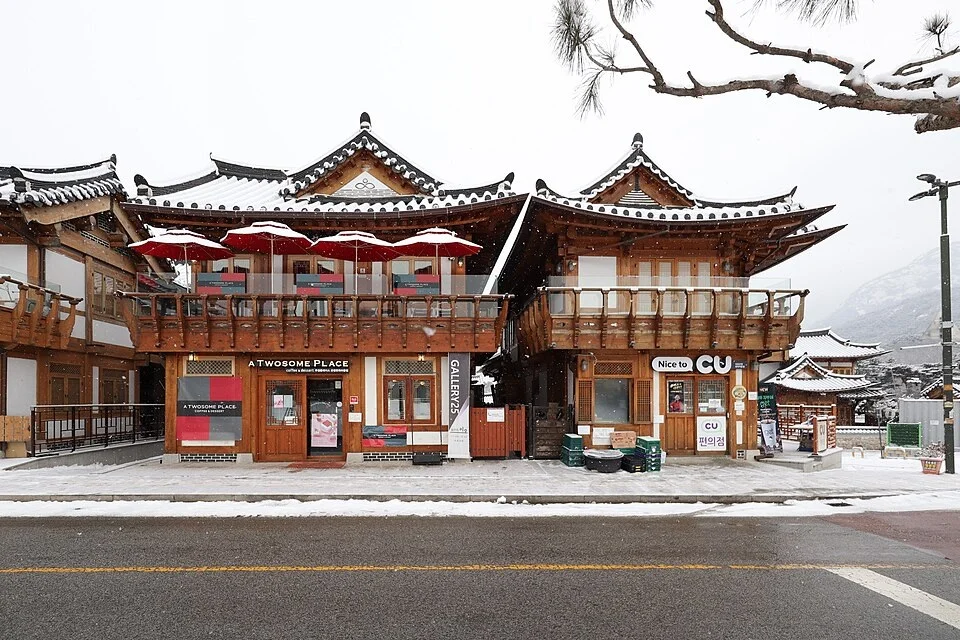
An upstairs seat can reveal how the roofs overlap against Bukhansan. One option is 1in1jan, known for its village-and-mountain outlook and Korean-style drinks and desserts. The current Visit Seoul listing separates its floor-by-floor hours and notes a regular Monday closure, with public-holiday exceptions. If this café is the main reason for your trip, check the floor you want before setting out. For a casual break, choose the available seat and menu that suit you. A higher floor does not guarantee the exact angle you have seen online, and a terrace can feel quite different from an indoor table in wind or winter. If you need step-free access or are visiting with children, ask about the particular seating area before ordering. Darakbang offers a different kind of stop: a cultural space centered on tea. Its ground-floor Onjeongdasil has floor seating, while the upstairs Solbit Darak uses chairs and looks over the village. The guided experience involves brewing a leaf tea rather than simply ordering a drink from a café menu. The official tea-session information, checked October 12, 2026, describes 30-minute sessions conducted in Korean. Advance reservations close at 6 p.m. the previous day; walk-in participation depends on remaining places. The fee is ₩3,000 per person, paid before the session. Bring Korean won in cash rather than relying on an overseas card; the venue lists a restriction on overseas-card payments.
Continue Toward Jingwansa for Trees and Temple Roofs
Mobius6 · Original · CC BY-SA 4.0 ·
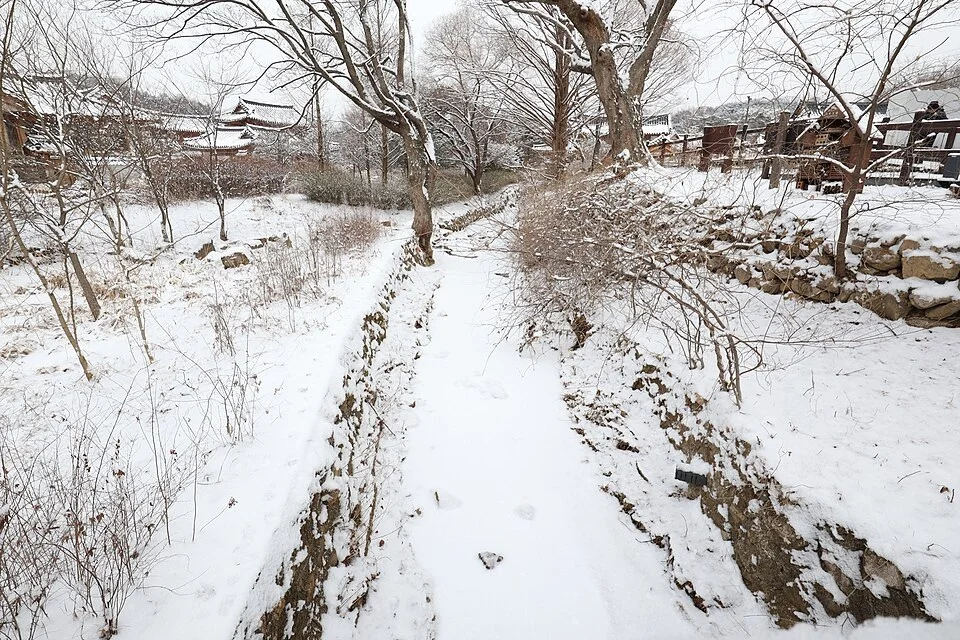
Toward the village edge, trees and small waterways soften the transition from houses to the mountain foothills. Follow the public walking route toward Jingwansa and the outing gradually changes character: boundary walls give way to a more wooded approach, with the temple ahead. Adding Jingwansa gives the trip another architectural setting. A household gate and a temple entrance serve different purposes, even when both draw on traditional building forms. Leave time to explore the publicly accessible temple grounds quietly and to notice how the halls sit against the surrounding landscape. A temple walk is distinct from a Templestay program or a temple-food experience, which have their own arrangements. It is also distinct from a Bukhansan hike. You can enjoy the village and temple without continuing onto a mountain route, making this a good choice for companions who want scenery without a summit climb.
Make the Weather Work for Your Visit
Mobius6 · Original · CC BY-SA 4.0 ·
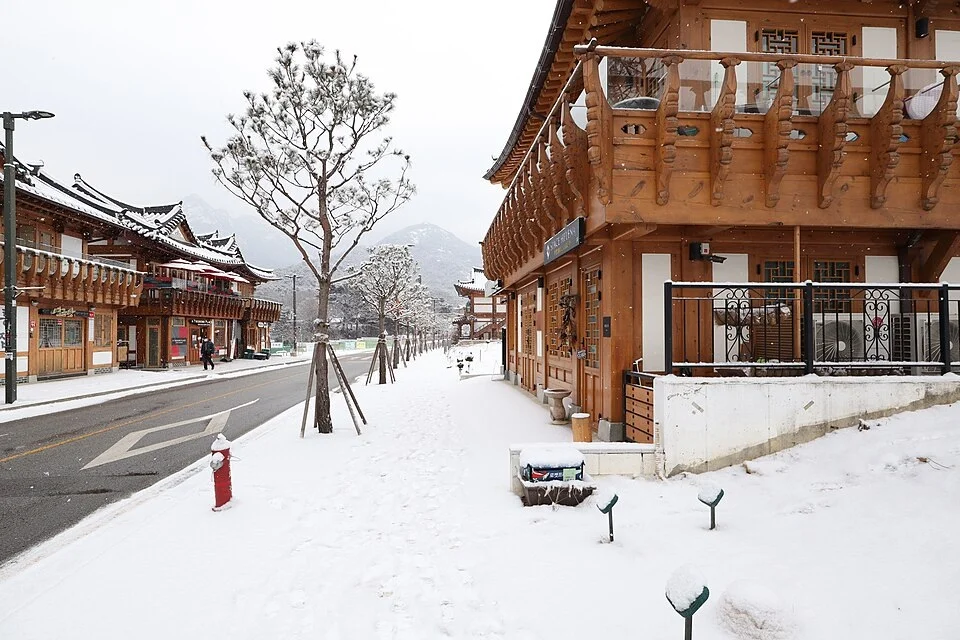
On a clear day, the mountain ridgeline deserves a place in your plan. When distant views fade, concentrate on the lanes, the museum, and an indoor tea break. The village still has plenty of close-up detail in its wood, stone, and tiled roof edges. Snow can transform the contrast between the dark roofs and pale streets, but it is an occasional condition rather than something a winter visit guarantees. Wear shoes with grip and watch shaded sidewalks after snowfall. The indoor stops are useful for warming up as well as for their own exhibits and experiences.