Cheonggyecheon's walking paths sit below street level, giving you an unexpectedly different view of central Seoul. Traffic and office towers remain just above, but down by the water the route passes beneath bridges, alongside stone embankments and through pockets of planting. It's an easy way to take a break between bigger sights, especially with Jonggak's restaurants close by.
For a first visit, start at Cheonggye Plaza and walk east past Mojeongyo and Gwangtonggyo, then head up toward Bosingak and Jonggak. Extend the stream portion to Jangtonggyo or Samilgyo if you'd like more time beside the water. The plaza-to-Samilgyo stretch is roughly 0.9 kilometers, or a little over half a mile, before any street-level detours. There's no need to tackle the stream's entire length.
The most useful plan is a pair of bridge names and a meal nearby. That gives the walk a beginning and an endpoint while leaving time to sit, watch the water or stop at the historic bell pavilion.
Where to start: Cheonggye Plaza
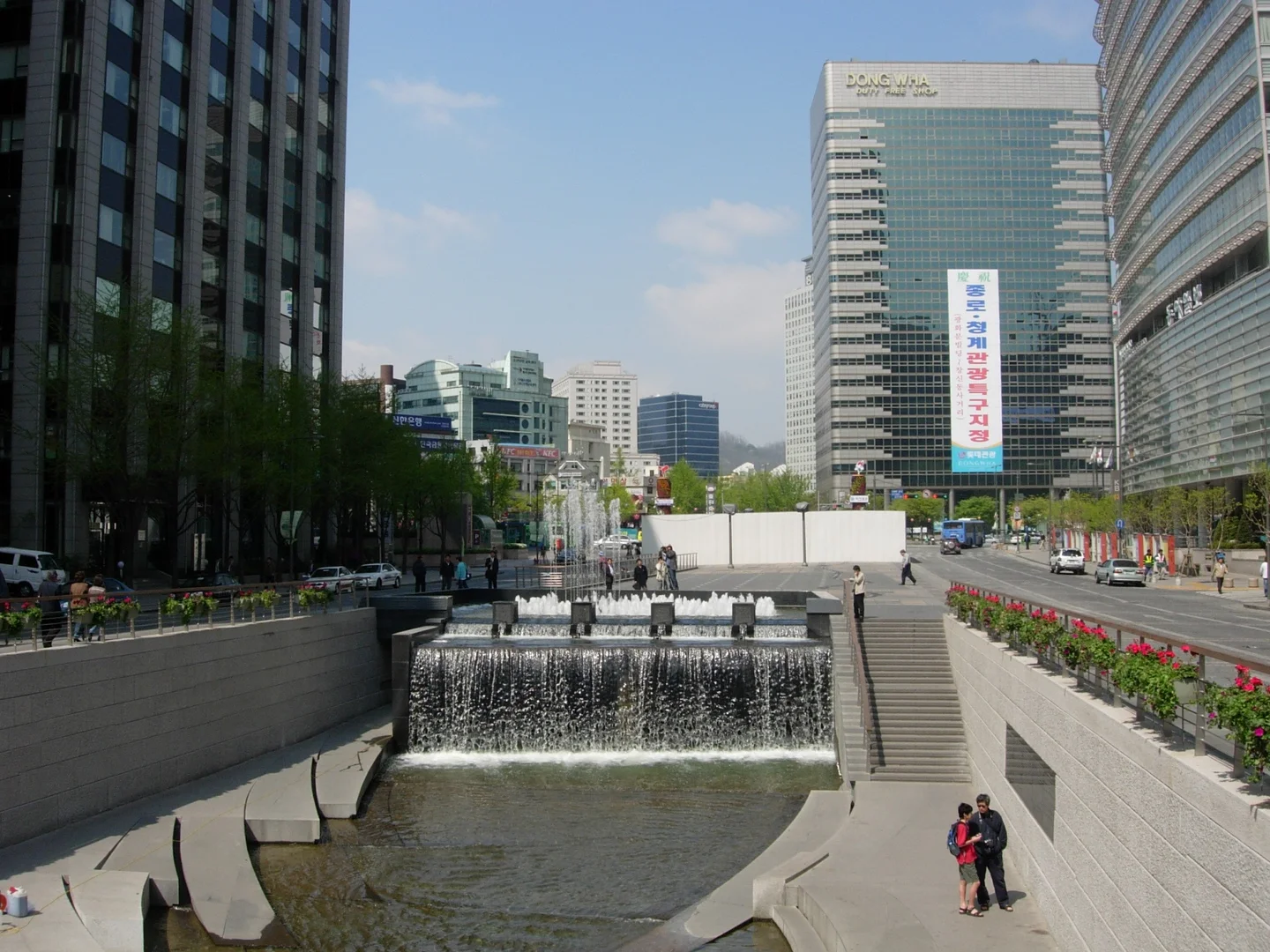
The waterfall at Cheonggye Plaza and the walkway below
Cheonggye Plaza marks the upstream end of the restored central section. It fits naturally after a visit to Gwanghwamun and is accessible from the Gwanghwamun or City Hall station areas. If Bosingak is your main interest, arrive at Jonggak Station on Line 1 and reverse the order, visiting the pavilion before heading toward the stream.
At the plaza, look east along the watercourse before going down. The cascade and broad paved spaces make the relationship between the stream and the surrounding city easy to see. Fountain displays depend on operating conditions, but the walk doesn't need a special show to be worthwhile.
Mojeongyo: the first bridge east of the plaza
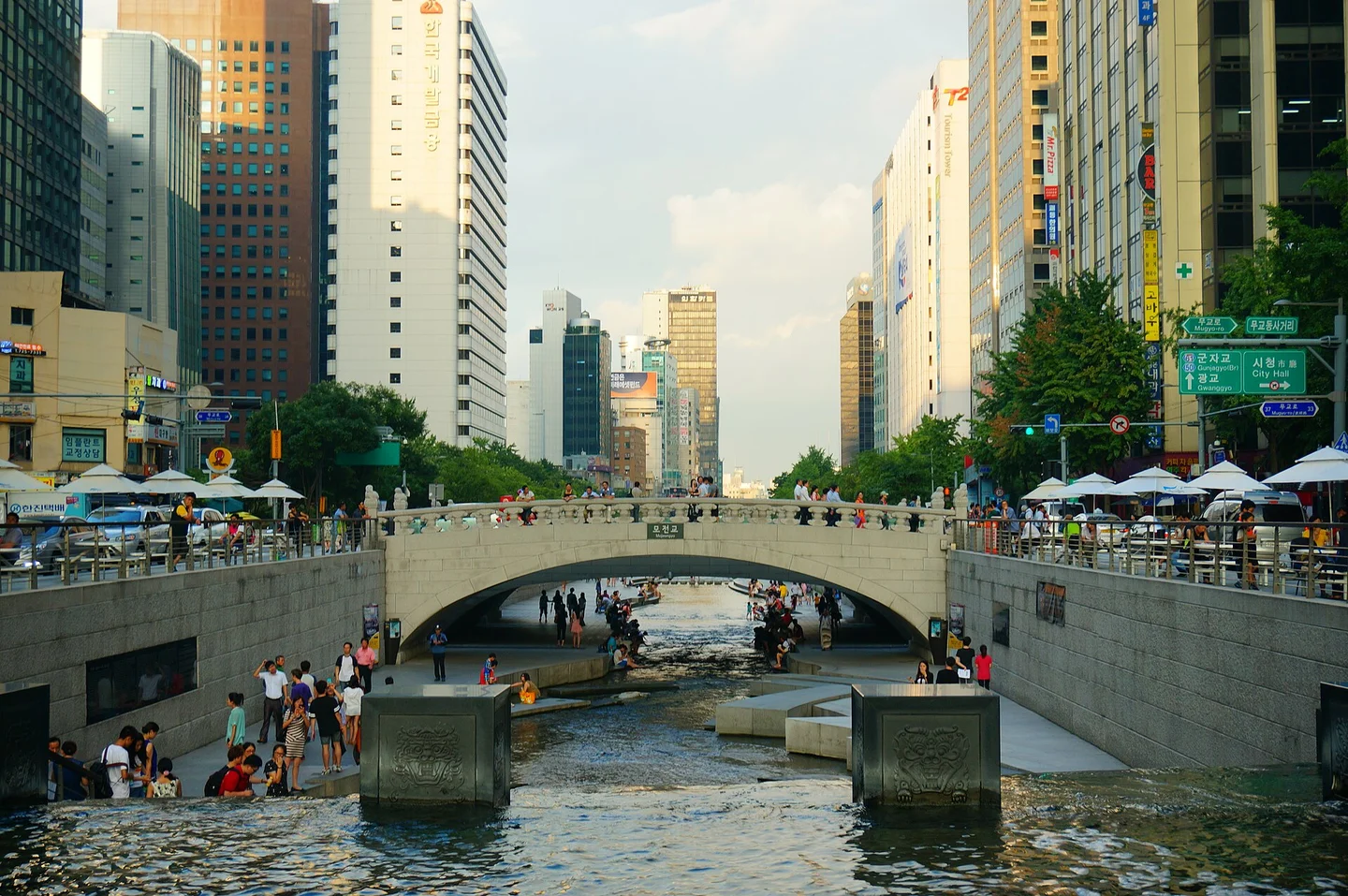
Mojeon Bridge and walkways on both sides of Cheonggyecheon
Mojeongyo's arch spans the water between tall buildings. From the lower path, the bridge frames the channel ahead; from street level, you can see how the stream cuts through the office district. Moving between the two levels is part of the experience, rather than simply a way to reach the next landmark.
Choose your exit as well as your entrance. The lower paths don't connect to every building beside them, so a cafe that looks close on the map may require walking onward to a staircase or ramp. Wheelchair users and families with strollers should use the operator's accessible-route map to plan both ends. Restrooms and meals are also reasons to allow for a return to street level.
Gwangtonggyo and the story of the restored stream
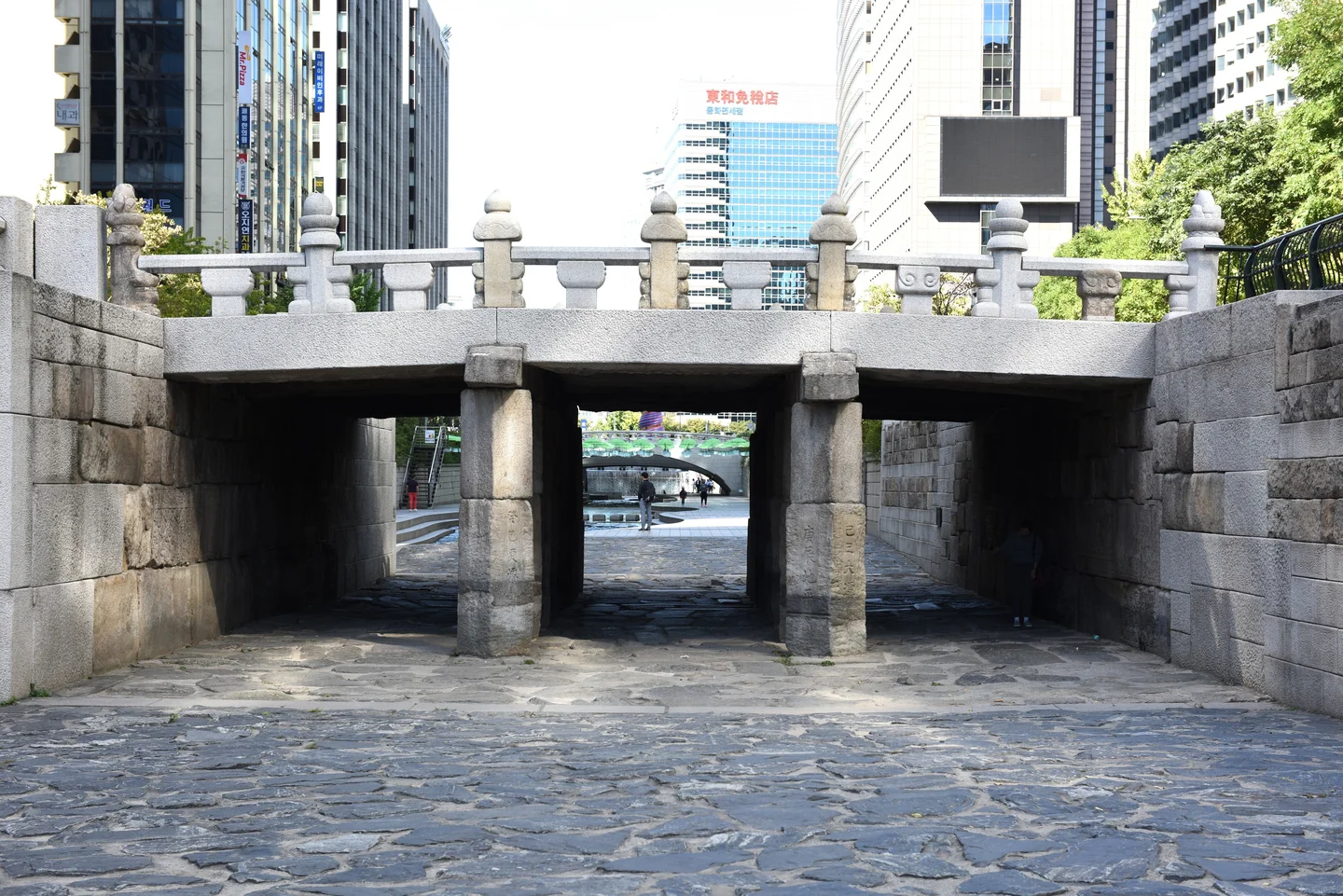
Stone pillars beneath Gwangtong Bridge over Cheonggyecheon
Gwangtonggyo comes next. Its stone supports and unevenly weathered surfaces are easiest to appreciate from the lower walkway, where the older masonry contrasts with the glass and concrete buildings overhead. Pause at the interpretation panel if you want to understand the bridge's history, then compare the view from above.
Cheonggyecheon reopened in 2005 after a major restoration that removed the road infrastructure covering it. The result is a designed urban waterway rather than an untouched natural valley. That history is central to its appeal: the walk lets you see how Seoul made room for a public landscape within a dense downtown district.
Beyond Gwangtonggyo, continue east past Gwanggyo and Jangtonggyo to Samilgyo. The bridges and changes in the channel give each short section a different feel. Their nameplates also make useful map references. Save the name of the bridge where you leave the water if you're planning to meet someone or return after dinner.
A one-way walk is often easier than retracing every step. Once you've had enough time by the stream, go up to the street and continue toward Jonggak, rather than treating the starting plaza as a compulsory finish line.
Bosingak and Jonggak's restaurant streets
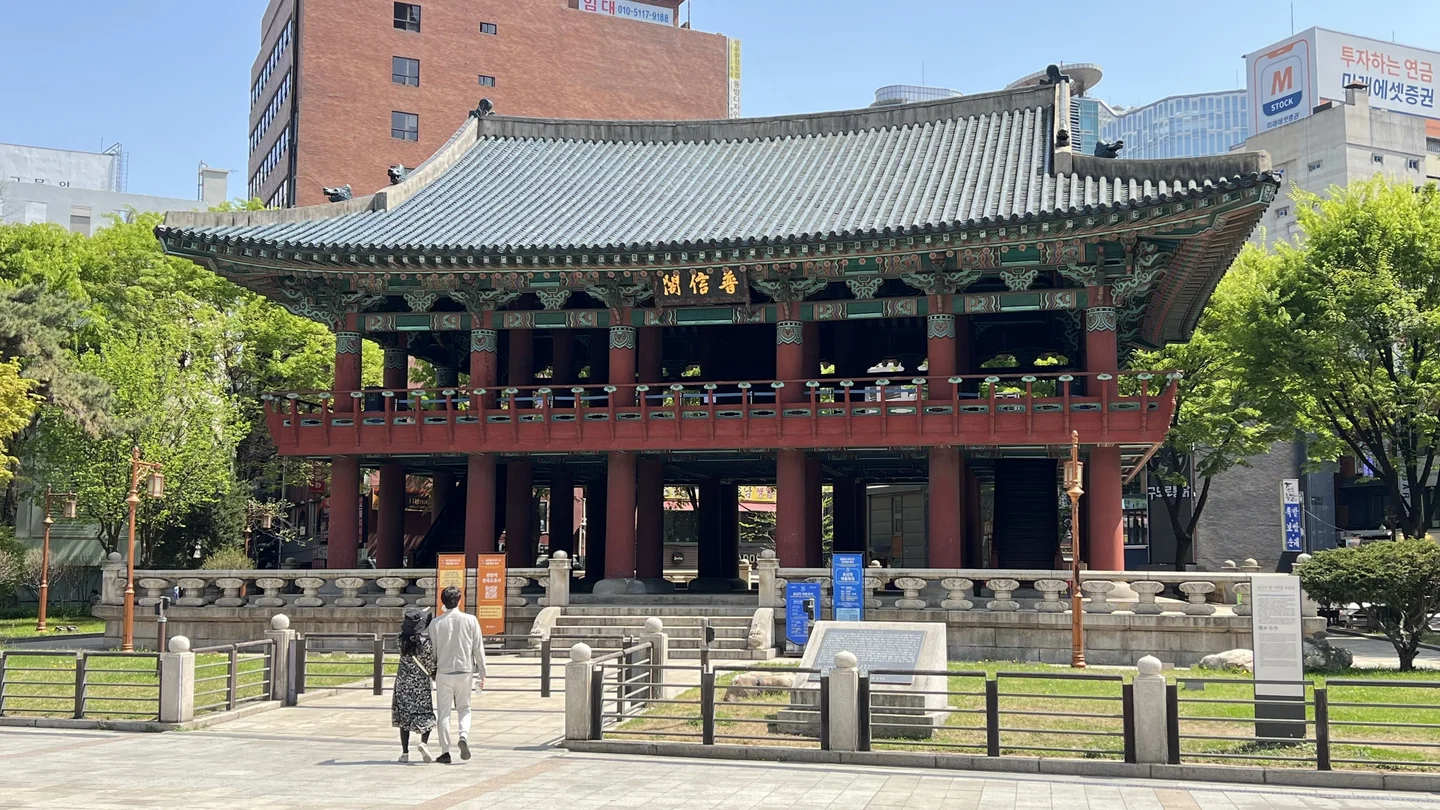
The tiled roof and red pillars at the front of Bosingak
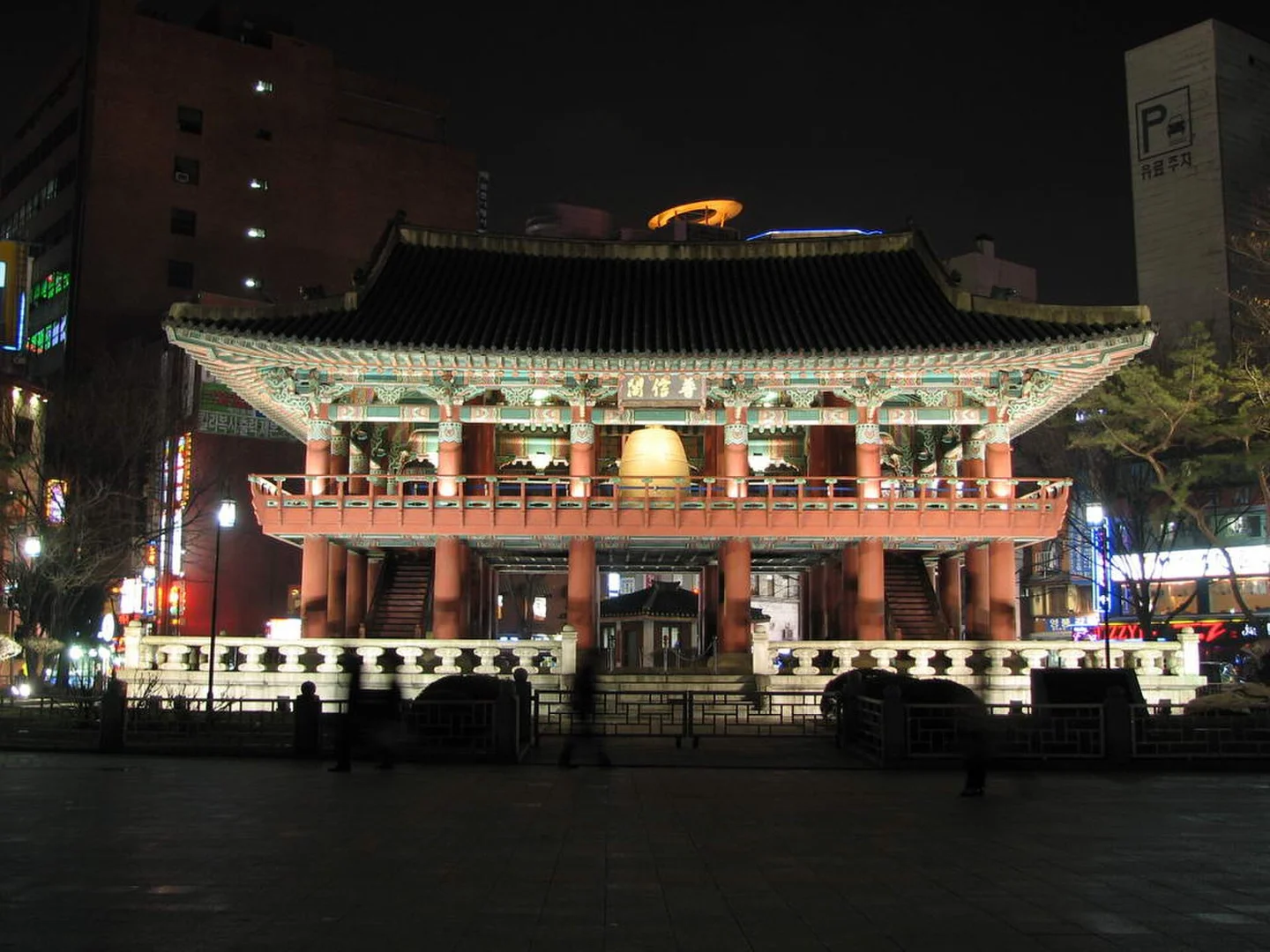
Bosingak's tiled roof and red columns stand among the commercial buildings near Jonggak Station. The pavilion recalls the bell-ringing tradition that once marked the opening and closing of the capital's gates. It offers a compact historic stop without requiring the time needed for a full palace visit.
The old bronze bell is now preserved at the National Museum of Korea; the bell hanging here is a later replacement. Keeping the two separate helps make sense of what you're seeing. You can appreciate the pavilion from outside without participating in a ceremony.
For a more active visit, look into the organized bell-ringing program. The city's English information, checked on October 12, 2026, lists a noon ceremony except Mondays and a foreign-visitor program on Tuesdays. Participation requires following the application arrangements; it isn't a bell you can walk up and ring whenever you like. Confirm the session if you plan your morning around it.
Go up to the street for dinner
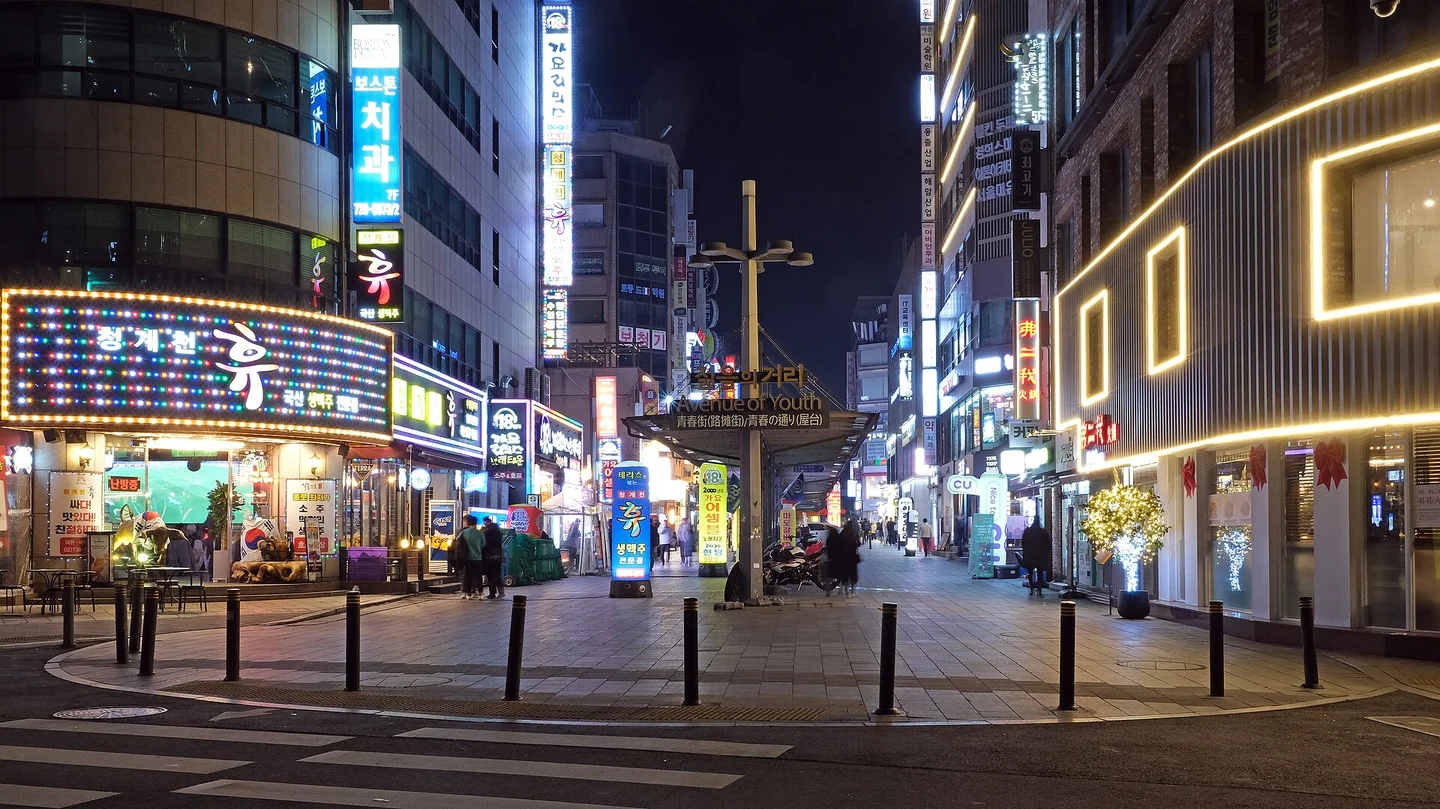
Jonggak's Avenue of Youth, also called the Street of Youth, brings together restaurants, bars and cafes beneath a dense stack of signs. This is where to look for a meal rather than staying at stream level and expecting a continuous row of waterside restaurants. The surrounding offices keep the area busy at lunch and after work.
Decide whether you want an individual meal or a table for sharing. Korean barbecue and jeongol, a communal hot pot, may have minimum orders or prices based on portions rather than one complete meal per person. Read the menu's serving information before ordering, especially when dining alone. For a solo meal, look for a menu that clearly lists individual portions.
After eating, Jonggak Station is handy for moving on. In good weather, you can also return to one short section of the stream instead of repeating the whole daytime walk.
Yes, especially if dinner already brings you to Jonggak. Bosingak's illuminated beams and columns stand out against the surrounding buildings, and nearby lights reflect on the stream. You can enjoy both with a modest evening detour rather than setting aside another full sightseeing session.
Lantern festivals and special installations are date-specific. On a regular evening, the appeal is the lit bridges and water, with festival displays available only during their scheduled runs. Along the lower paths, brightness changes beneath bridges, so watch the edge of the water and uneven or wet paving as you walk.
Rain, winter conditions and a street-level alternative
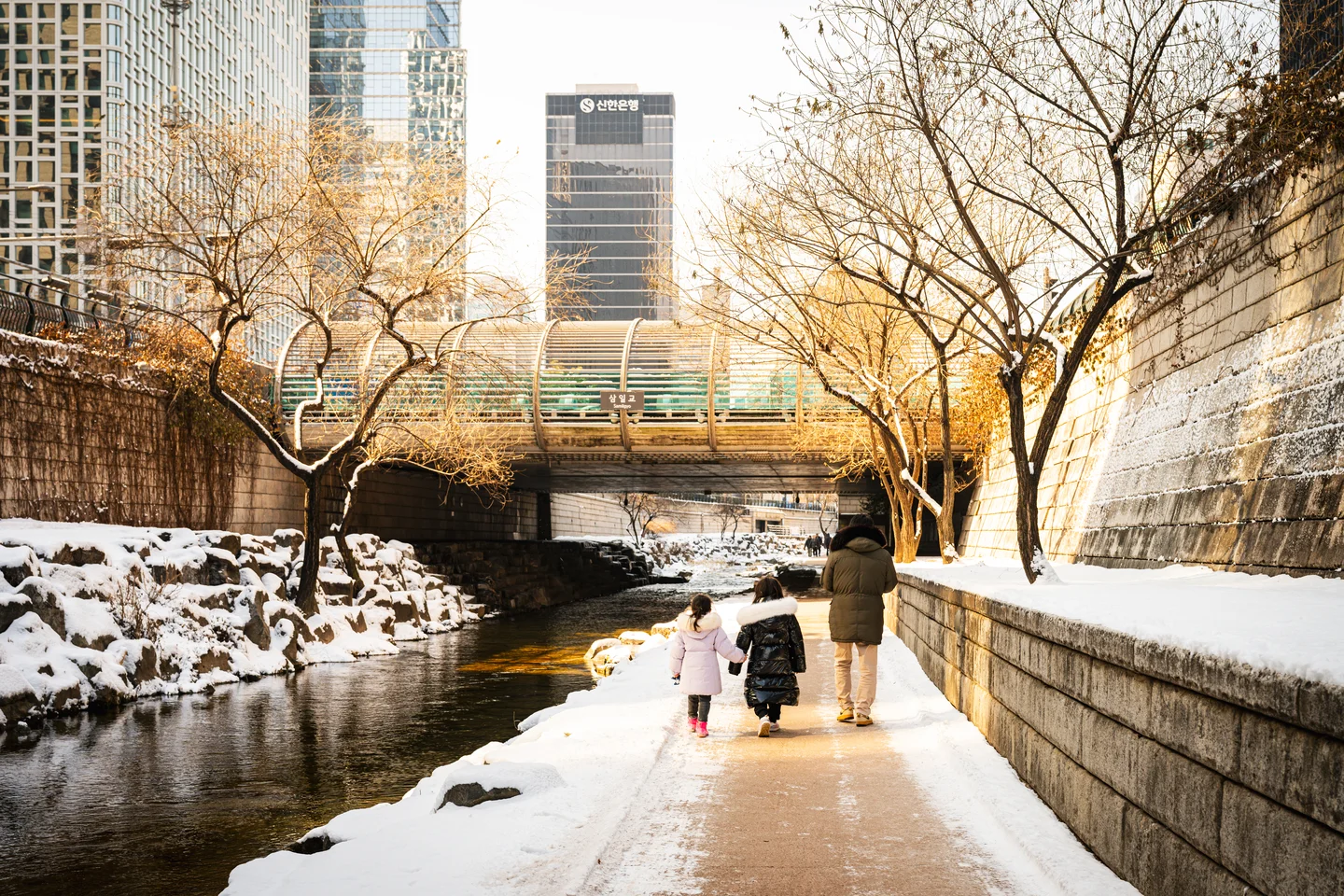
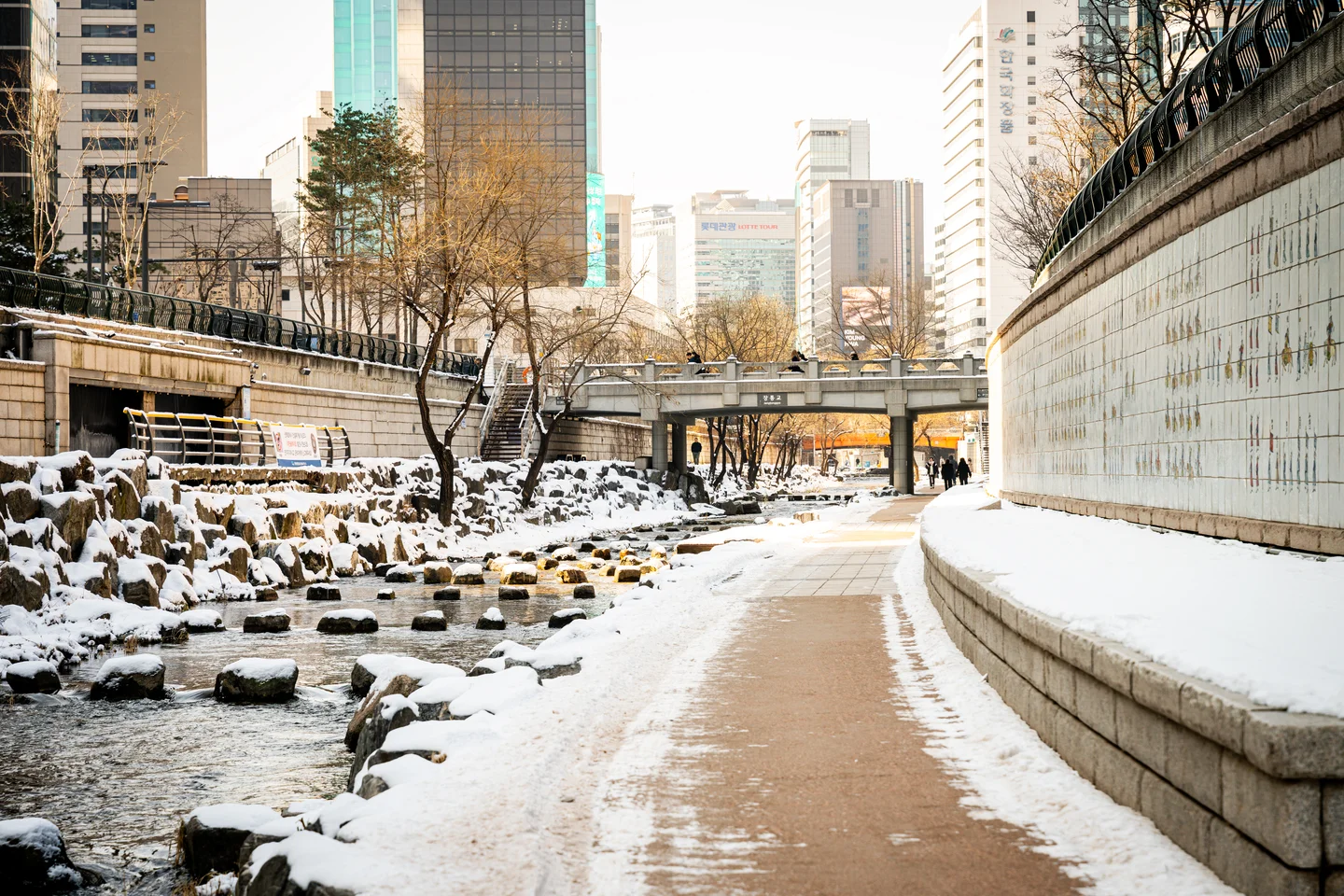
The snowy walkway around Jangtonggyo Bridge on Cheonggyecheon
Check the weather before going down. Cheonggyecheon can rise quickly during rain, and its lower paths may close even when conditions at street level don't look severe. Follow barriers, announcements and staff directions. If told to evacuate, use the nearest exit; don't shelter under a bridge, where water can surge suddenly. Stay above the stream until access officially reopens.
In winter, snow along the banks can make a striking setting, but wet paving and shaded patches may be icy. Shorten the walk if the footing is poor. The lower route is for walking, not cycling or swimming, and the operator also prohibits drinking alcohol and smoking. Pets aren't allowed, with an exception for assistance dogs.
When the lower paths are closed, the useful parts of the outing remain close together: Bosingak's exterior, a restaurant around Jonggak and a cafe on the surrounding streets. For a short dry-weather outing, walk from Cheonggye Plaza to Gwanggyo, then leave the stream for Bosingak and dinner around Jonggak Station.
Sources서울시설공단 청계천 개요·교량순서·복원: https://www.sisul.or.kr/open_content/cheonggye/intro/summary.jsp
서울시설공단 복원다리와 지도·삼일교: https://www.sisul.or.kr/open_content/cheonggye/intro/sculpture.jsp?bridge=samil
서울시설공단 풍수해 대책: https://www.sisul.or.kr/open_content/cheonggye/intro/disaster.jsp
서울시설공단 청계천 이용 제한: https://sisul.or.kr/open_content/main/guidance/service_category.jsp
서울문화포털 보신각 소개·타종·교통: https://culture.seoul.go.kr/culture/main/contents.do?menuNo=200147
중구청 청계천·청계광장: https://www.junggu.seoul.kr/tour/content.do?cid=981361100&cmsid=14819&mode=view&page=2&sf_category1=CWS1326
서울시 광통교 복원·역사: https://mediahub.seoul.go.kr/archives/1503049
Current stream visitor rules and flood warning: https://www.sisul.or.kr/open_content/cheonggye/community/attention.jsp
Accessible-route information for Mojeongyo to Samilgyo: https://www.sisul.or.kr/open_content/cheonggye/enjoy/restroom1.jsp
Official English Bosingak participation information: https://english.seoul.go.kr/service/amusement/traditional-culture/4-traditional-occasion/
Original Bosingak bell in the museum collection: https://www.museum.go.kr/ENG/contents/E0201110000.do
Official Seoul guide current Bosingak description: https://english.visitseoul.net/PalaceArea/Bosingak-Pavilion-Bell-Ringing-Ceremony/ENP001904
확인일: 2026-10-12 (Asia/Seoul). 기본 근거: seoul-013 한국어 완료 원고의 사실·선택 사진. 영어는 독립 구성·집필.