Namdaemun Market and Hoehyeon: What to Eat, Shop for and See
서울역사박물관 · Original · KOGL Type 1 ·
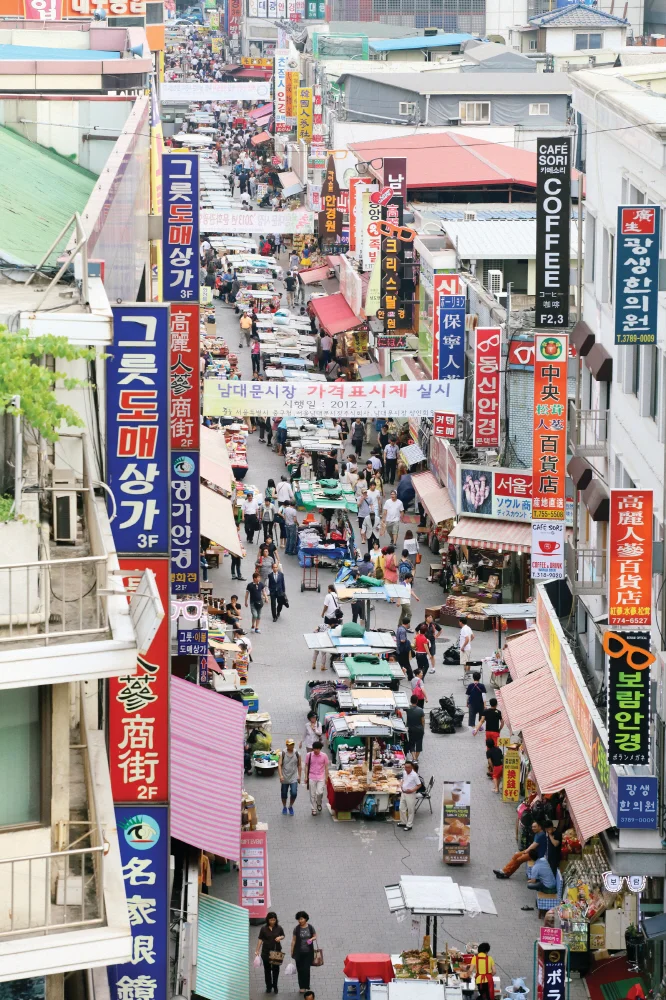
A bowl of hand-cut noodles, a shop stacked with tableware, then a city gate rising above the traffic: Namdaemun fits several kinds of Seoul into one walk. Its appeal begins with the market's range. Clothes and accessories share the neighborhood with kitchen goods, imported products and narrow lanes devoted to lunch. Come with a shopping idea or an appetite, and leave room to explore the streets around it. Hoehyeon is the practical starting point. From the market, Sungnyemun Gate gives the district's name a physical landmark; Seoullo 7017 and the old Seoul Station extend the outing toward the railway hub. There is also an uphill option beside the city wall at Baekbeom Square. Shoppers, food-curious travelers and people who enjoy walking between very different city scenes can each make a route here without trying to cover everything.
Arrive at Hoehyeon, then follow your interests
LERK · Original · CC BY-SA 4.0 ·
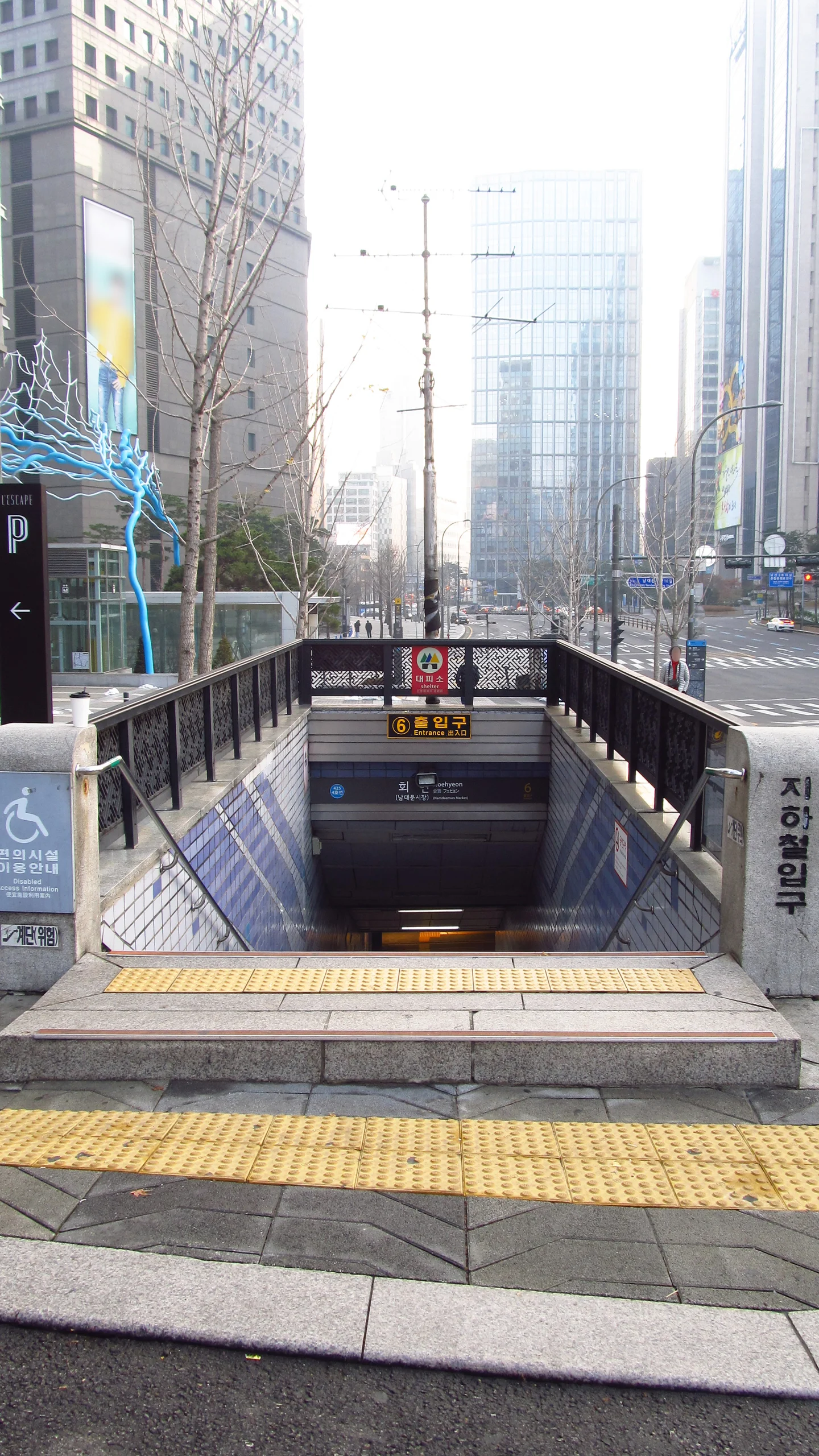
Take subway Line 4 to Hoehyeon Station. Exit 5 is the market approach recommended by Seoul's visitor guide, while Exit 6 also brings you into the surrounding area. Save your first shopping building or food lane as a separate map pin. Subway exits and market gates use different numbering systems, and “the market entrance” is too vague a meeting place if you split up. Namdaemun is a district of connected streets, lanes and multistory shopping buildings. A sensible first circuit follows a main lane, with turns into the specialist shops that catch your interest. Shop signs and floor directories help you find what street-level browsing misses. If you are arriving with a suitcase, leave it in storage first; the narrow lanes also carry handcarts and deliveries. Use the station's elevator signs if stairs are a problem.
Find useful souvenirs, then choose a market lunch
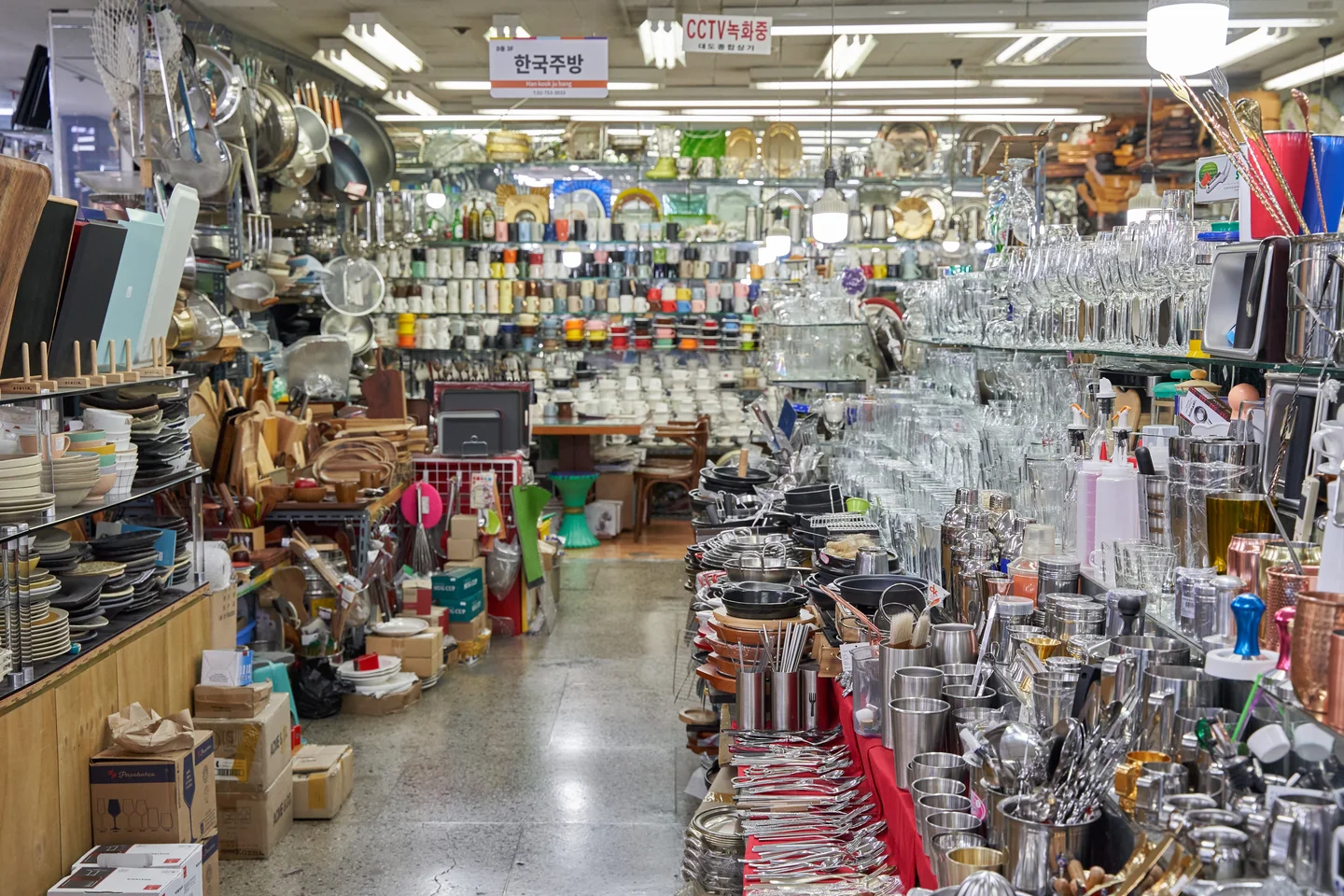
Tableware is a good reason to look beyond the clothing stalls. Bowls, dishes and cooking utensils offer a glimpse of Korean domestic life as well as something useful to take home. Follow the signs for tableware wholesalers and check the floors inside specialist buildings. Packaging supplies and imported goods add to the variety, so a short list of what interests you can be more helpful than a list of must-visit shops. At a wholesale shop, establish whether the price is for one piece or a set and whether individual items are sold. For ceramics, ask about protective packing and consider the weight in your luggage. Shops set their own hours and days off, so time the visit around the building you most want to browse. Overnight wholesale business is a different rhythm from daytime sightseeing and shopping. What should you eat at Namdaemun Market? Two local food lanes give you a useful starting point. Kalguksu is knife-cut noodle soup: soft, irregular noodles in a savory broth, often finished here with fried tofu, seaweed and sesame. The market's Kalguksu Alley is close to the Exit 5 side of Hoehyeon Station. It is a good choice when you want a bowl of noodles rather than a string of snacks. Galchi-jorim is a more assertive meal of hairtail, also called cutlassfish, braised with radish and red-pepper seasoning. The nearby Galchi-jorim Alley specializes in this dish. Choose it for a spicy fish lunch; some restaurants also serve grilled fish if that suits you better. Recipes and broth ingredients vary, so ask about anything important to your diet rather than judging by the toppings alone. Before sitting down, check the menu price, serving size and payment method. If a particular counter has a long line, browse the shops first and come back. The market works well when lunch and shopping can trade places in the plan.
Sungnyemun: the south gate beside the market
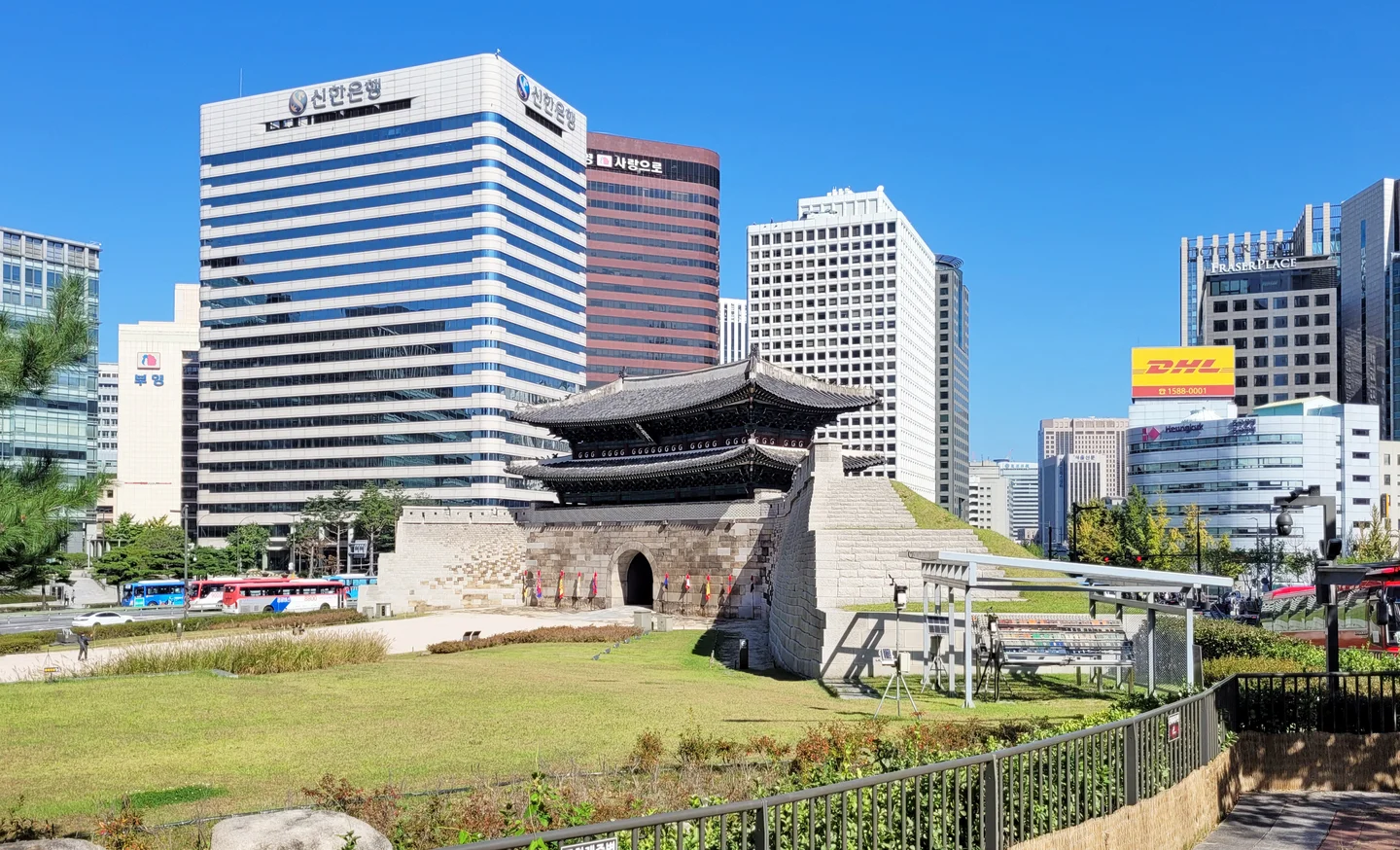
Walk out toward the market's western edge and Sungnyemun provides a dramatic change of scale. Its other name, Namdaemun, means “Great South Gate,” the name also carried by the market. The connection is useful to keep in mind: this was an entrance to the walled city and a route for people and goods. Look from the broad stone base and arched passage up to the timber pavilion. Against the surrounding office blocks, the gate makes the older city's outline easier to imagine. It dates to the early Joseon period and was restored after the 2008 fire, so what you see also tells a story of repair and preservation. Use the pedestrian crossings to reach the visitor area. Monday is the regular closure day, and the upper pavilion is not a freely accessible lookout. The exterior still provides the key architectural view if a short market-and-gate walk is all you have time for.
Choose your extra walk: Namsan's lower slopes or Seoullo 7017
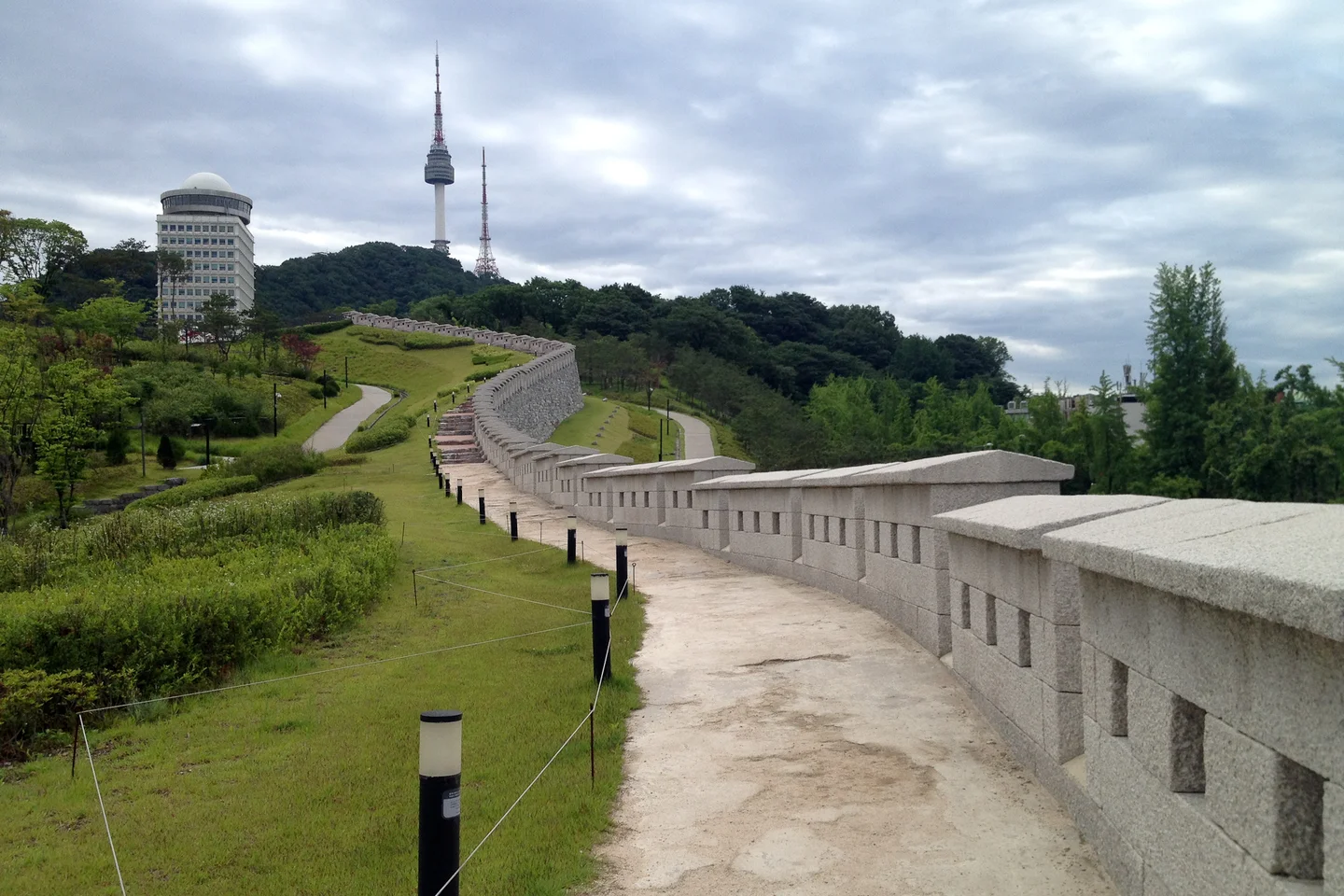
Baekbeom Square in Namsan Park is the choice for greenery and a closer view of the Seoul City Wall. Approach from Hoehyeon and the city begins to rise beneath your feet. Stone walls curve with the hillside, with lawns and paths alongside them. It is a useful contrast to the market's crowded displays: here the shape of the hill becomes the main feature. This is an uphill detour with steps, so it suits a day when you want to walk and are carrying little. Wear shoes with grip and bring water in warm weather; wet or icy slopes call for extra care. The tower above is still farther up Namsan. Treat a visit to it as a separate outing rather than assuming this walk has taken you to the summit. Seoullo 7017 toward Seoul Station
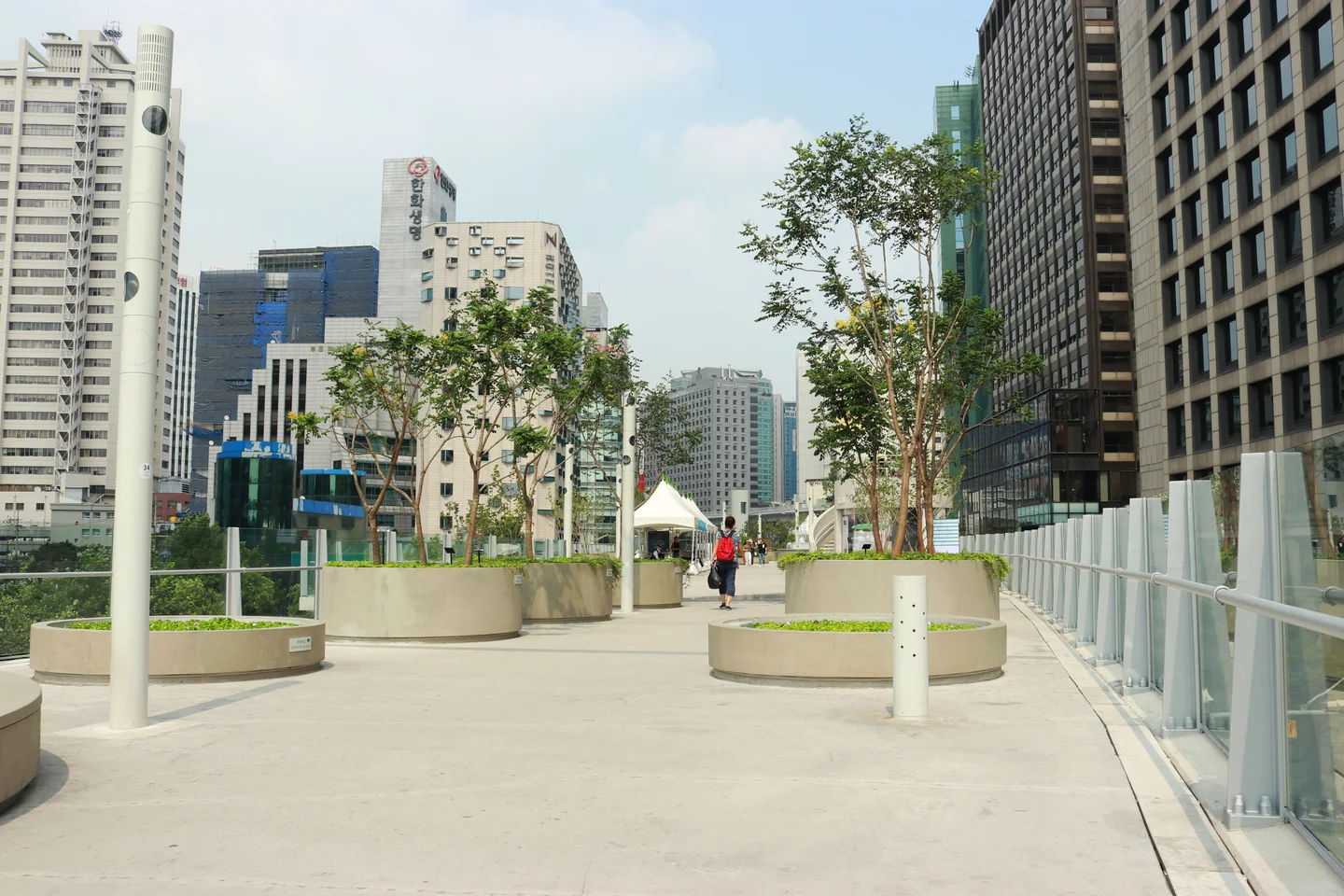
분당선M · Original · CC BY-SA 3.0 ·
For a city walk toward your next transport connection, join Seoullo 7017 from the Hoehyeon side. The former road overpass now carries pedestrians between large circular planters, with streets and buildings seen from an unusual height. The name joins 1970, when the overpass was built, with its reinvention in 2017. Use whichever connecting path suits your next stop; you do not have to cross the whole route. The walkway is exposed to sun and wind, making a shorter stretch more appealing during summer heat or cold weather. If you bought heavily in the market, the direct route to the station may be the better finish.
End at the old Seoul Station
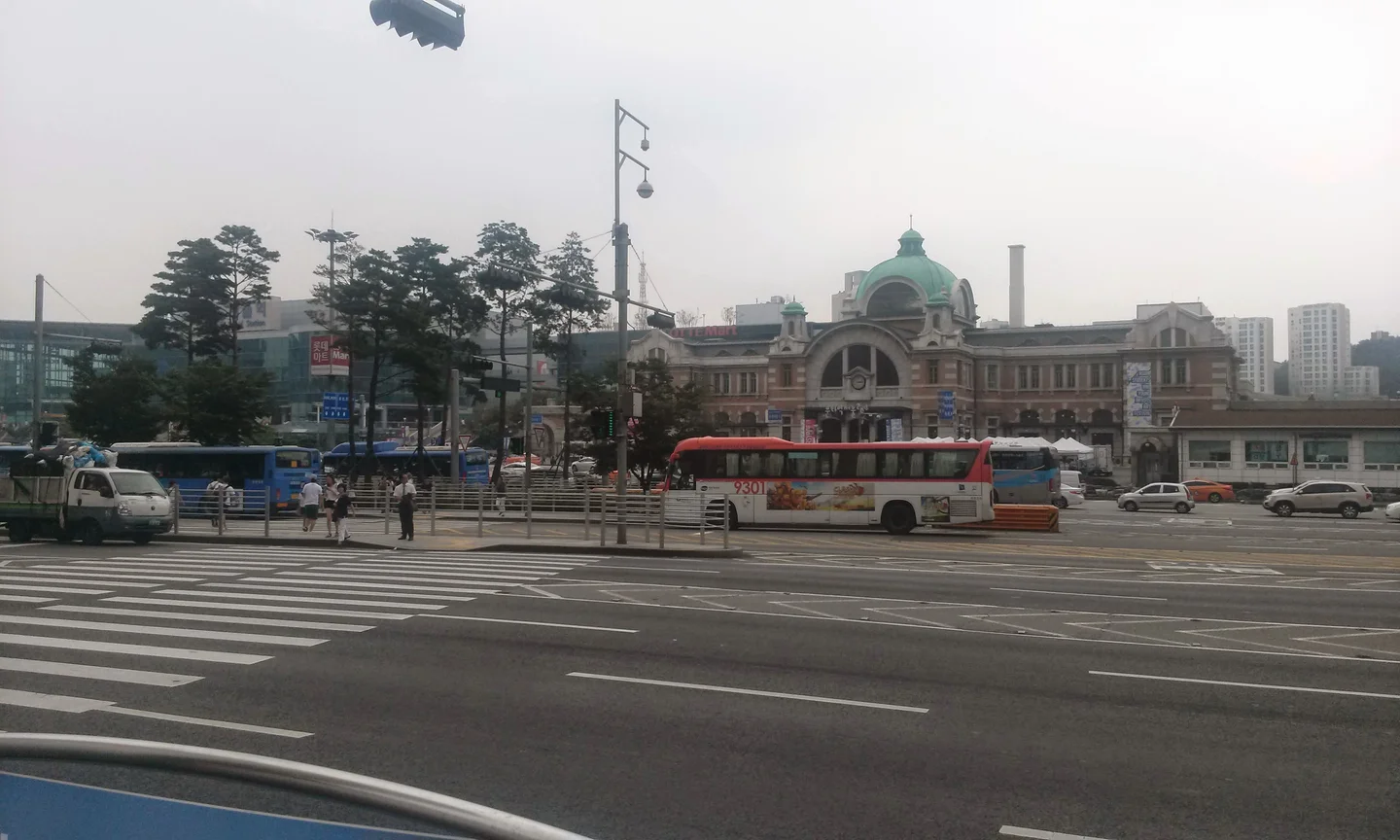
The red-brick building with the domed roof is Culture Station Seoul 284. The former railway station is now a cultural venue, and its exterior makes a distinctive end to the walk. An open exhibition adds the chance to explore the building as well as the work on show. If going inside is the main reason for your visit, choose your date from the venue's program; access changes between exhibitions. For an onward train, continue to the current station facilities and follow your ticket and platform signs. The historic building and the place where you board are separate destinations. Keep the outing short with the market, lunch and Sungnyemun. Extend it with Seoullo and the old station when you want more city walking, or add Baekbeom Square for the hillside and wall. Decide whether you will leave from Seoul Station or return to Hoehyeon before starting. The reward is a route that follows your interests: a meal, something made for everyday use, and several layers of Seoul within the same neighborhood. Visitor arrangements were checked against official sources on October 12, 2026, and may change; consult the venue pages when choosing your day.