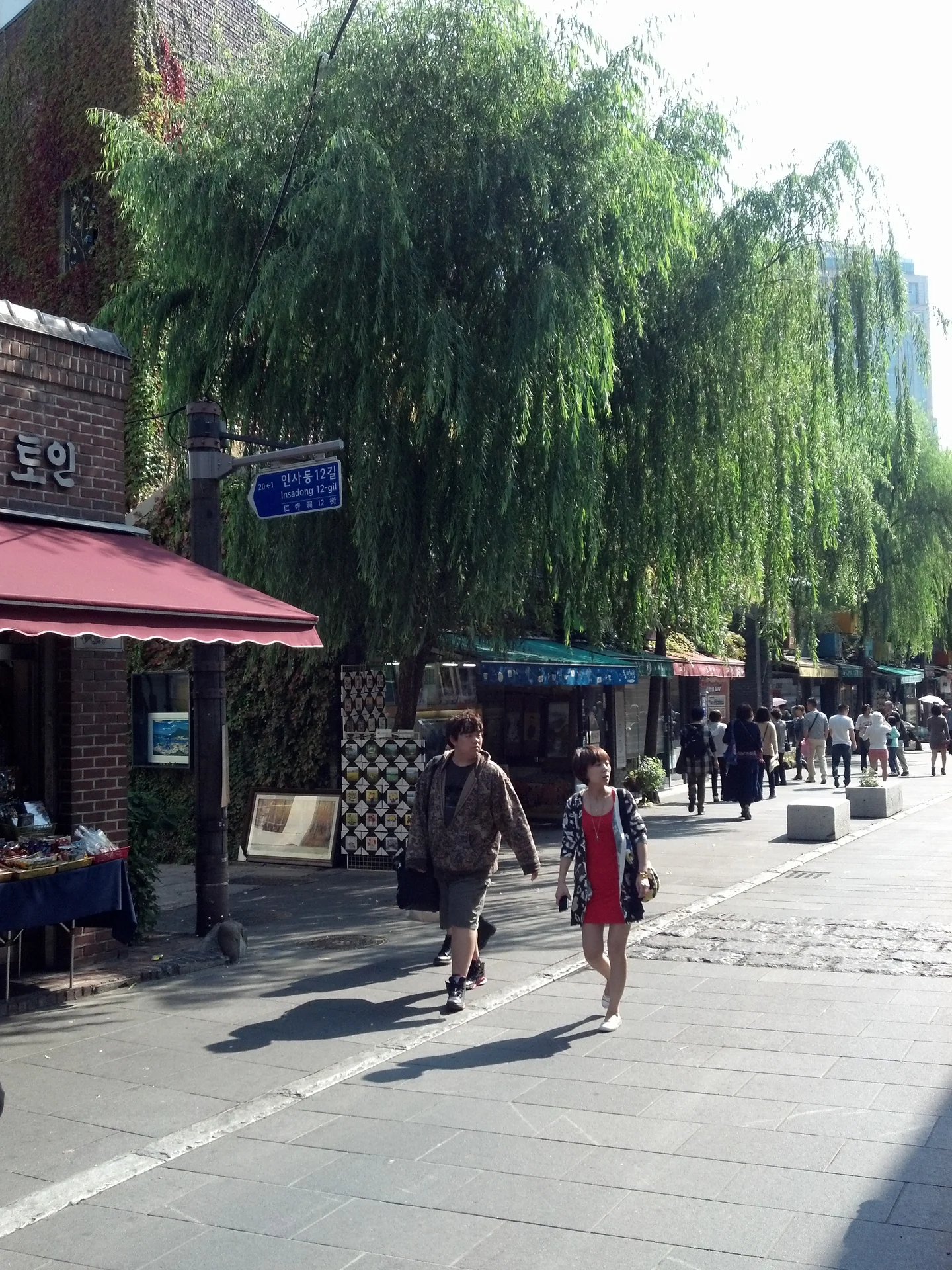
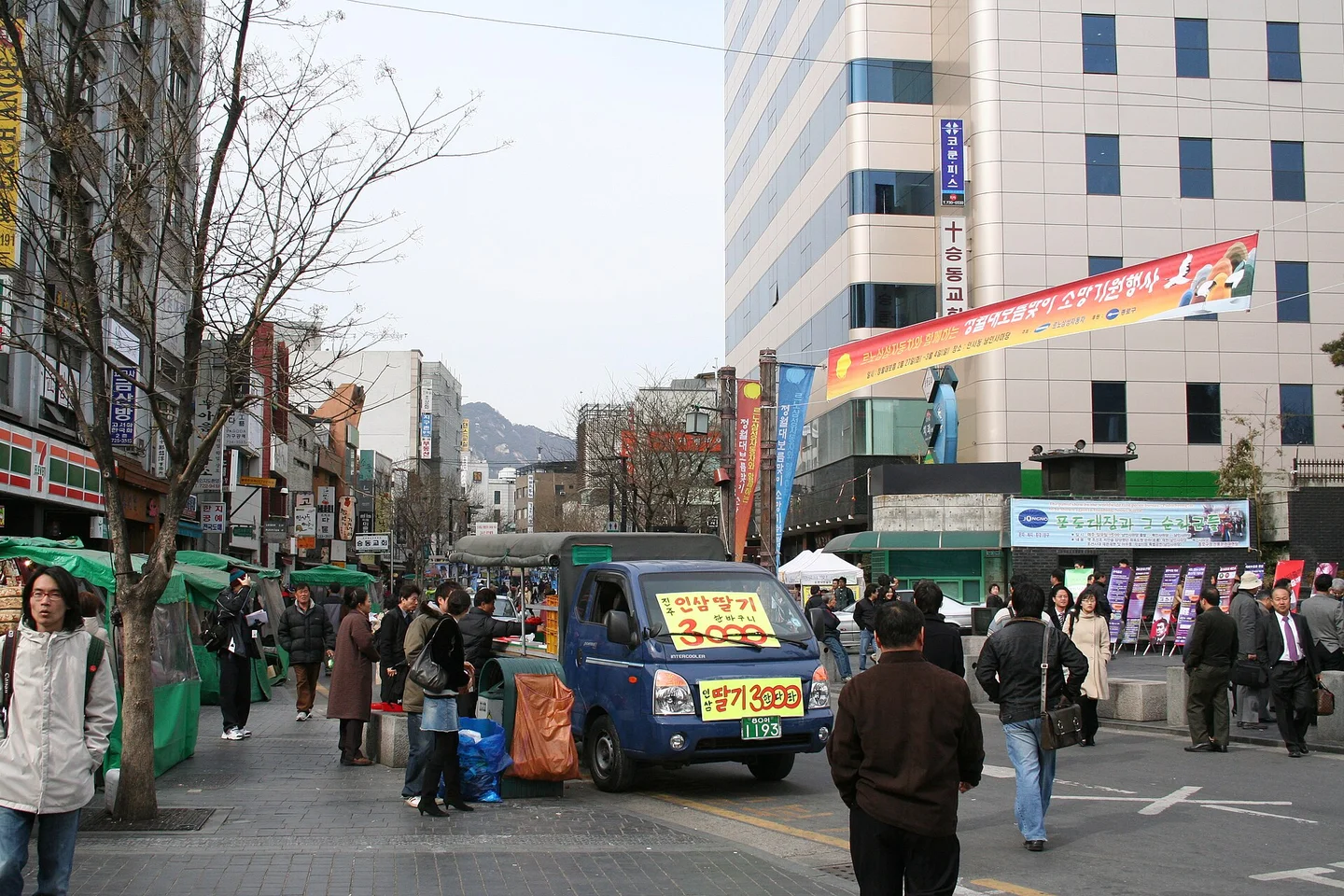
Insadong is a good place to give your Seoul souvenir search some substance. A calligraphy shop can introduce you to brushes and inkstones; a ceramics store might supply a cup you'll use every morning. Alongside those specialist businesses, Ssamziegil and Anyoung Insadong bring contemporary design, galleries and small shops into the same neighborhood. Traditional craft here is something to browse, buy and sometimes try making yourself.
The outing has more variety than its reputation as a shopping street suggests. Turn off Insadong-gil for a teahouse among low buildings and tiled roofs, then walk west to Jogyesa Temple for painted timber halls and a leafy courtyard. It's an appealing follow-up to Seoul's palaces if you want to move from royal history to everyday objects, art and a living place of worship.
Anguk Station, Line 3, Exit 6, brings you to the northern approach. From there, follow Insadong-gil south, making short loops into the alleys and shopping complexes. Jonggak or Jongno 3-ga makes a useful finish. If you're coming from Bukchon, Insadong lies across the main road south of the Anguk area.
Save Ssamziegil and Anyoung Insadong as separate map pins. The main street is easy to follow, but similar street names branch into smaller lanes, and a memorable shop sign may be harder to find on the return walk. The busiest stretches also carry people stopping to browse, while cross streets may have delivery traffic. This is a shopping neighborhood rather than an entirely pedestrian-only area.
What to buy: useful gifts and tools for making
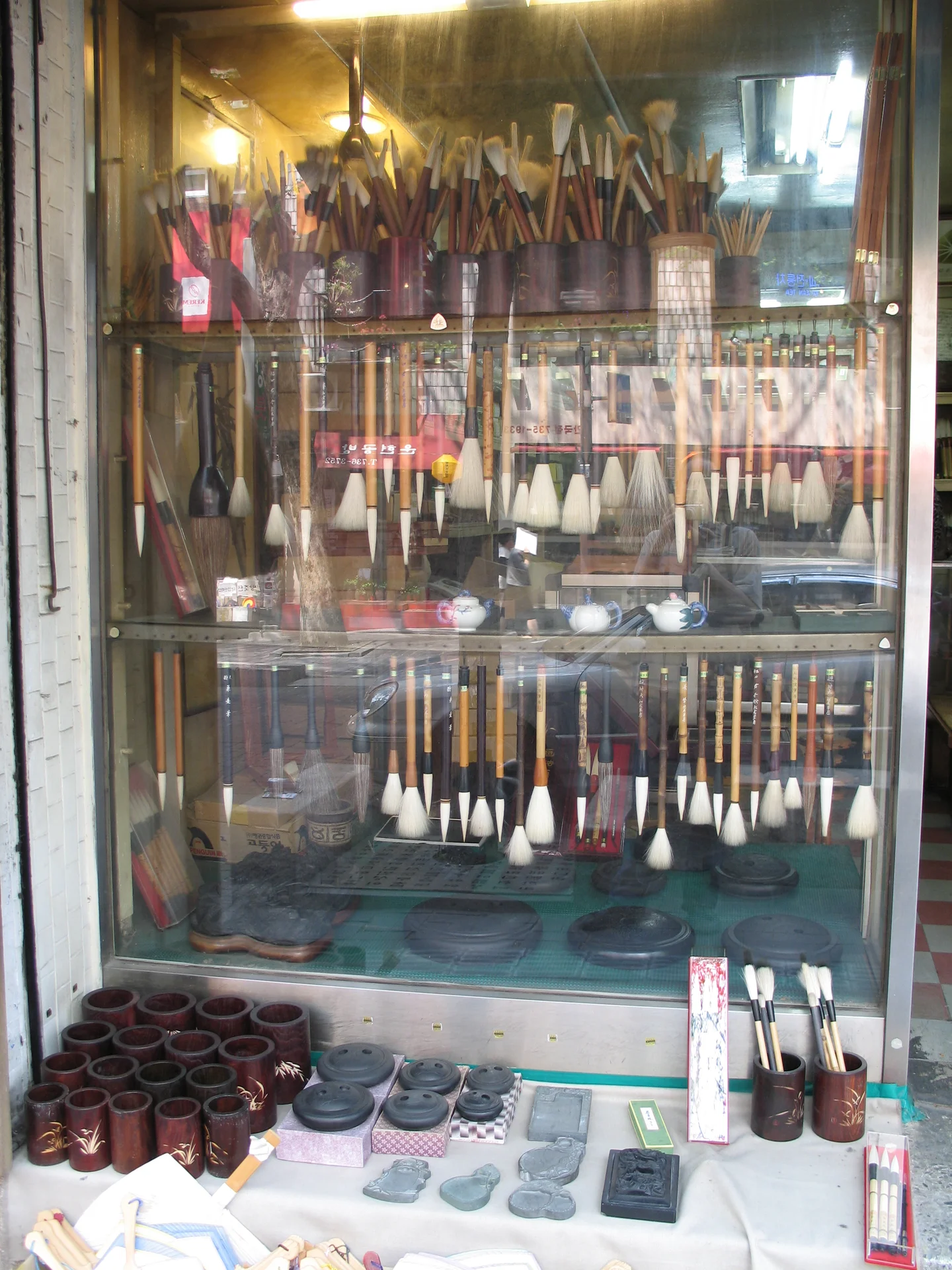
Brushes and inkstones displayed in a calligraphy supply shop
Calligraphy supply stores, known as pilbang, are among Insadong's distinctive shops. Brushes hang in different sizes beside paper, ink and inkstones. For someone who draws or enjoys lettering, this can be a more personal gift than a decorative souvenir. Tell the seller what the tool will be used for and whether the recipient is a beginner; brush size alone doesn't tell you how suitable it is. A short written translation of your question can help with specialized materials and care instructions.
Ceramics, wooden objects, metalwork and textiles offer other ways to bring a little Korean design home. For a cup, the useful questions are whether it's intended for drinks and how to clean it. For a textile, ask about washing; for a handmade piece, look for the maker and place of production. A Korean motif doesn't by itself mean an item was handmade in Korea.
Prices can reflect quite different materials and methods even when two objects look similar. Compare those details as well as appearance. Protective packing matters for ceramics, while a personalized item needs a confirmed spelling and collection time. These small checks help you choose something you'll still enjoy using after the trip.
Ssamziegil and Anyoung Insadong: two ways to browse
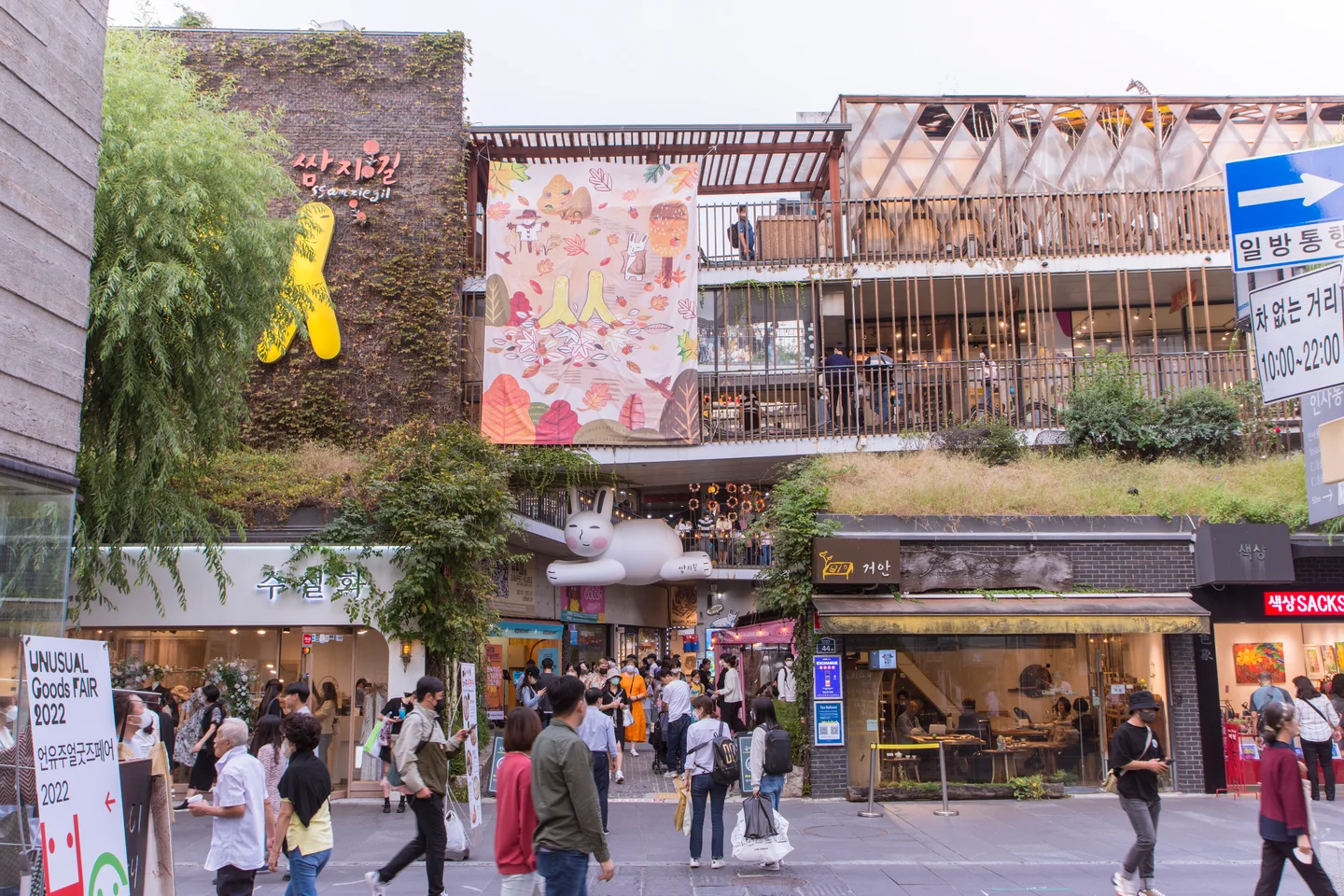
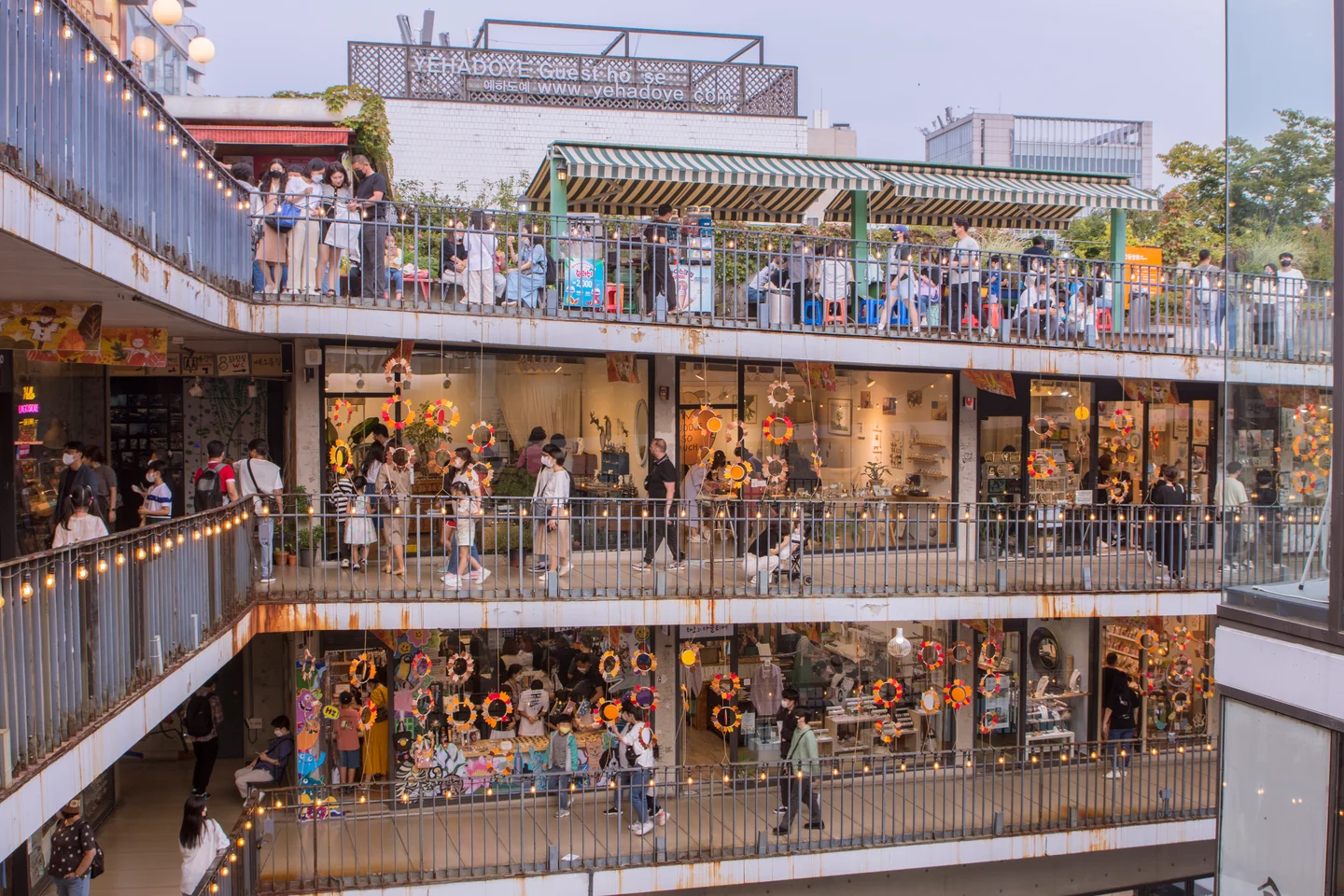
At Ssamziegil, the shopping route climbs around an open courtyard. The building is part of the attraction: each level brings another view across the shops, with small displays along the walkways. Traditional materials appear in modern accessories and gifts, making this a useful stop for comparing the district's older craft trades with newer design ideas.
Make something at Ssamziegil
Craft shops and walkways around the courtyard at Ssamziegil
For a hands-on visit, look into the craft workshops rather than adding more shopping stops. Seoul's visitor guide lists activities involving ceramic cups and dishes, mother-of-pearl accessories and hanji, Korean paper. The options give you a starting point for choosing a material you'd like to work with. Ask which sessions are available for your date, whether instruction is suitable for your language and age group, and when the finished piece can be collected. Drying time can matter as much as the length of the class.
Some circulation is open to the weather. A sloping walkway also doesn't establish that every shop or workshop has step-free access; if that's essential, confirm the route to the particular floor before planning around an activity.
Add a gallery stop at Anyoung Insadong
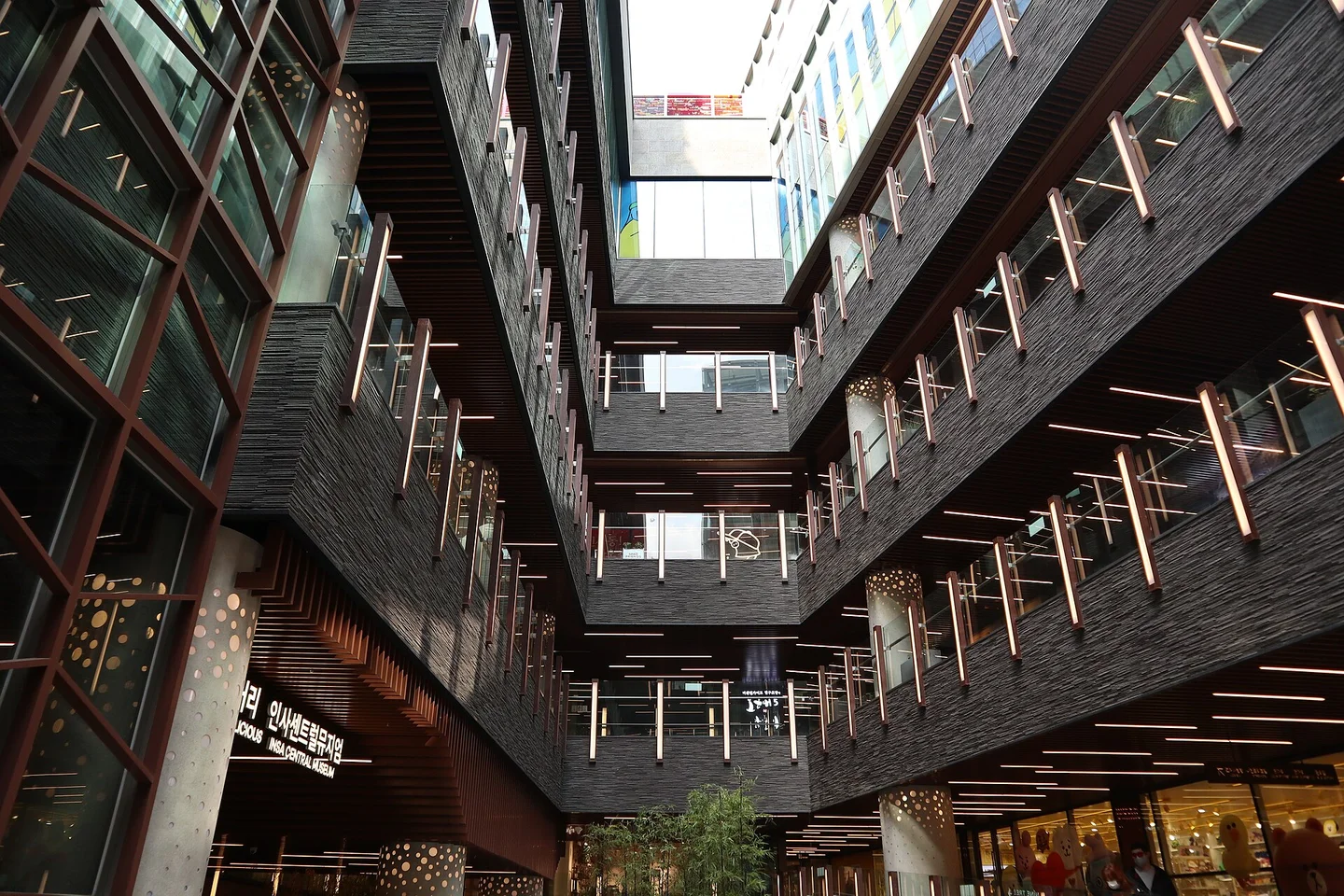
Central space and walkways on each floor at Annyeong Insadong
Anyoung Insadong combines galleries, shops, cafes and dining around a tall central space. It's worth checking the current exhibitions when deciding how much time to spend here. An exhibition may have its own admission conditions and schedule, separate from the surrounding shopping areas.
Ssamziegil is the stronger focus for a craft-browsing visit; a particular exhibition may give Anyoung Insadong the larger place in your day. With both complexes nearby, it's easy to combine some shopping with art and a meal without leaving the neighborhood.
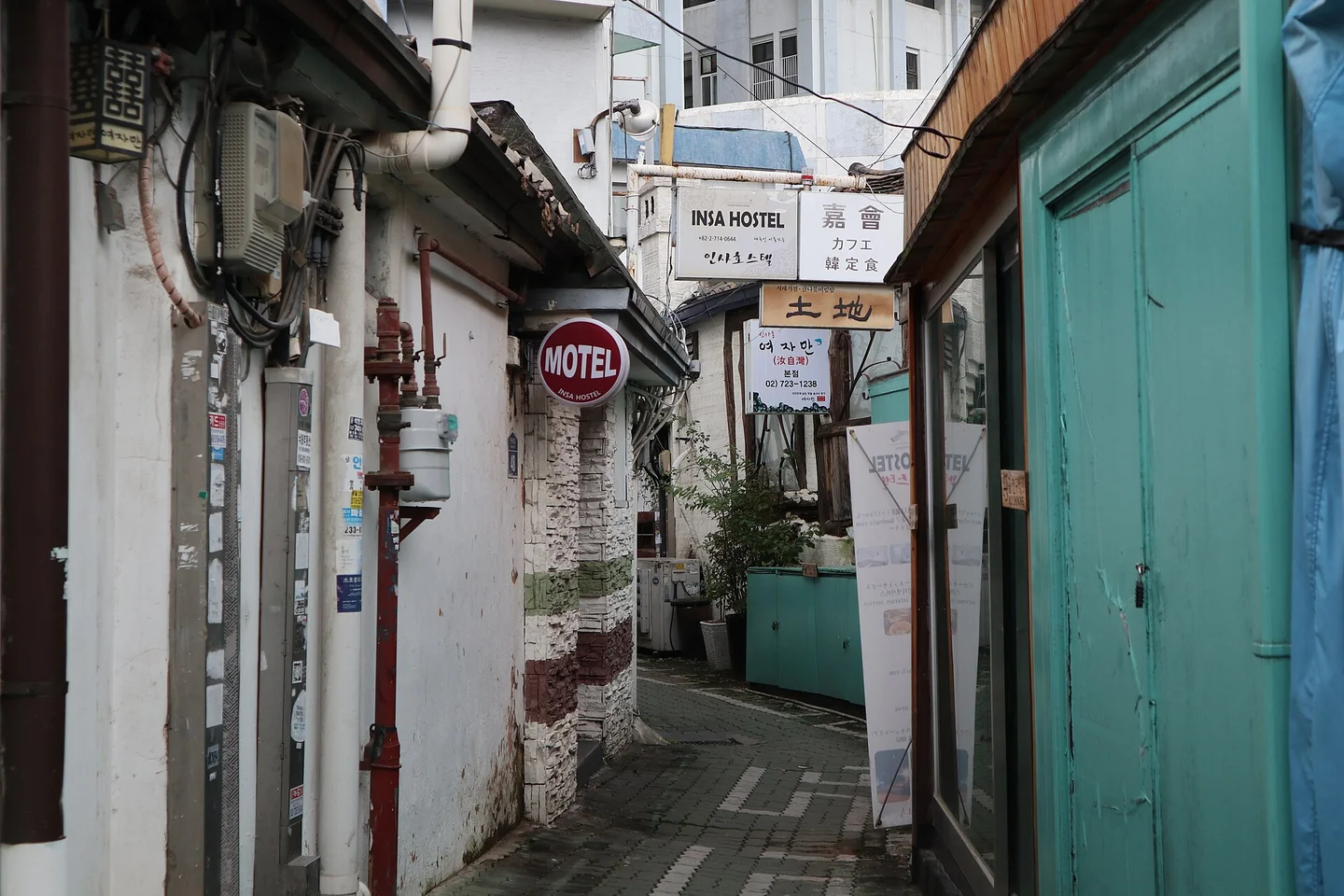
The short lanes off Insadong-gil lead between low buildings, restaurant signs and teahouses. They offer a change from the main street's busy shop windows, though they're working commercial alleys rather than a preserved village. Roof tiles, remodeled facades and newer additions sit close together. A tea stop is a chance to spend time in this smaller-scale part of the district instead of simply passing through it.
Reading a Korean tea menu
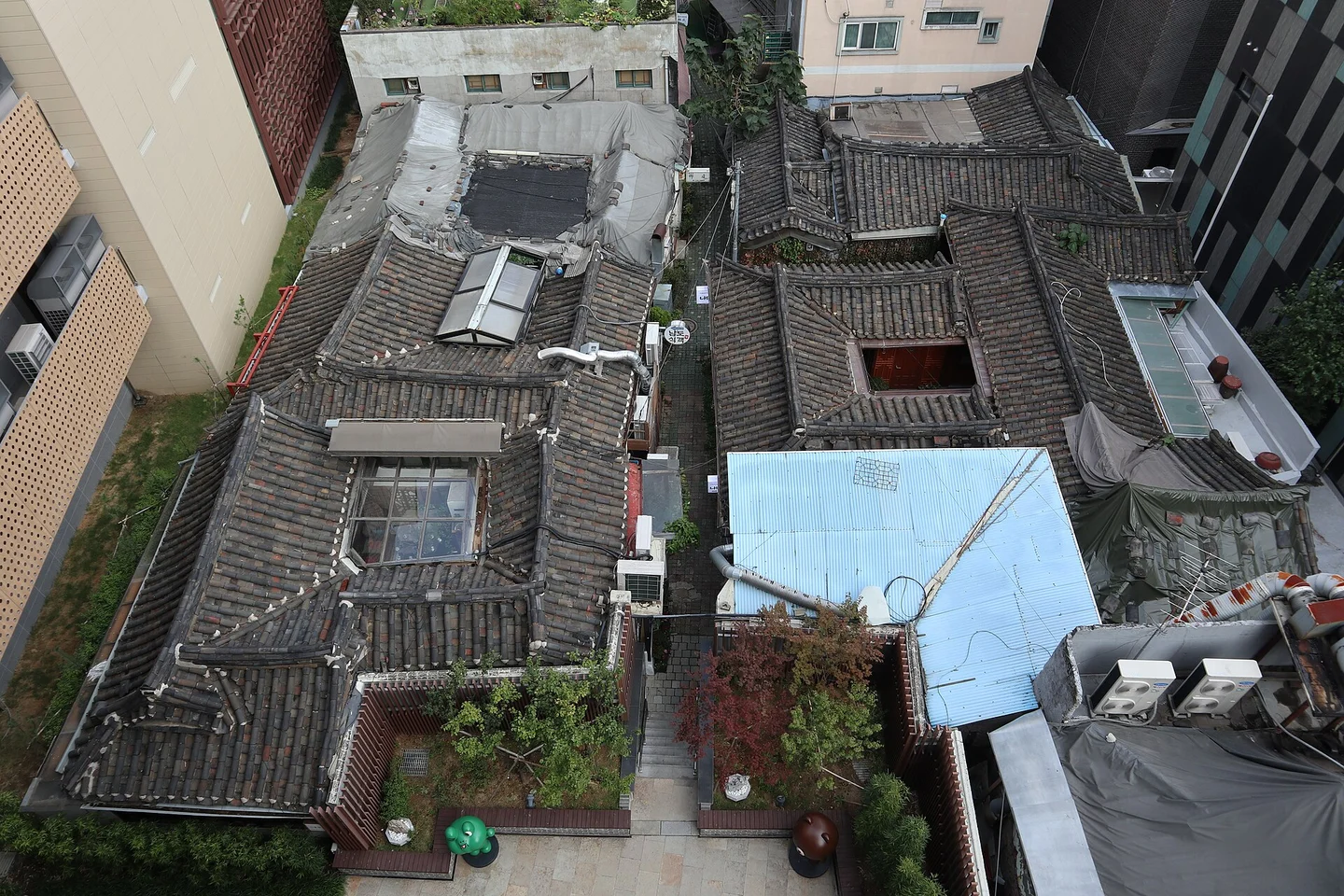
Hanok rooftops among surrounding buildings in Insadong
“Tea” can mean more than an infusion of leaves. Daechucha is jujube tea, while saenggangcha is ginger tea; both appear in Insadong's traditional teahouse offerings. Leaf teas and drinks made with fruit preserves can differ substantially in sweetness and texture. Ask about the main ingredient and sweetness if the name is unfamiliar, and check whether the drink comes hot or cold.
Seating is another useful distinction: some places have chairs, others floor seating or steps at the entrance. Choose a setting that works for a comfortable break. The appeal is partly the setting itself, with low tiled roofs tucked among taller city buildings, and partly the chance to try a drink beyond the usual coffee order.
Jogyesa Temple: a final stop beyond the shops
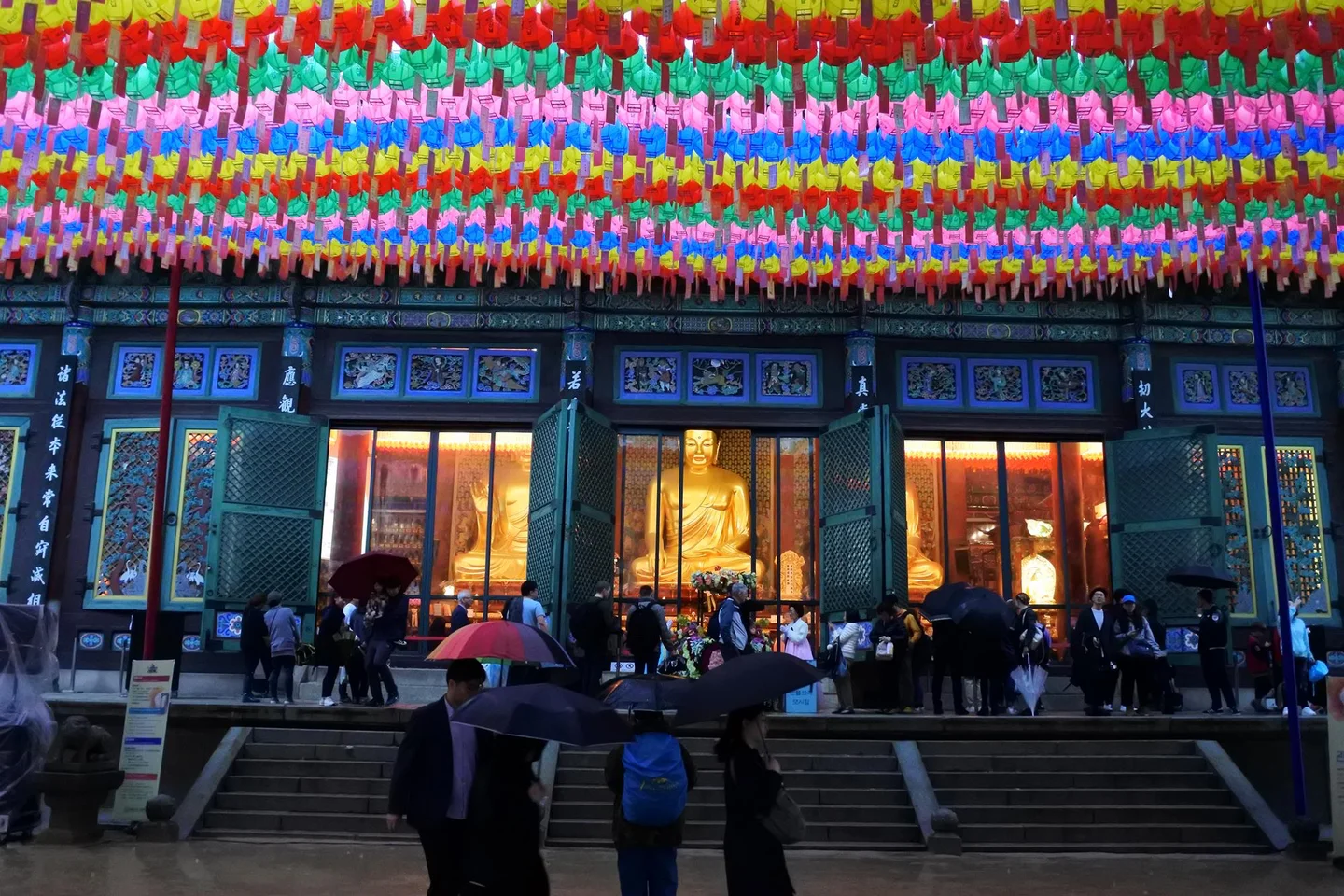
Daeungjeon Hall at Jogyesa Temple beneath lanterns
Jogyesa lies west of Insadong on Ujeongguk-ro. Its main hall, Daeungjeon, gives the walk a different scale and purpose. Look up at the patterned doors and dancheong, the multicolored painted patterns on the wooden structure, then take in the hall's relationship to the courtyard and mature trees. Lantern displays change with the season and temple events.
This is an active Buddhist temple. You can appreciate the grounds and architecture without joining a religious ceremony. For entry to the hall, follow the posted guidance on shoes and photography, and give worshippers space. The courtyard is a good place to begin if a service is in progress.
From Jogyesa, continue south toward Jonggak Station or return to Insadong-gil for a last shop or meal. If you expect to buy fragile or bulky pieces, visit the temple first and leave those purchases until the end. Crafts, tea and the temple work well together here: each adds a different experience within a walkable corner of central Seoul.
Sources인사동 개요: https://english.visitseoul.net/attractions/insa-dong_/81
인사동 도보코스·필방·쌈지길: https://korean.visitseoul.net/palace/%EC%9D%B8%EC%82%AC%EB%8F%99-%EC%9A%B4%ED%98%84%EA%B6%81-%EC%BD%94%EC%8A%A4/KON000653
안국역·종각역 접근: https://korean.visitseoul.net/hallyu/%EC%A2%85%EB%A1%9C-%EC%9D%B8%EC%82%AC%EB%8F%99%EA%B1%B0%EB%A6%AC/KON001550
안녕인사동 개요: https://english.visitseoul.net/attractions/anyoung%20insadong/ENP032734
조계사 경내 시설: https://www.jogyesa.kr/about/facility.php
Ssamziegil craft workshop materials and activities; availability not guaranteed: https://english.visitseoul.net/entertainment/Ssamziegil-Experience-Workshop/ENP006364
Jogyesa Temple official visitor overview: https://english.visitseoul.net/attractions/Jogyesa-Temple/ENP002586
Insadong tea ingredients: daechucha and saenggangcha; used as ingredient evidence, not a venue recommendation: https://english.visitkorea.or.kr/svc/contents/contentsView.do?vcontsId=75508
Insadong traditional tea context: https://english.visitseoul.net/tours/sindang_/28
확인일: 2026-10-12 (Asia/Seoul)
기본 근거: 지역ID seoul-003 한국어 완료 원고 KO-v01의 사실·사진. 영어는 독립 구성·집필.
공식 한국어 장소명: 인사동 / 인사동길 / 안국역 / 종각역 / 종로3가역 / 쌈지길 / 안녕인사동 / 조계사 / 대웅전 / 우정국로